For American households with toddlers, reaching the sink, potty, or kitchen counter safely is a priority. The right step stool supports independent learning, enhances hygiene habits, and reduces daily struggles for caregivers. The following selections emphasize non-slip designs, sturdy construction, and kid-friendly heights to help little ones gain confidence during potty training and daily routines around sinks and counters.
| Product | Brand | Key Benefit |
|---|---|---|
| Dreambaby Step Stool for Kids | Dreambaby | Non-slip base and contoured design for versatile use |
| Forbena Toddler Step Stool | Forbena | Two-step height with handles and slip resistance |
| COOSEYA 2 Step Stools | COOSEYA | Double-layer design for extra height and safety |
| Primlect Potty Training Seat | PRIMLECT | 2-in-1 potty seat and step stool with raised stability |
| Onasti 3 Step Foldable Stool | Onasti | Foldable, adjustable height, with handles and non-slip pads |
Dreambaby Step Stool for Kids

The Dreambaby Step Stool combines an anti-slip base with a contoured shape that fits around toilet bases and accommodates sinks. Its 117 rubber dots provide traction on various floor surfaces, helping prevent movement during use. Built from durable yet lightweight plastic, it supports up to 175 lb while remaining easy for toddlers to manage. Dimensions measure 14.3″ wide, with a depth of 9.6″ and a height of 5.6″, making it suitable for handwashing, brushing teeth, and reaching bathroom fixtures or kitchen counters.
Forbena Toddler Step Stool
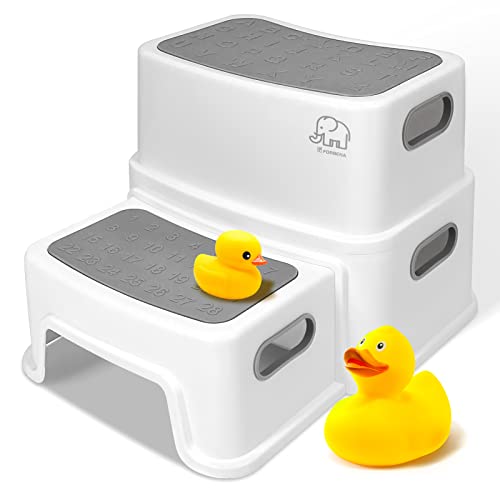
The Forbena step stool offers two steps with 8 slip-resistant soft rubber feet for stability on tile and other hard floors. Carrying handles provide a comfortable grip for toddlers, supporting transitions between the sink, toilet, and other elevated tasks. It supports up to 200 lb and is designed for easy assembly, snapping into place in minutes. The stool’s lightweight construction makes it easy for kids to maneuver across various rooms, promoting independence during potty training and daily routines.
COOSEYA 2 Step Stools

The COOSEYA two-step model emphasizes a no-slip design on both the bottom and stepping surface, reducing slip risk. The double-layer structure adds height for reaching sinks or countertops, while a safety edge design smooths sharp corners to prevent injuries. This stool is intended to grow with a child’s needs, supporting potty training, handwashing, toothbrushing, and other daily activities with a focus on stability and safety.
Primlect Potty Training Seat

The Primlect option is a 2-in-1 solution, combining a potty seat with a step stool. Its triangular supports and rear cross structure provide enhanced stability, with a 4-point anti-slip base to reduce tipping. The enlarged pedal area supports toddlers as they turn and sit, and the height is adjustable to accommodate varying child heights. This model supports multiple uses—from potty and sink tasks to kitchen counter assistance—while prioritizing safety and adaptability for growing toddlers.
AJVV Toddler 2-Step Stool

The AJVV two-step stool features a safe, sturdy design with a right-angle frame and rubberized bottom edging to prevent movement. The anti-slip surface helps keep toddlers secure during use, while a compact footprint and carrying handle make it easy to move between rooms. With a load capacity around 170 lb, it supports potty training, handwashing, and reaching sinks or counters in kitchens and bathrooms, making it a versatile option for growing children.
Onasti Foldable Step Stool (3 Step)

The Onasti foldable 3-step stool provides adjustable height, allowing a quick transition from 3 steps to 2 steps as a child grows. Its design includes handles and non-slip pads for secure use around sinks, toilets, and kitchen counters. The foldable mechanism saves space when not in use, making it suitable for small homes while maintaining safety and independence for toddlers during daily activities and potty training.
Onasti 3 Step Tower (Second Edition)

This Onasti model emphasizes versatility with three steps and a convertible top panel that can switch into a 2-step stool or a toddler chair. The A-structured frame, non-slip pedals, and padded armrests enhance stability and safety while allowing independent movement across rooms. It is lightweight for easy transport and suitable for reaching kitchen counters, bathroom sinks, or seating areas to aid daily routines and potty training tasks.
Woodure Wooden Height-Adjustable Stool

The Woodure height-adjustable two-step stool combines a sturdy ‘A’ frame with handrails and slip-resistant rubber pads. The wooden construction offers a natural look and durability, suitable for bathrooms, kitchens, and bedrooms. Armrests provide extra security for rising and lowering, while the adjustable height accommodates children as they grow, supporting long-term use across various tasks at the sink or counter.
Buying Guide
- Safety first: Look for non-slip bases, textured stepping surfaces, and sturdy side rails or handles. A low center of gravity and wide footprint reduce tipping risks.
- Height and weight limits: Choose a stool that suits your child’s current height and weight, with some room for growth (typically 2–5 years). Verify the maximum load rating.
- Number of steps: For toddlers, two to three steps offer a good balance between reach and stability. Foldable or adjustable designs provide long-term usefulness.
- Material and cleaning: Plastic stools are lightweight and easy to clean; wooden stools offer durability and a natural look but may require more care to prevent moisture damage.
- Portability and storage: Consider stools with carrying handles or foldable configurations for easy transport and compact storage in small bathrooms or kitchens.
- Multi-use functionality: Some models combine potty seats with steps, while others emphasize reach to sinks or counters. Choose based on your routine needs.
- Adult-use safety: If an adult may accidentally use the stool, ensure it supports higher weights and remains stable under extra force.
- Assembly and maintenance: Easy assembly reduces setup time. Check whether parts require tools and if surfaces can withstand frequent cleaning with common household cleaners.