Finding the right sitting walker for a baby blends safety with developmental benefits. This guide highlights five reliable options that combine engaging toys, adjustable features, and sturdy design to support early mobility. Each product section provides key features, a direct product link, and practical considerations for parents and caregivers.
Summary Table of Selected Products
| Product | Brand | Typical Use | Key Features |
|---|---|---|---|
| Laugh & Learn Puppy Walker | Fisher-Price | Infant to early toddler; sit & stand play | 2 play modes, 75+ songs/phrases, interactive lights |
| VEVOR 4-in-1 Walker | VEVOR | Learn-seated, walk-behind, rocker, bouncer | 4 modes, soft seat, 6 anti-skid blocks, quiet wheels |
| Bright Starts JuneBerry Walk-A-Bout | Bright Starts | Floor play or on-the-go; ages 6+ months | Removable floor toy; foldable frame; lights & sounds |
| Delta Lil Play Station | Delta Children | Multi-mode activity center for growing baby | 4 ways to play; height adjustable; engaging toys |
| VTech Sit-to-Stand Walker | VTech | Sits up; stands to explore; floor play | Detachable tray; musical keys; shape sorters |
Fisher-Price Laugh & Learn Puppy Walker

The Fisher-Price Laugh & Learn Smart Stages Puppy Walker is designed for infants who are ready to explore transitions from sitting to standing. It features two modes of play, including sit & play and stand & walk, and offers 75+ songs, sounds, and phrases across three Smart Stages levels. Interactive lights and activities teach the alphabet, shapes, and colors, while a friendly puppy character keeps babies engaged. The walker helps develop motor skills, balance, and early music recognition with age-appropriate content that adapts as a child grows.
VEVOR 4-in-1 Baby Walker

The VEVOR 4-in-1 Baby Walker offers versatility through Learning-Seated, Walk-Behind, Rocker, and Bouncer modes. The soft high-back seat provides comfort and supports proper posture, while six anti-skid blocks and a widened base enhance stability. The design emphasizes safety and adaptability for babies aged 6-24 months, helping with muscle development, coordination, and exploratory play in various settings without compromising security.
Bright Starts JuneBerry Walk-A-Bout

The Bright Starts JuneBerry Walk-A-Bout combines a walker with an entertaining removable floor toy. It includes a foldable frame for easy storage, making it practical for traveling families. Suitable for babies who can sit up and reach up to 26 pounds, this walker supports motor development via a high seat back and interactive features. The removable toy adds on-the-go play and can be used independently of the walker when desired.
Delta Lil Play Station
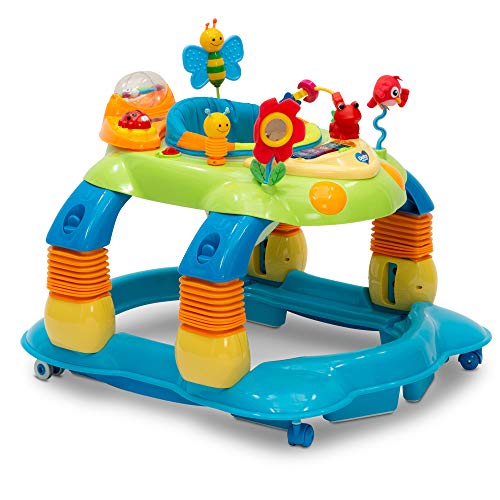
Delta Children’s Lil Play Station is a versatile 4-in-1 activity center that converts between a baby walker, rocker, stationary activity center, and a bouncer. The design promotes development through a bouncing action, 360-degree toy engagement, and reach-and-grab activities. A three-position height adjustment ensures the product can grow with the child, accommodating weights up to 25 pounds and a height of about 30 inches. It’s geared toward long-term use as the baby progresses through early milestones.
VTech Sit-to-Stand Learning Walker
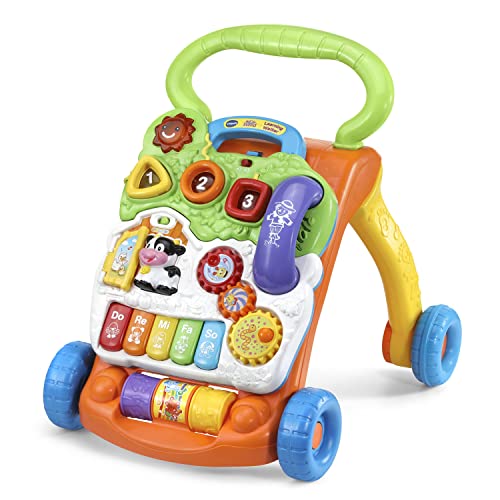
The VTech Sit-to-Stand Learning Walker features a removable tray suitable for sit-down play or on-the-run activities. Its activity center includes five piano keys for musical notes and a pretend telephone handset to encourage role-play. The walker also includes motor development boosters such as three shape sorters, light-up buttons, and colorful rollers to support early cognitive and fine motor skills. This option emphasizes independent exploration while offering adjustable play surfaces for evolving baby needs.
Buying Guide: Key Purchase Considerations
- Age and growth range: Look for adjustable height, multiple modes, and weight limits that align with your child’s development stage (6-24 months is common for many models).
- Safety features: Prioritize wide, stable bases, non-slip wheels, and a secure seat with appropriate back support. Check that toys are securely attached and do not pose choking hazards.
- Versatility vs. simplicity: Some walkers offer 4-in-1 configurations (seated, walker, rocker, bouncer), while others focus on sit-and-play or basic walking support. Consider your space and travel needs.
- Portability and storage: Foldable frames and compact designs are beneficial for small living spaces or frequent travel. Ensure the unit is easy to fold and light enough to carry.
- Toy interactions and learning content: Toys that teach letters, numbers, shapes, or music can stimulate cognitive development, but ensure they don’t overwhelm and are age-appropriate.
- Cleaning and maintenance: Removable, washable seat covers and easily wipeable surfaces simplify upkeep for babies who drool or spill.
- Weight and portability: Heavier units may be sturdier but harder to move between rooms or travel with. Balance stability with ease of use for caregivers.
- Durability and materials: Look for sturdy plastic or wood components with rounded edges, and check for parts that won’t pinch fingers or break easily.
Overall, the best choice depends on your child’s growth trajectory, space, and how you intend to use the walker. A device that supports safe sitting, encourages exploration, and offers age-appropriate activities tends to provide the most value over time. Always supervise infants during use and discontinue use when they can stand independently or show signs of fatigue.