Choosing the right sink stool helps toddlers reach the sink safely, learn good hygiene, and gain independence. This guide highlights five top options designed to be stable, easy to clean, and kid-friendly. Each product is evaluated on slip resistance, height versatility, and ease of use to support daily routines from potty training to brushing teeth.
| Product | Brand | Key Feature |
|---|---|---|
| Dreambaby Step Stool for Kids | Dreambaby | Non-slip base with contoured design for sink access |
| Forbena Toddler Step Stool | Forbena | Two-step height with slip-resistant feet |
| AJVV Toddler Step Stool | AJVV | Anti-slip surface and rubber bottom with carrying handle |
| COOSEYA 2 Step Stools | COOSEYA | No-slip bottom and double-layer height |
| HOOBRO Step Stool for Kids | HOOBRO | Non-slip pads and sturdy wood design |
Dreambaby Step Stool For Potty Training And Sink Use

The Dreambaby Step Stool features an anti-slip base and a contoured silhouette that fits around typical sink and toilet configurations. It includes 117 rubber dots to maximize traction, reducing movement on wet or slick surfaces. The stool is designed to support growing toddlers and remains sturdy yet light enough for independent use, with dimensions around 14.3″ wide, 9.6″ deep, and 5.6″ high. It bears up to 175 lb, making it durable for long-term use as children grow. The combination of a non-slip base and a compact profile makes it a versatile helper for handwashing, brushing teeth, or reaching the kitchen counter.
Forbena Toddler Step Stool For Bathroom Sink
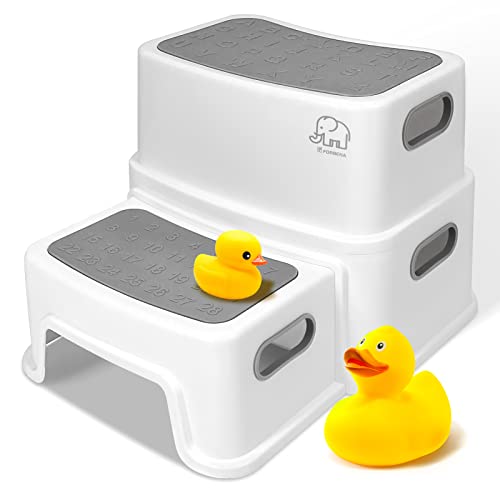
Forbena offers a two-step design with strong supporting feet and comfortable carrying handles. The stool is lightweight for easy movement between rooms and features eight slip-resistant feet to minimize sliding on tile or slick floors. It’s designed to assist toddlers from potty training to reaching the sink for handwashing, teeth-brushing, or simple kitchen tasks. The setup is straightforward, with a weight capacity around 200 lb, and assembly is described as quick and simple, allowing families to have a reliable aid ready in minutes.
AJVV Toddler Step Stool With Anti-Slip Surface

AJVV’s two-step stool emphasizes safety with an anti-slip surface and rubberized bottom edges to prevent movement. The compact size supports toddlers ages 1+ and a weight tolerance of about 170 lb. The top step is designed for comfortable footing while the bottom step encourages stable ascent. A carrying handle adds mobility for parents, helping children move the stool from bathroom to kitchen as needed. This stool is particularly suited for tasks like handwashing at the sink and reaching high counters for small chores.
COOSEYA 2 Step Stools For Kids

COOSEYA provides a double-layer design that adds height for taller tasks while maintaining a slim footprint. The bottom and top surfaces use no-slip materials to reduce slips, and edges are rounded to minimize injury risk. Its two-step structure supports kids as they grow, enabling access to sinks, toilets, or higher shelves. The stools are designed to be child-friendly yet sturdy enough for occasional adult use, offering a simple assembly process and a focus on safety during daily routines.
HOOBRO Step Stool For Kids With Non-Slip Pads

HOOBRO combines a sturdy wooden construction with practical safety features. Thick non-slip pads grip the floor, helping to prevent movement on various surfaces. The stool is designed with a broad platform and integrated handles, making it easy for children to climb and maneuver. Its rustic aesthetic blends well with home decor while providing reliable support for activities like brushing teeth, washing hands, or reaching the bathroom sink. The wood construction adds durability and a timeless look for a shared family space.
Buying Guide: What To Consider When Buying A Sink Stool For Toddlers
- Safety features: Look for non-slip bases, rubber feet, and anti-skid surfaces to minimize slips on wet floors. Avoid stools with sharp corners; prefer rounded edges.
- Height and versatility: Choose a stool that matches your child’s current height with room to grow. Some models offer two steps or adjustable heights to accommodate sinks and countertops.
- Stability and construction: Metal or high-quality plastic frames with a wide stance tend to be more stable. Wooden stools can be stylish but ensure they have slip-resistant feet and sturdy joints.
- Portability: For households moving stools between rooms, look for lightweight designs with carrying handles or easy foldability.
- Weight capacity: Ensure the stool supports your child’s current weight and a reasonable growth margin.
- Cleaning and maintenance: Smooth surfaces and minimal crevices simplify cleaning after spills or splashes.
- Use cases: Consider whether you need a stool primarily for potty training, handwashing, or reaching higher shelves, and choose a model that fits your primary use case.
- Durability and materials: Plastic stools are often lightweight and easy to clean; wooden stools offer durability and a classic look but may require more care to avoid moisture damage.
- Assembly: Some stools require tools; others are “snap-in” or ship pre-assembled. Factor in your willingness to assemble when choosing.
- Age range: Check recommended age ranges to ensure the stool aligns with your child’s development stage.
Multiple perspectives exist on whether a single-step or two-step stool is best for a given child. A two-step design can provide extra reach for taller sinks or countertops, while a single-step model may be simpler for younger toddlers still mastering balance. Non-slip features are essential for all designs, especially on slick bathroom floors. Parents should assess space constraints, as some stools fold for compact storage, while others are bulkier but offer greater stability. Material choice affects durability, cleaning ease, and interior style consistency, so balancing function with home aesthetics is advisable.