Choosing the right push walker can support safe, confident first steps while entertaining babies with engaging activities. The following selections highlight walkers that blend durable construction, age-appropriate learning, and interactive features. Each option helps with balance, coordination, and motor development as little ones move from sitting to cruising and standing. This guide compares five highly-rated push walkers to help American parents pick a model that fits their child’s pace and household needs.
Product Summary
| Product | Brand | Key Features |
|---|---|---|
| Fisher-Price Laugh & Learn Smart Stages Puppy Walker | Fisher-Price | 2 play modes, 75+ songs, 3 Smart Stages, light-up piano, rapids of activities |
| VTech Sit-to-Stand Learning Walker Blue | VTech | Detachable tray, five piano keys, shape sorters, light-up buttons |
| Fisher-Price Panda Walker | Fisher-Price | Steady Speed, 3 Smart Stages, 100+ songs and phrases, dual-side play |
| Fisher-Price Laugh & Learn Sis Walker | Fisher-Price | 2 play modes, 75+ songs, light-up keys, multiple activities |
| Skip Hop 4-in-1 Sit to Stand Walker | Skip Hop | 4 modes, 40+ activities, light-up keyboard, developmental play |
Fisher-Price Laugh & Learn Smart Stages Puppy Walker

The Puppy Walker offers two play modes that grow with baby: a sit-and-play mode and a stand-and-walk mode. It features three Smart Stages with 75+ songs, sounds, and phrases that teach the alphabet, shapes, colors, numbers, and even basic Spanish words. With seven hands-on activities—including a light-up piano, nose, roller, spinner, and a flip page—this unit supports early language and fine motor skills as children transition to upright mobility. The durable design accommodates daily use and exploratory play.
VTech Sit-to-Stand Learning Walker Blue
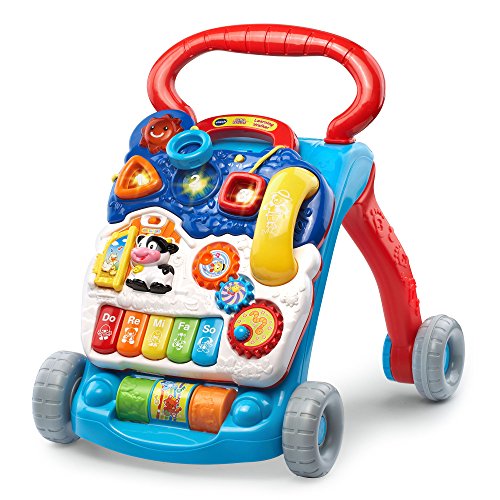
This walker is ideal for babies who can sit up and want to begin cruising. It includes a removable tray that can be detached for sit-down play and re-attached for on-the-go exploration. The activity center provides five piano keys that play musical notes and a pretend telephone for role-play, encouraging creative play. Additional features include motor development aids like shape sorters, light-up buttons, and colorful spinning rollers to help define early motor skills while guiding walking progression.
Fisher-Price Panda Walker

The Panda Walker provides a dual-side design with steady speed wheels to maintain a slower pace for beginners. It evolves with baby from sitting to pulling up and walking, supported by three Smart Stages with 100+ songs, sounds, and phrases that teach the alphabet, counting, and opposites. The panda theme adds a playful visual element while the built-in activities foster hand-eye coordination and basic problem-solving as mobility improves.
Fisher-Price Laugh & Learn Sis Walker
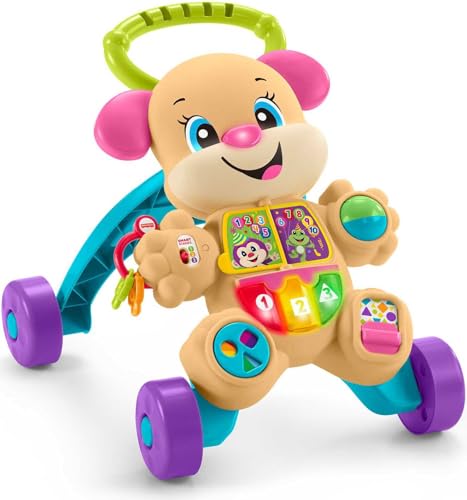
This sister walker mirrors the Puppy Walker with two play modes and a suite of activities. It features 75+ songs, sounds, and phrases across three Smart Stages and a light-up piano, nose, roller, spinner, and flip page. The setup supports interactive learning and early talking points while guiding babies through sitting, standing, and walking. Its design emphasizes durability and gentle resistance to support new walkers as they gain confidence in mobility.
Skip Hop 4-in-1 Sit to Stand Walker

The Skip Hop walker offers four modes: seated, cruising, shopping cart, and stroller. It features 40+ activities, including a light-up musical keyboard that introduces shapes and numbers. This model emphasizes developing balance, mobility, and fine motor skills through interactive features and varied play contexts. The modular design supports transitions from floor play to upright walking, making it a versatile option for growing walkers.
Buying Guide: Key Purchase Considerations
- Age and development readiness: Choose a model that aligns with your child’s current sitting, crawling, and standing capabilities. Some walkers offer transition modes that accommodate gradual progress.
- Safety and stability: Look for a broad base, sturdy frame, and smooth wheels. Non-slip surfaces and adjustable speed help prevent tipping and a cautious pace for new walkers.
- Engagement and learning features: Interactive elements such as light-up keys, music, shape sorters, and buttons can support sensory development, hand-eye coordination, and early cognition.
- Removable and washable components: Removable trays and easy-clean surfaces simplify cleanup after spills or drool, maintaining hygiene for growing toddlers.
- Portability and storage: Consider foldability or compact designs for small living spaces or travel. Lightweight models are easier to move between rooms or keep in the trunk of a car.
- Durability and materials: Sturdy plastics, reinforced assemblies, and quality manufacturing improve longevity as babies use walkers daily.
- Versatility and growth: Models offering multiple modes or adjustable height can adapt to an expanding child’s needs, providing longer usability.
- Price and value: Balance features with budget. Higher-priced options often include broader learning content and longer-term usefulness.