Choosing an infant formula when a baby has a cow milk protein allergy or other severe sensitivities requires clear information on hypoallergenic and amino acid-based options. This guide highlights five well-regarded formulas, explaining who they may help, key ingredients, and what to consider when selecting a product for sensitive newborns or older infants. All options below are designed to support digestion, immune health, and development while reducing allergy-related symptoms.
Summary of chosen products:
| Product | Brand | Type | Notes |
|---|---|---|---|
| Pepticate Baby Formula | NUTRICIA PEPTICATE | Extensively hydrolyzed formula (eHF) | Supports CMA symptom relief; includes prebiotics, nucleotides, DHA, ARA |
| Extensive HA® Hypoallergenic Infant Formula with Iron | Gerber | Extensively hydrolyzed with probiotic | Reduced allergenicity; includes B. lactis probiotic |
| Alfamino Hypoallergenic Amino Acid Based Formula | Alfamino | Amino acid-based | Designed for CMA, multiple allergies; MCT fat blend |
| PurAmino Hypoallergenic Infant Drink | Enfamil | Amino acid-based | Iron-fortified; suitable for severe CMA; supports several dietary conditions |
| Similac Alimentum with 2′-FL HMO | Similac | Hypoallergenic with HMO | Maternal-style immune support; ready-to-use |
Pepticate Baby Formula, Hypoallergenic Powdered Formula

Pepticate is a leading extensively hydrolyzed infant formula (eHF) used in CMA management. It is designed to relieve CMA symptoms such as eczema and colic. Inspired by components found in breast milk, Pepticate includes prebiotic oligosaccharides to support digestive health and immune development, nucleotides to support the immune system, and DHA and ARA to support brain and eye development. This formula is widely recognized in Europe for CMA care and is formulated to be gentle on immature digestive systems.
Pepticate features a long-standing history in CMA management, with clinical backing for symptom relief. Intended for infants with cow milk allergies, it emphasizes a digestible protein structure and immune-supporting nutrients. For caregivers seeking a hypoallergenic option that aligns with breast-milk-inspired nutrition, Pepticate offers a well-established choice.
Extensive HA® Hypoallergenic Infant Formula with Iron

Extensive HA is designed for babies with cow’s milk protein allergy (CMPA) and uses 100% whey protein broken into tiny, highly digestible pieces. It is ultra-filtered to reduce residual allergenicity and includes probiotic B. lactis to support digestive health, mirroring gut flora found in breast milk. This product aims to minimize allergic reactions while delivering essential nutrients for growth and development.
The formula focuses on hypoallergenicity with a simple protein profile and a probiotic to aid tolerance. It is a practical option for families seeking a ready-to-use or easily prepared hypoallergenic formula that supports gut health and may ease CMPA symptoms in many infants.
Alfamino Hypoallergenic Amino Acid Based Formula with Iron
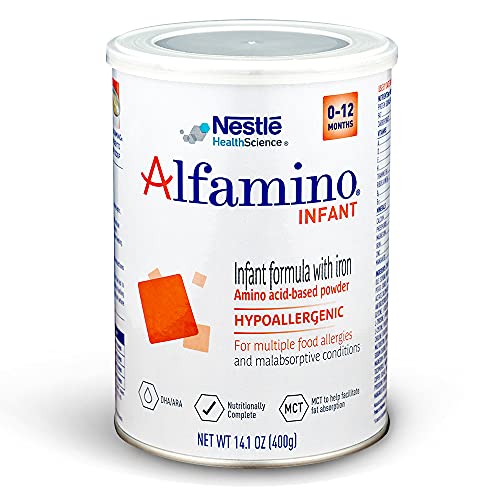
Alfamino is an amino acid-based infant formula designed for infants with cow’s milk protein allergy and multiple food allergies or malabsorption. It provides essential nutrients for growth and development and features a fat blend that includes medium chain triglycerides (MCTs) to aid fat absorption. This formula is useful for babies who cannot tolerate hydrolyzed proteins and require an elemental approach to nutrition.
As an amino acid-based option, Alfamino minimizes allergen exposure and supports infants with complex dietary needs. It can be considered when other hypoallergenic formulas fail to meet tolerance or when a complete amino acid profile is needed to manage malabsorption concerns.
PurAmino Hypoallergenic Infant Drink
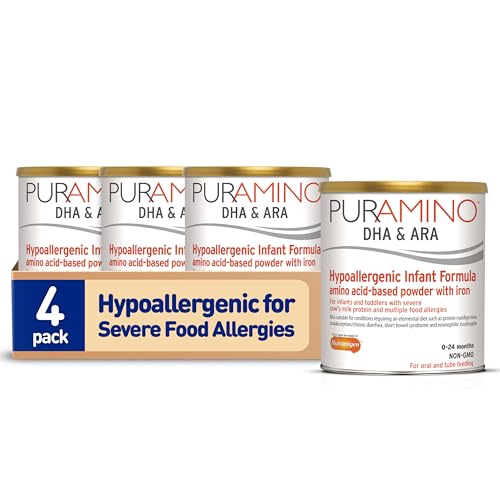
PurAmino is an iron-fortified, hypoallergenic, amino acid-based infant formula designed for dietary management of infants with severe CMA. It is suitable for other conditions that may require an elemental diet, including eosinophilic esophagitis and short bowel syndrome. This formula provides essential nutrients with a focus on minimal allergen exposure and straightforward digestion, making it a viable option for infants with complex allergic profiles.
PurAmino emphasizes versatility in dietary management, supporting infants who need an elemental approach due to severe CMA or related conditions. Its amino acid base reduces the risk of allergenicity while delivering iron and immune-supporting nutrients for growth and development.
Similac Alimentum with 2′-FL HMO Hypoallergenic Formula

Similac Alimentum is a hypoallergenic formula in which the milk protein is broken down into tiny pieces to reduce allergic reactions in most babies with CMA. It includes 2′-FL HMO to support immune system development and gut health and is designed to help reduce colic symptoms associated with protein sensitivity. This ready-to-feed option can be useful for families seeking convenience and rapid relief of symptoms in infants with protein allergies.
With Similac Alimentum, the focus is on minimizing allergen exposure while delivering immune-supportive ingredients. The inclusion of HMO and easy-to-digest protein fragments can help promote better digestion and comfort for babies with protein sensitivities and colic-related discomfort.
Buying Guide: Key Purchase Considerations And Comparisons
- Allergen profile: For CMA or severe CMA, amino acid-based formulas (e.g., Alfamino, PurAmino) present the least allergenic risk, while extensively hydrolyzed formulas (e.g., Pepticate, Extensive HA) offer a balance between tolerance and cost.
- Protein type: Hydrolyzed (partially or extensively) vs amino acid-based; amino acid formulas are typically the most hypoallergenic but can be costlier and sometimes less palatable for older infants.
- Digestive aids: Probiotics (such as B. lactis in Extensive HA) and HMOs (2′-FL in Similac Alimentum) support gut health and immune development, potentially aiding tolerance over time.
- Iron fortification: Many hypoallergenic formulas include iron, supporting healthy growth; ensure iron needs align with pediatric guidance and dietary plans.
- Feeding method: Consider readiness for tube feeding (PurAmino options note suitability for tube feeding) or ready-to-use liquid formats for convenience and consistency with caregiver routines.
- Developmental needs: DHA and ARA content supports brain and eye development; compare levels across products to align with pediatric recommendations.
- Packaging and storage: Some formulas vary by packaging (e.g., cans vs ready-to-use bottles). Heat sensitivity and storage instructions should be followed to maintain product integrity.
- Clinical guidance: Always consult a pediatrician or allergist before switching formulas, especially when managing CMA, malabsorption, or other complex conditions.
- Cost and convenience: Hydrolyzed and amino acid-based formulas can be more expensive than standard hypoallergenic formulas. Consider caregiver time, preparation, and availability.
- Variety and tolerance: If a baby demonstrates intolerance to one hypoallergenic option, pediatric guidance may help determine whether to trial an alternative formula type (hydrolyzed vs amino acid-based).
When selecting an infant formula for allergy management, balance tolerance, nutritional completeness, and caregiver practicality. These five options cover a range of hypoallergenic and amino acid-based approaches, offering pathways to support comfort, growth, and development in infants with CMA or related conditions. Always rely on healthcare professionals for tailored recommendations based on a baby’s medical history and symptoms.