Parents seeking safe, gentle moisture control for their little one’s delicate skin can turn to cornstarch-based powders. This guide reviews five popular options that use naturally derived cornstarch to help keep skin dry, comfortable, and soft between diaper changes. Each product is evaluated on hypoallergenic formulas, added soothing ingredients, and freedom from common additives.
| Product | Brand | Key Benefit | Size |
|---|---|---|---|
| Johnson’s Baby Powder with Cornstarch | Johnson’s Baby | Aloe & Vitamin E for delicate skin; free of parabens | 15 oz |
| Caldesene Dry & Comfy Baby Powder | Caldesene | Moisture barrier with zinc oxide; talc-free | 5 oz |
| HealthWise Corn Starch Baby Powder | HealthWise | Aloe + Vitamin E; talc-free; moisture control | 15 oz |
| Era Organics Talc-Free Baby Powder | Era Organics | Arrowroot, calendula, and corn starch blend; fragrance-free | 3 oz |
| Burt’s Bees Baby Dusting Powder | Burt’s Bees | 100% natural origin; talc-free; mild aroma | 7.5 oz |
Johnson’s Baby Powder With Cornstarch

Johnson’s Baby Powder with Naturally Derived Cornstarch combines cornstarch, aloe, and vitamin E to create a gentle formula designed for a baby’s delicate skin. The powder is hypoallergenic, dermatologist-tested, and free from parabens, phthalates, dyes, and sulfates. Its light, silky texture absorbs moisture quickly, helping to keep skin dry and soft after baths or diaper changes. This option is clinically described as mild and suitable for ongoing use on sensitive skin, making it a common standby in homes prioritizing gentle care.
Caldesene Dry & Comfy Baby Powder
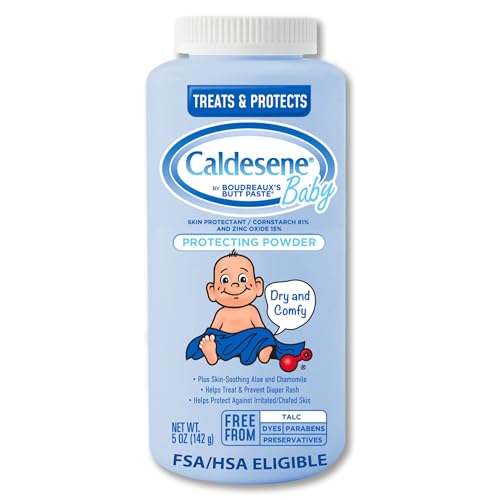
Caldesene Dry & Comfy Baby Powder features zinc oxide alongside corn starch to form a protective barrier that helps repel moisture and guard against diaper rash. The formula is talc-free and includes soothing aloe and chamomile to calm delicate skin. This medicated approach targets moisture-related irritation while remaining gentle enough for everyday use. It’s presented as a practical option for babies who experience frequent moisture exposure in diaper areas.
HealthWise Corn Starch Baby Powder

HealthWise Corn Starch Baby Powder uses a simple, safe cornstarch-based formula with aloe and vitamin E. It’s free from parabens and phthalates, focusing on moisture absorption to keep skin cool and comfortable. The product is positioned for regular use after baths and diaper changes, helping to maintain soft, smooth skin throughout the day. The emphasis is on gentle care suitable for sensitive infant skin while avoiding common chemical additives.
Era Organics Talc-Free Organic Baby Powder
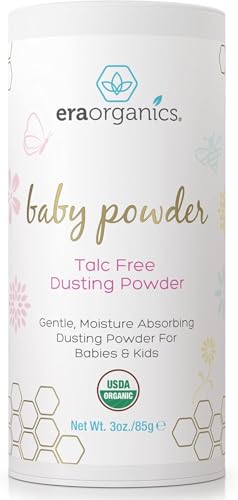
Era Organics offers a talc-free formula made with USDA organic standards for a gentle, fragrance-free experience. The blend includes arrowroot powder to absorb moisture, calendula for soothing properties, and corn starch for additional moisture control. The product is marketed as suitable for newborns and toddlers, and emphasizes dermatologist testing and parental assurances. It is presented as a conscious choice for families seeking organic, chemical-free options without synthetic fragrances or dyes.
Burt’s Bees Baby Dusting Powder

Burt’s Bees Baby Dusting Powder uses a 100% natural origin, talc-free formula built on cornstarch for moisture absorption. It is designed to keep skin dry and comfortable between diaper changes with a mild, light scent. The product is marketed as free from parabens, phthalates, petrolatum, and SLS, aligning with a minimal additives approach for baby skin care. It is suitable for parents who prefer a simple, natural option in their baby care routine.
Buying Guide
Key considerations when choosing a corn starch powder for babies include safety, skin sensitivity, and moisture control. First, confirm that the product is talc-free and free from potentially irritating additives such as parabens, phthalates, fragrances, and dyes. Hypoallergenic and dermatologist-tested claims can indicate suitability for sensitive skin, but real-world results may vary by infant.
Second, evaluate the moisture-absorption formula. Cornstarch-based products differ in texture and blend; some include soothing botanicals like aloe or calendula that may help with irritation, while others emphasize barrier-forming ingredients like zinc oxide for diaper-area protection. Parents should weigh whether they want fragrance-free options or those with a mild scent for comfort.
Third, consider packaging size and frequency of use. For newborns, smaller 3–5 oz containers can be convenient for travel, while larger 15–22 oz bottles may be cost-effective for regular home use. If a family uses multiple daily changes, a format that minimizes mess and eases application can be advantageous.
Fourth, read the brand’s safety history and third-party validations. Reputable brands with pediatrician or dermatologist endorsements tend to provide clearer guidelines for use on infants. Some products also promote organic or natural ingredient claims, which can appeal to parents seeking particular filtration of ingredients.
Finally, usage context matters. For diaper rash-prone babies, a formula with barrier-protective components like zinc oxide may offer extra protection. For everyday skin care and moisture absorption, a light, silky cornstarch powder without added actives can be sufficient. Always apply powder away from the baby’s face to avoid inhalation risk and use sparingly to prevent buildup.