Biking with a little rider requires careful selection of a child bike seat that prioritizes safety, comfort, and compatibility with your bike. This guide reviews five popular infant-friendly seats, highlighting their mounting styles, padding, restraints, and adjustability. Whether you prefer front-mounted seats or rear options, these picks cover a range of ages and riding styles to help you choose confidently for weekend adventures and daily commutes.
Chosen products at a glance
| Product | Brand | Key Feature |
|---|---|---|
| Schwinn Deluxe Child Bike Carrier | Schwinn | 3-point harness, foot wells, rear-mounted safety padding |
| Ercabikker Child Bike Seat – Front Mount | Ercabikker | Front-seat design with padded backrest and armrests for safety |
| Bell Mini Shell Front Carrier | BELL | Ventilated, secure 3-point harness, easy installation |
| Thule Yepp 2 Rear Rack Mount | Thule | Adjustable footrests, universal rack mount for easy mounting |
| Peg Perego Orion Front Mount | Peg Perego | One-click removal, adjustable front footrests |
Schwinn Deluxe Child Bike Carrier

Schwinn’s rear-mounted seat accommodates one child aged 1+ with a maximum weight of 40 lb. It emphasizes safety with a quick-release 3-point harness, a padded cross bar, and leg restraints with safety straps. Custom comfort padding supports the child’s back, and cushioned seat pads provide a comfortable ride. The seat includes adjustable footwells and a removable headrest for added support.
Ercabikker Child Bike Seat – Front Mount

The Ercabikker front-mount seat fits general mountain bikes with crossbars of specific diameters and offers a padded seat and backrest for comfort. The unit includes armrest handrails and a footrest, enhancing safety for young riders. Construction uses PU leather, sponge cushioning, stainless steel footrests, and steel armrests for durability and easier cleaning.
Bell Mini Shell Front Carrier
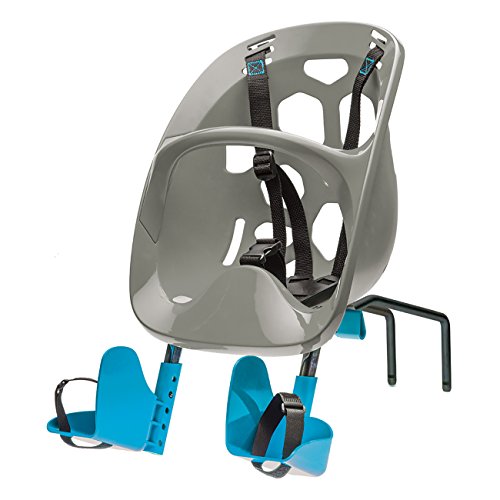
The Bell Mini Shell Front Carrier offers easy, secure installation with ventilated design for comfort. Its 3-point harness system secures the child during rides, making it a compact option for front-mount setups. The shell-style design helps protect small riders while keeping them within easy view for the parent rider.
Thule Yepp 2 Rear Rack Mount

Thule Yepp 2 rear-mounted seat features an adjustable footrest and footstraps to fit growing children. It is available in various configurations (frame, rack, and front versions) with a universal rack mount system for straightforward installation on most bikes. The seat is designed to provide a secure, comfortable ride behind the rider.
Peg Perego Orion Front Mount

Peg Perego Orion front-mount seat supports bikes with frames ranging from 32mm to 52mm in diameter. The installation is designed to be quick and simple with a one-click system. Three-position adjustable footrests help the seat grow with the child, balancing comfort and safety on longer rides.
Buying Guide: Key Considerations For Selecting A Baby Bike Seat
Choosing the right infant bike seat involves evaluating mounting type, safety features, comfort, fit with your bicycle, and the child’s age and weight. Front-mount seats keep the child within the rider’s line of sight, which some find reassuring, while rear-mount seats can offer better weight distribution for longer rides and larger children. Important factors include:
- Age and weight limits: Ensure the seat supports your child’s current weight and anticipated growth. Some seats are suitable from 6 months to 3–4 years, others up to 40–110 lb with varying age ranges.
- Mounting style: Front-mounted seats enable front-facing observation and easier interaction, but require compatibility with your bike’s frame. Rear-mounted seats often work with more bikes and racks but may change handling.
- Harness and restraints: A secure 3-point or more harness system reduces movement. Check for padded straps, headrests, and leg restraints for added security.
- Padding and comfort: Cushioned seats and backrests improve comfort on longer rides. Removable, washable covers simplify maintenance.
- Foot protection: Adjustable footrests ensure feet stay clear of the chain and pedals. Look for padded or curved feet guards to prevent injuries.
- Ventilation and visibility: Breathable materials and open designs help with comfort in warm weather. Some seats offer visibility aids for easy monitoring by the rider.
- Durability and materials: Durable frames, corrosion-resistant hardware, and easy-to-clean upholstery extend the life of the seat.
- Installation and compatibility: Verify crossbar diameters, seat height, and rack compatibility. Some carriers require specific mounting hardware or adapters.
When evaluating options, consider your typical riding scenarios—short neighborhood trips versus longer family rides—and how the seat’s weight, installation complexity, and safety features align with your bike and riding style. Reading product manuals and customer reviews can provide real-world insight into fit, ease of use, and durability.