Yes—finding the right toothbrush for a 1-year-old is essential for establishing healthy brushing habits early. This guide highlights five child-friendly options designed for small mouths, soft bristles, and easy grips. Each product helps parents support budding brushing skills while safeguarding delicate gums. The top picks are ideal for parents seeking beginner tools that are gentle, age-appropriate, and simple to use for toddlers and caregivers alike.
| Product | Brand | Best For |
|---|---|---|
| Dr. Brown’s Infant-to-Toddler Toothbrush, Giraffe | Dr. Brown’s | First toothbrush experience; tiny hands |
| Dr. Brown’s Infant-to-Toddler Toothbrush, Giraffe & Strawberry Toothpaste Set | Dr. Brown’s | First brushing with fluoride-free toothpaste; learning with paste |
| Dr. Brown’s Infant-to-Toddler Toothbrush Set, Soft & Gentle 4-Pack | Dr. Brown’s | Growing teeth; family option; multi-pack |
| Dr. Brown’s Baby and Toddler Toothbrush, Green and Orange Dinosaur 2-Pack | Dr. Brown’s | Engaging designs; easy grip |
| Trueocity Baby Toothbrush 12 months and up | Trueocity | Small hands; teething-friendly features |
Dr. Brown’s Infant-to-Toddler Toothbrush, Giraffe

Best for: Parents introducing brushing to a 1-year-old. The small head and easy-grip handle are designed for tiny mouths and little hands, promoting independent brushing over time. The soft bristles gently clean first teeth and gums without irritation.
Why selected: This training toothbrush focuses on safe bite-sized brushing experiences, helping caregivers guide their little one with confidence. Its giraffe-friendly design adds engagement for kids just learning to brush.
Caution: This is a training toothbrush—replacement may be needed as teeth grow and brushing demands increase.
Dr. Brown’s Infant-to-Toddler Toothbrush, Giraffe & Strawberry Toothpaste Set

Best for: Parents who want a ready-to-use brushing routine with fluoride-free toothpaste. The set pairs a tiny toothbrush with a pea-sized amount of fluoride-free toothpaste to introduce brushing technique safely.
Why selected: The combination supports early brushing skills and builds routine, while the toothpaste option helps clean gently without fluoride. The trainer toothbrush remains comfortable for small grips.
Caution: Fluoride-free toothpaste can be less effective for cavity prevention over the long term; consult pediatric dental guidance for your child’s needs.
Dr. Brown’s Infant-to-Toddler Toothbrush Set, Soft & Gentle 4-Pack

Best for: Families seeking a value multi-pack that grows with a child’s oral care needs from 0–3 years. Each toothbrush features soft bristles and a kid-friendly grip to support independent brushing.
Why selected: The four-pack ensures replacements align with dental development and shedding of primary teeth, making it easier to maintain consistent cleaning habits without frequent purchases.
Caution: With multiple colors, ensure you rotate brushes with your child’s preferences to keep brushing fun and consistent.
Dr. Brown’s Baby and Toddler Toothbrush, Green and Orange Dinosaur 2-Pack

Best for: Kids who respond well to playful animals while transitioning to independent brushing. The dinosaur design supports imaginative brushing sessions for 1-year-olds starting to brush on their own.
Why selected: The easy-to-hold shape and super-soft bristles help protect tender teeth and gums, while the two-pack provides a backup option as little ones grow and switch to new brushing routines.
Caution: Design variety may affect consistency; aim to keep to a routine rather than random brushing sessions.
Dr. Brown’s Infant-to-Toddler Toothbrush, Elephant, Pink

Best for: Parents seeking a friendly, soft-bristled option that’s sized for small mouths. The elephant design can help engage toddlers who are just starting to brush independently.
Why selected: This toothbrush combines gentle cleaning with an approachable shape that encourages daily brushing and fine motor skill development in toddler hands.
Caution: As kids grow, you may need to upgrade to larger brushes to accommodate new teeth and longer brushing sessions.
Trueocity Baby Toothbrush 12 months and up
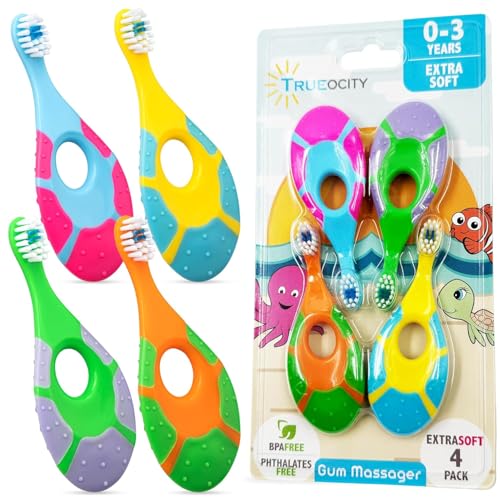
Best for: Parents who want a compact, easy-to-grip option designed for little hands. The 12-months-and-up range supports teething and early brushing habits with a child-friendly design.
Why selected: The 4-pack or multi-color approach can keep brushing fresh and engaging while ensuring replacements are readily available as teeth develop in the first years.
Caution: The design emphasizes hand-feel and safety; always supervise brushing to ensure correct technique and avoid choking hazards.
Buying Guide: Key Considerations For 1-Year-Old Toothbrushes
- Suitability for age: Look for brushes labeled 0–3 years or “training” brushes with tiny heads and extra-soft bristles.
- Grip and handle: Choose a design with easy-to-hold handles to build independence for little hands.
- Bristle softness: Ultra-soft bristles protect tender gums and emerging teeth while effectively cleaning surfaces.
- Design engagement: Fun animals or bright colors can help motivate daily brushing and establish routines.
- Cleaning routine: Some sets pair brushes with fluoride-free toothpaste; consider whether fluoride is appropriate per pediatric guidance.
- Hygiene practices: If buying a multi-pack, replace brushes regularly to maintain hygiene as teeth grow and brush heads wear.
FAQ
- Q: How often should a toothbrush be replaced for a 1-year-old? A: Replace when bristles become splayed or after 3–4 months of use, whichever comes first.
- Q: Is fluoride toothpaste safe for babies? A: For 1-year-olds, many pediatric guidelines recommend fluoride-free toothpaste; always follow your pediatrician’s advice.
- Q: Should a parent supervise brushing every time? A: Yes, especially in the early stages, to model technique and ensure safe handling.
- Q: What features matter most in a training toothbrush? A: Small head, ultra-soft bristles, and an easy-to-grip handle that fits little hands.
- Q: Are multi-pack toothbrush sets worth it? A: Yes, they provide replacements as teeth grow and help maintain consistent oral care routines.
- Q: When should we switch to a larger toothbrush? A: As soon as the toothbrush no longer fits comfortably in the child’s mouth or the brushing duration increases beyond a minute.