When buying a sit-to-stand baby walker, you want a safe, engaging toy that supports early mobility and development. This guide highlights five top picks that suit different needs—from durable wooden designs to feature-rich activity centers. Each entry explains who it’s best for, why it stands out, and any notable limitations to consider. Ideal buyers include first-time parents focusing on stability, caregivers seeking multi-use activity centers, and families wanting portability without sacrificing safety.
Overview of chosen products
- CutERabit Sit to Stand Baby Walker — Best for multi-stage growth and versatility.
- Fisher-Price Laugh & Learn Smart Stages Sis Walker — Best for educational content and evolving play.
- VTech Sit-to-Stand Learning Walker (Blue) — Best for light, modular play and on-the-go use.
- QDRAGON 3 in 1 Baby Walker and Activity Center — Best for 3-in-1 versatility and weight customization.
- VTech Sit-to-Stand Learning Walker (Lavender) — Best for color variety and consistent development features.
Below is a quick table to compare key aspects of the top picks.
| Product | Best For | Notable Feature | Potential Limitation |
|---|---|---|---|
| CutERabit Sit to Stand Baby Walker | Early-stage walkers; multi-surface use | Removable activity panel; two-speed wheels | Assembly required for table mode |
| Fisher-Price Laugh & Learn Sis Walker | Education-focused play; growing with child | 75+ songs in 3 stages | Music-heavy, may be noisy for naps |
| VTech Sit-to-Stand Learning Walker (Blue) | Portable, simple play; carpet/bare floor | Detachable tray; multiple learning modes | Plastic construction may show wear over time |
| QDRAGON 3 in 1 Walker | Parents seeking multi-mode flexibility | Detachable entertainment panel; weight add option | 3-in-1 design can be complex |
| VTech Sit-to-Stand Learning Walker (Lavender) | Colorful, consistent development tools | Same core features as blue variant | Similar limitations as other plastic walkers |
CutERabit Sit to Stand Baby Walker
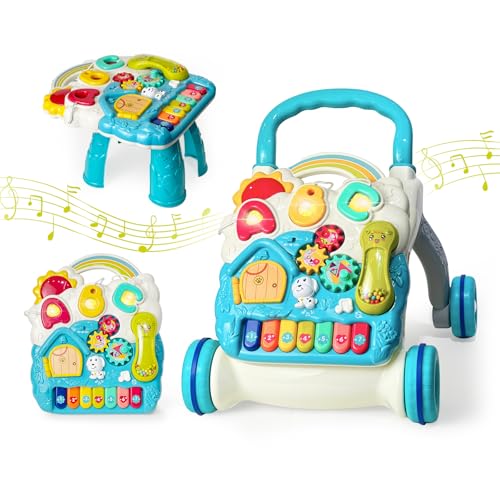
The CutERabit model combines a sit-to-stand walker with a detachable activity panel that can become a separate table. It supports infants from about 6 months up to learning to stand at 9+ months. Best for families who want one device that grows with the child, this walker emphasizes a sturdy triangle frame and anti-slip features for stability. Two-speed options let caregivers tailor movement as the child progresses. A removable panel designed for use on a crib or playpen adds portability and versatility. Caution: ensure supervision during use on uneven surfaces to prevent tipping during early steps.
Fisher-Price Laugh & Learn Smart Stages Sis Walker
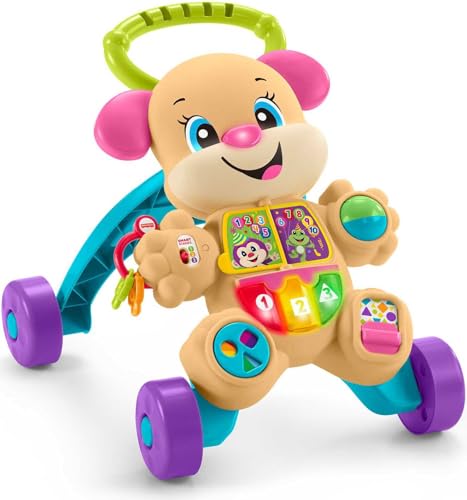
This walker grows with your child through three Smart Stages and more than 75 songs, sounds, and phrases. It blends music with learning, covering the alphabet, shapes, colors, and numbers, plus Spanish words. With seven hands-on activities including a light-up piano and a nose activity, it’s well-suited for babies who enjoy interactive, song-led play. Best for parents prioritizing educational content and sibling-friendly multi-sensory experiences. Limitation: volume can be high; consider a quieter playtime setup if noise is a concern.
VTech Sit-to-Stand Learning Walker (Blue)
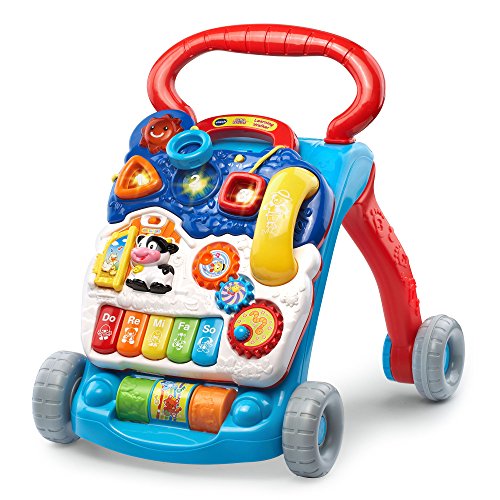
This model emphasizes a removable tray and a detachable panel, ideal for babies who can sit up and enjoy on-the-go play on carpet or bare floors. Five piano keys provide auditory training, alongside a toy phone to foster imaginative role-play. With shape sorters, light-up buttons, and colorful rollers, it helps define motor skills while supporting busy early explorers. Best for: parents needing a straightforward, dependable walker with clear developmental cues. Caution: the plastic build may show signs of wear with heavy use over time.
QDRAGON 3 in 1 Baby Walker and Activity Center

The QDRAGON 3 in 1 design transitions from a sit-to-stand walker to an entertainment table and a hangable activity center. This model emphasizes brain development and coordination through features like a turning cube, shape blocks, colorful gears, and an elephant-shaped electronic piano. The stable triangle frame and the optional weight through a water tank addition improve stability and forward movement. Best for families who want a versatile, long-term toy that adapts as the child grows. Limitation: setup and switching modes may take more time than single-purpose walkers.
VTech Sit-to-Stand Learning Walker (Frustration Free Packaging) – Lavender
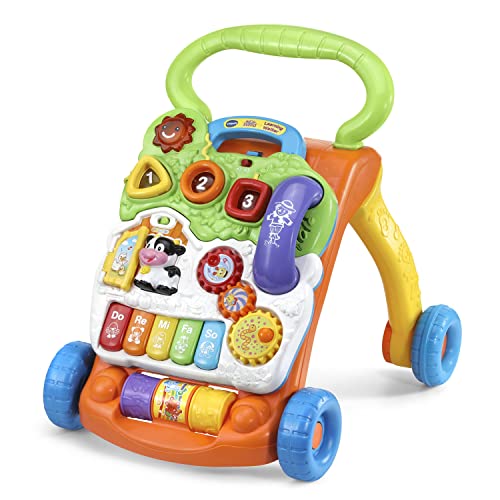
This lavender variant shares the same core features as the blue model: detachable panel, five musical keys, a pretend phone, and motor-skill-building activities. It offers the same developmental benefits in a different color option, which can help with visual appeal in a multi-child household or to coordinate with nursery decor. Best for buyers who prefer pastel tones or want a consistent learning experience across color variants. Caution: color preference should not overpower practical needs like stability and panel versatility.
CUTE STONE Sit to Stand Learning Walker

The CUTE STONE model offers a 2-in-1 approach with a push walker and a detailed activity center. It includes a detachable activity panel with shape recognition blocks, a colorfully themed electronic organ, turnable gears, and a detachable basketball frame. The design emphasizes fine motor skills, color and shape recognition, and hand-eye coordination. Best for: parents seeking a highly interactive panel experience and a robust learning toy that doubles as a walker. Limitation: multi-feature panels can be harder to clean and assemble for very small babies.
Bautia Wooden Baby Walker

The Bautia wooden walker uses a Montessori-inspired approach with a natural wood construction and smooth edges. It includes a lively interactive panel, a rolling letter wheel, xylophone, flip board, and tracking game, designed to support hand-eye coordination and cognitive development. Best for parents who prefer a natural, wood aesthetic and a quieter, floor-friendly option. The rubber wheels help protect floors, but wood might be heavier to move between rooms and may require regular maintenance to keep surfaces smooth.
Buying Guide
Key purchase considerations for sit-to-stand baby walkers:
- Safety and stability: Look for sturdy triangle frames, anti-slip features, and a low center of gravity to minimize tipping during first steps.
- Age and growth support: Choose a model that transitions from sit-to-stand to stand-and-walk as the child grows, or offers detachable activity panels that remain engaging as they age.
- Mobility and surface compatibility: Consider wheels that perform well on carpet and hard floors; check for adjustable speeds to match your child’s development.
- Educational value: If learning content matters, prefer walkers with integrated music, shapes, colors, and language activities. Balance with any noise considerations for naps.
- Maintenance and cleaning: Removable panels and washable covers are a plus. Wooden models may require more care to maintain smooth surfaces.
- Portability and storage: Detachable components and compact designs help when moving the walker between rooms or storing when not in use.
Choosing the right option depends on your family’s priorities: multi-function use, educational features, or a wooden, natural look. Consider your space, noise tolerance, and how long you expect the walker to stay in use as your child develops walking and motor skills.
FAQ
- What age should my child start using a sit-to-stand walker? Answer: Typically around 6 months to 9 months, when the child can sit up and begin to push up to stand, with supervision at all times.
- Are sit-to-stand walkers safe for use on carpet? Answer: Yes, many models are designed for carpet and hard floors, but always supervise and ensure wheels are appropriate for your flooring type.
- Do walkers help with walking development? Answer: They can support balance and leg strength, but should be part of a broader activity plan including floor play and floor time exercises.
- Can walkers be used for twins or multiple children? Answer: Some walkers offer compact designs or single-use panels; consider models with removable panels that can be used in different modes for shared use.
- Is wood better than plastic for walkers? Answer: Wooden walkers often provide a natural aesthetic and quieter operation, while plastic models can include more interactive features and light-up functions.
- What maintenance is needed? Answer: Regular cleaning of panels and toys, checking for loose screws, and ensuring wheels roll smoothly on all surfaces.