The best sit-to-stand activity table answers a common buyer question: which table grows with a child from early sitting to standing play? This guide highlights five popular options, each suited to different developmental stages and spaces. Read on to find the right fit for infants starting around 6 months through toddlers who are cruising and walking. The selections prioritize safe materials, engaging activities, and clear growth paths from floor play to stand-and-play setups.
| Product | Best For | Main Benefit |
|---|---|---|
| VTech Sit-to-Stand Learn and Discover Table, Pink | Babies 6+ months to toddlers | Two-way learning table that grows with the child |
| VTech Magic Star Learning Table, Yellow | Young beginners who love sounds and lights | Six bilingual activities for early language skills |
| Sit to Stand Baby Walker, Blue (Cuterabit) | Infants learning to stand and walk | Removable activity panel with two-speed push walker |
| LeapFrog Little Office Learning Center, Green | Preschoolers seeking pretend play and early coding basics | Interactive laptop, phone, globe with 27 touch points |
| Skip Hop Explore & More Activity Center | Infants to early walkers needing a versatile 3-stage center | 360° seat, 25+ activities, music and discovery |
Note: Each product below has distinct strengths. Consider space, age range, and whether you want a stationary activity surface or a mobile walker that transitions to a toddler table. The selections below emphasize objective, factual descriptions and practical buyer guidance.
VTech Sit-to-Stand Learn and Discover Table, Pink
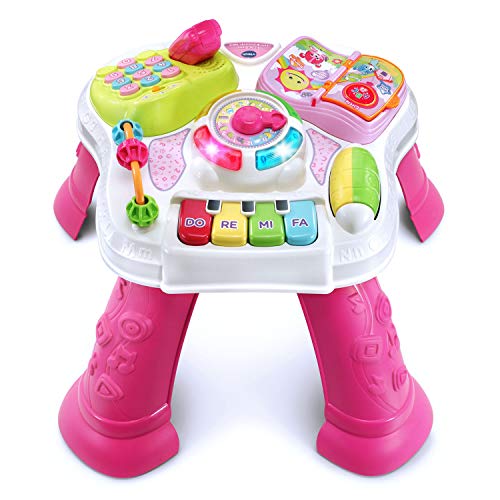
This table begins as a floor toy and shifts to a two-way learning table, making it suitable for infants 6+ months and growing toddlers. The interactive electric panel includes six learning stations, supporting early language, motor, and cognitive skills. Best for families seeking a compact, evolving play surface that encourages pretend play and early problem-solving. Caution: Small parts near the edge may require supervision for very young children.
VTech Magic Star Learning Table (Frustration Free Packaging), Yellow
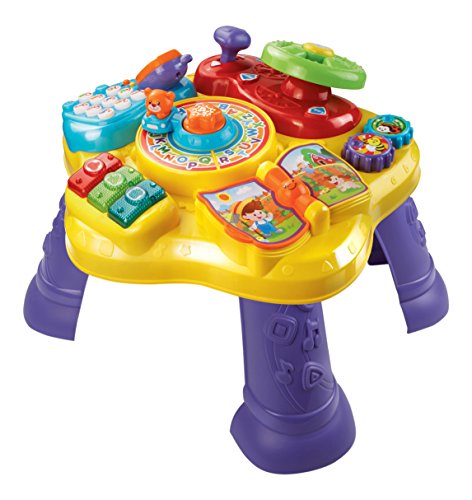
Best for active, language-loving beginners who enjoy musical interactions. The table offers six bilingual activities in English and Spanish, plus a steering wheel, flipping book with nursery rhymes, and gears that strengthen fine motor skills. It’s a great fit for households prioritizing bilingual exposure and multi-sensory play. Limitation: Some parents report that certain activities are smaller and may require close supervision for younger siblings.
Sit to Stand Baby Walker, Blue (Cuterabit)
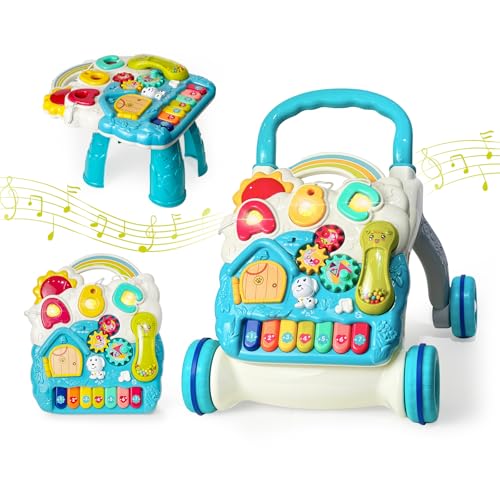
Best for growing infants who are practicing standing and early walking. This unit combines a removable activity panel, a two-speed push walker, and a stable triangle-frame design to reduce tipping. It supports stand-to-walk progression with a detachable panel that can be used separately or attached to a crib or playpen. Better for parents who want a single piece that transitions through several early milestones. Caution: The walker is relatively tall; ensure doorways and room layout accommodate safe maneuvering.
LeapFrog Little Office Learning Center, Green
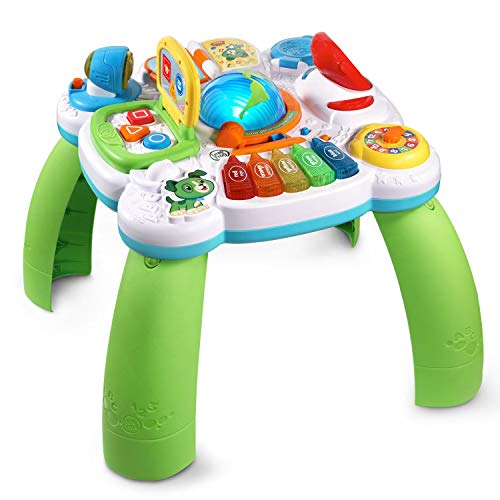
Best for preschoolers who enjoy role-play and early computer-themed activities. The desk includes a laptop, phone, globe, and 27 electronic touch points to simulate real-work scenarios and global exploration. It supports interactive learning modes for Explore, Learn, and Music, and helps with shape and animal recognition when the screen reveals graphics. Choose this if your child thrives on pretend work environments and multi-sensory feedback. Limitation: The setup is more desk-like and may not suit minimal-playroom layouts that favor open floor space.
Skip Hop Explore & More Activity Center
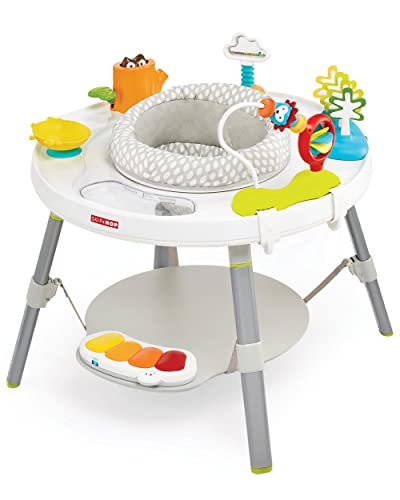
Best overall for versatility across growth stages. This center grows from sit-and-play to a 360° rotating seat with 25+ activities and a discovery window that encourages cause-and-effect learning. The musical light-up piano adds auditory and visual stimulation, while the clip-on toys and adjustable toy loops customize play. It’s well-suited for families seeking a long-lasting, all-in-one activity hub. Caution: Some users note assembly can be time-consuming due to multiple pieces and settings.
Buying Guide: Key Considerations For Sit-To-Stand Activity Tables
Age and growth trajectory: Look for products designed to transition from floor play to standing use. The most effective options keep a child engaged across several developmental stages.
Space and footprint: Measure your play area. Some tables are compact, while others include large bases or multi-piece assemblies. Choose a model that fits your room without obstructing pathways.
Learning features: Prioritize activities that support language development, fine motor skills, and cause-and-effect understanding. Consider bilingual options if language exposure is a goal.
Safety and materials: Check for sturdy construction, rounded edges, and non-toxic finishes. Removable panels or pieces should be easy to operate without pinching or trapping small fingers.
Age range and weight limits: Confirm the recommended age range and the child’s weight tolerance for standing play versus seated activities. A table that accommodates longer use as the child grows is ideal.
Durability and portability: If you expect to move the table between rooms or pack it for travel, consider lightweight designs with secure locking mechanisms for height-adjustable features.
Frequently Asked Questions
- What is a sit-to-stand activity table? A table designed to support early sitting, standing, and playing, with activities that evolve as a child grows.
- Which age should I start with a sit-to-stand table? Many models target 6 months and older, transitioning to toddler use as walking or cruising begins.
- Are these tables safe for toddlers who are learning to walk? Yes, many models include sturdy bases, non-slip feet, and age-appropriate activities to reduce tipping risk.
- What features maximize developmental learning? Story-telling prompts, language activities, fine motor tasks, and cause-and-effect play with lights and sounds.
- Should I choose a walker or a stationary table? A walker supports early walking skills, while a stationary table often provides more standing-and-playing opportunities as the child grows.
- How should I clean these products? Wipe surfaces with a damp cloth and mild detergent. Check manufacturer guidance for any removable parts noted for cleaning.