Direct answer: Rubber-tipped baby spoons are best for gentle gums, heat warning, and easy self-feeding. This guide highlights top picks ideal for new eaters, toddlers, and busy parents. Each product is chosen for gum safety, comfortable grips, and practical features that support learning to eat independently.
The following table summarizes the five products featured below, focusing on who they are best for and why they stand out.
| Product | Brand | Best For | Key Reason |
|---|---|---|---|
| Nuby 2-in-1 Hot Safe Feeding Spoons | Nuby | First foods for 4+ months, safety-conscious parents | |
| First Essentials by NUK Soft-Bite Spoons | NUK | Home and travel feeding sets | |
| Munchkin Soft Tip Baby Spoons | Munchkin | Colorful, budget-friendly starter set | 12-pack with soft spoon bowls |
| Eascrozn First Stage Silicone Spoons | Eascrozn | First stage self-feeding, color-differentiated | |
| Dr. Brown’s TempCheck Spoons | Dr. Brown’s | Temp-sensitive feeding for safety |
Nuby 2-in-1 Hot Safe Feeding Spoons

Best for: Parents introducing first foods to babies around 4+ months. The long-handled design provides a stable feeding grip for caregivers, and the color-changing tip serves as a visual safety cue for hot foods. Soft spoon edge protects tender gums and teeth while encouraging gentle feeding. This set reduces plastic waste through reusability.
Why selected: It combines heat-indicator safety with ergonomic handling. The 4-pack offers value for households needing multiple spoons for feeding at home and on the go. Caution: Tip color-change may vary with lighting; always test temperature before serving.
First Essentials by NUK Soft-Bite Infant Spoons

Best for: Families seeking a compact set that includes multiple feeding tools for home or travel. The soft bite design reduces gum pressure and makes chewing comfortable as babies explore textures. The assortment supports staged feeding with mash and serve options.
Why selected: Offers a practical combination of 4 soft spoons and a mash-and-serve bowl in one kit. The updated branding ensures continued availability of trusted NUK products. Caution: Packaging and color variations may occur due to new branding.
Munchkin Soft Tip Baby Spoons, 12 Pack
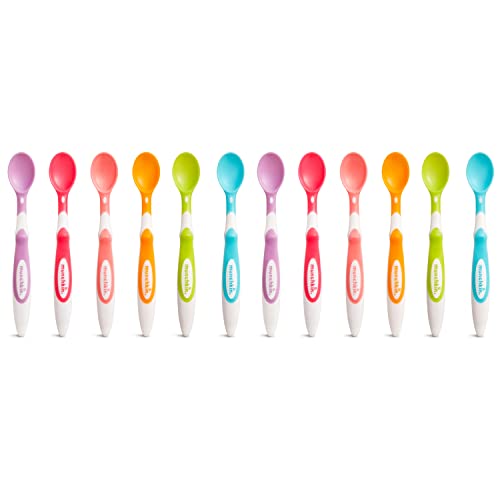
Best for: Budget-minded households needing multiple spoons for daily use or daycare settings. The soft, rounded bowls are gentle on gums and the ergonomic handles help small hands grip comfortably.
Why selected: The 12-pack provides affordability and variety, with a durable, BPA-free design. Caution: Color variety may vary between batches; some colors may be brighter than others, which can influence grip preferences.
Eascrozn First Stage Silicone Spoons

Best for: Parents seeking color-differentiated spoons that promote independent self-feeding around 6 months and up. The six-pack assists with hand-eye development and color-coding for meal planning.
Why selected: 100% food-grade silicone, BPA-free, and heat-resistant. Spoons are not afraid of hot or cold foods and are easy to differentiate by color. Caution: Some users may prefer larger heads for older babies; check head size against your baby’s mouth.
6-Piece Silicone Baby Feeding Spoons by NETANY

Best for: Parents wanting a stage-appropriate, soft-tip option with durable silicone that stands up to frequent use. The six-color set helps with meal-time routines and self-feeding practice.
Why selected: 100% food-grade silicone, BPA-free, and heat-tolerant. The soft, pliable tips protect gums while supporting easy self-feeding. Caution: Some colors may appear muted, which could influence visual preferences for some babies.
Munchkin Gentle Dip Baby Spoons

Best for: Early self-feeding or baby-led weaning where a flat head helps with picking up soft foods. The set includes multiple stage spoons designed to grow with the child.
Why selected: Ergonomic, flat-head design supports early self-feeding, and the three-pack offers practical value. Caution: Stage compatibility varies; ensure you choose the correct stage for your baby’s age and development.
Buying Guide
- Material safety: Look for BPA-free, food-grade silicone or soft-tip plastic. Silicone spoons resist heat and are gentle on gums.
- Heat awareness: Spoons with heat-indicator tips or color changes help prevent feeding with hot foods.
- Grip and size: Long handles and small heads suit small hands and family feeding dynamics. Ensure the spoon head size fits your baby’s mouth comfortably.
- Durability and cleaning: Dishwasher-safe options simplify busy routines. Durable materials withstand repeated boiling or sterilization.
- Color-coding: Color-differentiated sets aid independent feeding and meal planning for multiple kids or stages.
- Value and set composition: Multi-packs support households with frequent meals or daycare needs, but check if included accessories meet your needs (mash bowls, lids, etc.).
FAQ
- Are rubber-tipped spoons safer for babies? Rubber-tipped spoons are gentler on gums and teeth, reducing irritation during early feeding and teething.
- Do heat-indicator spoons actually prevent burns? Heat-indicator spoons provide a visual cue to avoid hot food, but always test the temperature before feeding.
- What age should I use silicone spoons? Silicone spoons are suitable from around 6 months and up, when babies begin self-feeding or baby-led weaning.
- Can these spoons be boiled or sterilized? Most silicone spoons are boil-safe or dishwasher-safe, but always check the product label for cleaning instructions.
- Is a larger spoon better for older babies? A larger spoon head may be harder for younger babies; choose the size that fits comfortably in your child’s mouth.
- How many spoons should I buy? A mix of 6–12 spoons is typically enough for daily feeding cycles and travel.