Choosing the right pacifier for a 6- to 18-month-old can support soothing, oral development, and skin comfort. This guide highlights five dependable options, each selected for different needs such as better sk in comfort, orthodontic design, or nighttime visibility. This overview helps parents decide who each product is best for and why. The featured items are popular picks among caregivers seeking a reliable, age-appropriate pacifier for toddlers.
| Product | Best For | Why Selected |
|---|---|---|
| Tommee Tippee Ultra-Light StayPut Pacifier | Lightweight comfort, germ-resilience | Symmetrical nipple and breathable shield reduce irritation; stays put after a drop thanks to light design. |
| MAM Air Pacifier | Sensitive skin, orthodontic balance | Extra air flow and SkinSoft silicone mimic a natural latch; glow-in-the-dark feature aids night-time finding. |
| Philips Avent Ultra Soft Pacifier | Gentle skin contact, orthodontic support | Soft shield follows facial curves; narrow neck reduces pressure on teeth and gums; high acceptance. |
| NUK First Choice Classic Orthodontic Pacifier | Natural sucking motion, smaller jaws | Orthodontic shape supports natural sucking; nose-friendly shield design. |
| Philips Avent Ultra Air Nighttime Pacifier | Better breathability, night visibility | Large air holes keep skin drier; glow-at-dark feature helps locating pacifier in low light. |
Tommee Tippee Ultra-Light StayPut Pacifier

The Tommee Tippee StayPut uses the brand’s light, one-piece silicone design to minimize the chance of the pacifier dropping from the mouth. Its symmetrical nipple supports correct orientation, while air holes in the shield promote skin breathability. Best for parents seeking a lightweight, straightforward pacifier that reduces ground-time exposure for toddlers.
Best for: Parents prioritizing a lightweight pacifier with a symmetrical nipple and breathable shield. Consideration: Some toddlers may prefer larger shapes; ensure the size is comfortable for your child.
MAM Air Pacifier for Babies 6-16 Months
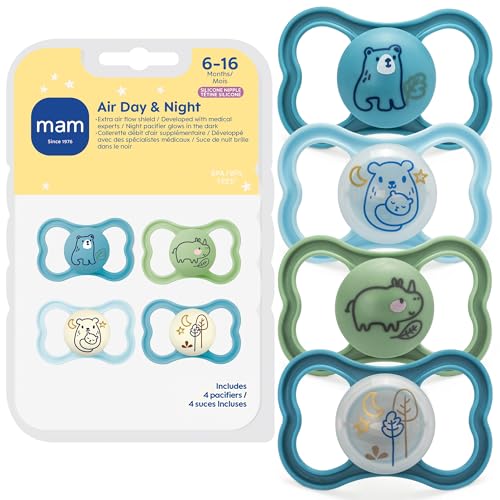
The MAM Air Pacifier focuses on sensitive skin with extra air flow and a SkinSoft silicone nipple. The symmetrical nipple aims for high acceptance and a familiar latch. Its glow-in-the-dark feature helps caregivers locate the pacifier at night. Best for: Toddlers with sensitive skin or delicate mucosa, and parents who value night visibility. Limitation: Some babies may take longer to adapt to the extra air-flow design.
Philips Avent Ultra Soft Pacifiers

These orthodontic, silicone-nipple pacifiers feature a soft shield that matches facial curves for reduced cheek pressure. The design emphasizes a narrow neck to minimize dental pressure and encourage comfortable sucking. Best for: Parents seeking an orthodontic option with a strong acceptance rate and practical sterilization packaging.
NUK First Choice Classic Orthodontic Pacifier

NUK’s pacifier features an asymmetrical nipple with a scooped bottom, offering space for natural sucking and reduced jaw pressure. The heart-shaped shield fits well under the nose for easier breathing. Best for: Toddlers needing a natural-sucking feel and minimal dental pressure. Limitation: Some babies may prefer identical sides on other designs.
Philips Avent Ultra Air Nighttime Pacifier
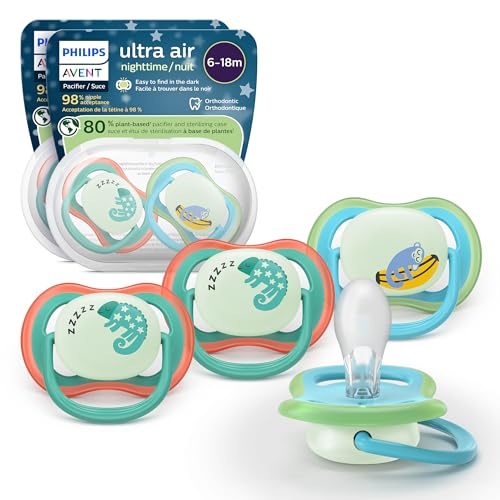
This nighttime version emphasizes extra-large air holes for dryer skin and includes a glow feature for easy nighttime locating. The silicone nipple is orthodontic and the shield is designed to reduce cheek pressure. Best for: Parents who want improved breathability and easier nighttime pacifier retrieval. Caution: Glowing feature may be less noticeable in bright rooms.
Buying Guide: Key Considerations For 6-18 Month Pacifiers
- Age and development: Choose an orthodontic nipple design if your child is in the 6-18 month range to support natural palate and jaw development.
- Skin comfort: Look for breathable shields and SkinSoft silicone or similar materials to minimize irritation and rashes.
- Oral health impact: Consider pacifiers with thin or narrow necks to reduce pressure on teeth and gums; avoid overly bulky shapes if not needed.
- Nighttime practicality: If nighttime use matters, select pacifiers with glow-in-the-dark features or easy-to-find shapes.
- Durability and cleaning: One-piece designs are generally easier to clean and less prone to separating parts; verify BPA-free construction.
- Size and fit: Confirm the size is appropriate for 6-18 months; a pacifier that’s too large can cause discomfort or interfere with normal sucking.
FAQ
- Q: Which pacifier is best for sensitive skin? A: Pacifiers with extra air flow and SkinSoft silicone, like MAM Air, help reduce skin irritation.
- Q: Do orthodontic pacifiers help with teeth development? A: Orthodontic designs aim to support natural tongue and palate development and reduce potential dental pressure.
- Q: What is the advantage of a one-piece pacifier? A: One-piece designs reduce the risk of parts separating and are easier to clean thoroughly.
- Q: Should I choose a glow-in-the-dark pacifier? A: Glow features help locate the pacifier at night but ensure the shield remains comfortable against the skin.
- Q: How many pacifiers should I own for a toddler? A: Several is practical for quick swaps, especially if multiple caregivers are involved; aim for at least 3 on hand.
- Q: Can pacifiers affect breastfeeding? A: For older toddlers, the impact is typically minimal; consult a pediatric professional if you have concerns about continued breastfeeding and pacifier use.