Choosing the right bottle for a newborn helps reduce feeding stress for both baby and caregiver. This guide highlights five bottles that address common issues like colic, gas, and reflux, with clear reasons for each pick. Best for first-time parents, twins, exclusive breastfeeding transitions, or caregivers seeking anti-colic options.
| Product | Best For | Why It Stands Out | Capacity |
|---|---|---|---|
| Philips Avent Anti-Colic AirFree SCY701/04 | Babies prone to gas or reflux | AirFree vent keeps milk in the nipple, not air, aiding upright feeding | 4 oz |
| Philips Avent Natural SCY900/04 | Breast-to-bottle mix feeding | NaturalResponse nipple supports baby’s natural pace | 4 oz |
| Dr. Brown’s Natural Flow Options+ SCY | Premature or slow feeders | Preemie flow nipple for very slow feeding; anti-colic vent system | 2 oz |
| MAM Easy Start Anti-Colic+ Wide Neck | Newborns and preemies | Vent system + SkinSoft nipple reduces air intake and supports comfort | 4.5 oz |
| thyseed Anti-Colic Glass Bottle | Allergy-conscious or glass users | Base vent and ultra-soft silicone nipple for calm feeds | 5 oz |
The following sections break down each pick with practical guidance to help you decide which bottle fits your baby’s feeding style.
Philips Avent Anti-Colic AirFree SCY701/04 – 4 Pack

Best for babies who experience gas or reflux after feeds. The AirFree vent keeps milk in the nipple, reducing air intake and promoting a calmer feeding experience. Usable with or without the vent, allowing a flexible setup as baby grows.
- Best for parents seeking an anti-colic option that still allows vented flexibility.
- Designed to help keep the bottle upright during feeding.
Best for: Newborns with colic tendencies; caregivers who want an adjustable vent system. Caution: Some babies may prefer nipple-with-vent usage only after a trial period.
Philips Avent Natural SCY900/04 – 4 Pack

Best for families transitioning between breastfeeding and bottle feeding. The Natural bottle is designed to support a baby’s natural drinking rhythm with a wide, breast-shaped nipple that mimics breastfeeding.
- Best for easing the breastfeeding-to-bottle transition.
- Unique opening and tip prevent unnecessary milk flow when the baby pauses to breathe.
Best for: Babies who respond well to a natural-feel nipple; nursing parents seeking a smooth transition. Caution: Flow rate is Slow (Flow 2)—not ideal for fast feeders at early weeks if your baby drinks quickly.
Dr. Brown’s Natural Flow Options+ Narrow – 2 oz
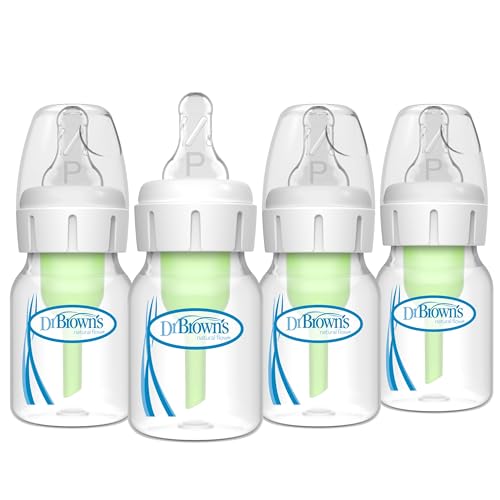
Best for premature babies or newborns with feeding difficulties. Features a Preemie Flow nipple and an anti-colic vent system that reduces spit-up and gas while delivering a steady milk flow.
- Best for slow or controlled pacing of feeds.
- Vacuum-free feeding more closely mimics breastfeeding.
Best for: Preemies or babies needing slower flow to avoid gulping. Caution: The additional internal vent can be more involved to clean compared with two-piece designs.
MAM 4.5oz Easy Start Anti-Colic+ Wide Neck

Best for babies who need minimal air intake during feeds. The dual anti-colic system combines a vented base and a SkinSoft nipple to reduce air bubbles and help babies feed at their own pace.
- Best for newborns and those with sensitive tummies.
- Easy to clean with a wide neck design.
Best for: Newborns who benefit from air-reduction and gentle pacing. Caution: Slightly larger nipple opening than ultra-slow options may not be ideal for extremely premature infants.
thyseed Anti-Colic Glass Bottle – 5 oz

Best for caregivers prioritizing glass for durability and easy cleaning. The base vent reduces bubbles and swallowed air, while the nipple is ultra-soft to support natural feeding motion.
- Best for those who prefer glass bottles for cleanliness and temperature stability.
- Clinically studied vent design supports calmer feeds.
Best for: Families seeking a glass option with anti-colic benefits. Caution: Glass can be heavier and may require careful handling with very small babies early on.
Buying Guide: How to Choose The Right Bottle
Assess your baby’s feeding behavior first. If gas and fussiness are common, anti-colic designs with venting can help. For transitioning between breast and bottle, look for a nipple that mimics the breast and supports a natural latch. For caregivers who prefer glass, a bottle with a reliable vent and a softer nipple can provide calm feeds while remaining easy to clean.
Key considerations to compare quickly:
- Flow rate: Start with the slowest option for newborns; adjust as baby grows.
- Vent system: Anti-colic vents can reduce air intake; some babies respond immediately, others gradually.
- Nipple design: Breast-like shapes can ease latch and transition; SkinSoft or similar materials feel closer to skin.
- Material: Plastic vs. glass—weight, durability, and ease of cleaning differ; some babies prefer one feel over the other.
- Cleaning: Fewer parts often mean easier cleaning; consider dishwasher safety and reachability of the vent.
Frequently Asked Questions
- What bottle is best for a gassy baby? — Bottles with anti-colic vents and slower flow rates tend to minimize swallowed air, reducing gas symptoms.
- Do I need a bottle that mimics breastfeeding? — A breast-shaped nipple can help with latch and pacing for some babies, especially during transitions.
- Is glass better than plastic for newborns? — Glass is easy to clean and durable but heavier; plastic options are lighter and usually more travel-friendly.
- Should I use a preemie nipple? — Preemie or very slow-flow nipples are beneficial for premature or difficult feeders who require gentler pacing.
- How many bottles should I own? — A small set (4–6 bottles) plus a few spare nipples in different flows is a practical starting point.
- Do bottles need to be sterilized? — For newborns, follow manufacturer guidelines; many bottles are dishwasher-safe and compatible with sterilizers.