Answering the need for durable, non-toxic sippy cups, this guide highlights five reliable options that are ideal for children ages 6 months to 3 years. Each pick emphasizes BPA-free materials, easy-clean design, and spill resistance. This summary helps parents choose based on age, transition stage, and on-the-go practicality. The buyers most likely to benefit are parents seeking metal or silicone alternatives to plastic, caregivers looking for leak-proof cups, and families who prioritize easy cleaning and durable construction.
Summary table of chosen products:
| Product | |||
|---|---|---|---|
| Jumble Dream Baby & Toddler Stainless Steel Sippy Cup | Toddlers 6–36 months transitioning to straw | Stainless steel interior, BPA-free | No spill, growth-ready design |
| Comotomo Toddler Tumbler 8oz | Parents wanting self-orienting handles | Food-grade silicone | Spout or straw option, leak-proof for travel |
| mushie Trainer Sippy Cup | First self-serve transition, small hands | Non-toxic plastic (BPA-free) | Leak-resistant with easy-grip handles |
| KIDSco. Silicone Sippy Cups (2 Pack) | Toddlers learning to drink independently | 100% silicone | Unbreakable, spill-resistant |
| Owala Kids Insulation Stainless Steel Tumbler | Active kids who travel often | Stainless steel, silicone straw | Spill-resistant lid, easy cleaning |
Jumble Dream Stainless Steel Sippy Cup
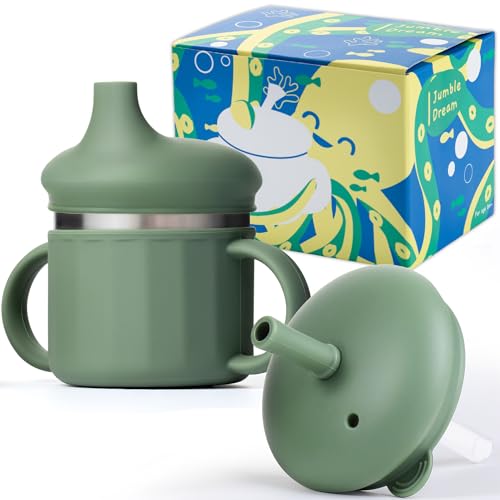
Best for parents seeking a durable, non-plastic option. The Jumble Dream cup uses a stainless steel interior to reduce plastic contact and odors. It supports a growth path from a sippy cup for babies to a straw cup for toddlers, then to an open cup as drinking confidence increases. Its leak-proof design makes it a strong choice for travel and busy days. Caution: as with metal cups, ensure the lid is fully closed before shaking to prevent spills.
Comotomo Toddler Tumbler 8oz

Best for hands-on learners who benefit from self-orienting handles. This tumbler features adjustable handles and a choice between spout or straw, with a leak-proof, travel-ready design. The approach supports a smooth transition from bottle to cup and is designed to minimize spills during on-the-go use. Limitation: silicone components require careful cleaning to avoid odor buildup if not washed regularly.
Upgrade Stainless Steel 7.4 Oz Sippy Cups

Best for families wanting a compact, multi-color kit. This package includes four cups with different colors, offering three functions in one: open cup, lips, and straw components. It emphasizes spill resistance and shatterproof construction. Caution: silicone components may wear with frequent dishwashing; hand-washing can extend lifespan.
Owala Kids Insulation Stainless Steel

Best for travel-friendly reliability. The Owala insulated tumbler uses a spill-resistant lid and a removable straw that is easy to clean. It suits kids who need a durable, easy-to-clean option for school or car trips. Limitation: stainless steel can be heavier for very small hands, and straw components require regular cleaning to maintain hygiene.
Moonkie Silicone Baby Sippy Cups
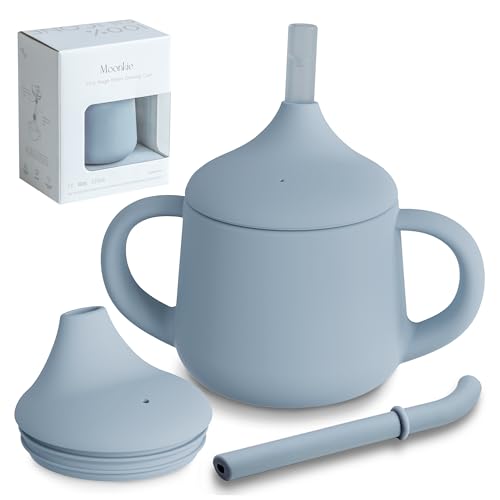
Best for gentle transition through three stages. The Moonkie cup uses 100% food-grade silicone and offers straw, spout, and open cup configurations. It supports safe lip closure and dental development while providing a flexible, durable feeding tool. Caution: silicone components may require thorough drying after washing to prevent water spots or odor retention.
KIDSco. Silicone Sippy Cups (2 Pack)

Best for an unbreakable, spill-resistant option. The two-pack silicone sippy cups provide easy-grip handles and a lid design aimed at leak prevention. These cups are designed to be durable for toddlers who drop cups often. Limitation: silicone cups may feel less sturdy to some parents compared to stainless steel options.
Buying Guide
Key considerations include material safety, transition design, spill resistance, ease of cleaning, and durability. Materials vary from stainless steel interiors (non-reactive, durable) to silicone (soft, flexible, and grip-friendly). Choose a cup that grows with your child’s abilities: from a sippy cup for early stages to straw or open cup as confidence builds. For travel, prefer spill-resistant lids and easy-clean components. If you prioritize metal over plastic, look for BPA-free stainless steel with minimal plastic in contact zones. For very young babies, a product offering a gentle silicone mouthpiece is advantageous.
Frequently Asked Questions
- What is the safest material for a non-toxic sippy cup? – Stainless steel interior or 100% food-grade silicone with BPA-free construction is widely considered safe when used as directed.
- Are sippy cups worth it for 6–12 months? – For transitioning away from bottles, a staged cup with handles helps build motor skills and lip closure.
- Do leak-proof cups really prevent spills? – Quality leak-proof designs substantially reduce spills, especially during travel or in car seats, but no cup is completely spill-proof in all situations.
- How often should I clean sippy cups? – Clean after each use with warm, soapy water; dry thoroughly to prevent odor or mold buildup.
- When should a child switch to an open cup? – Open cups are typically introduced as the child develops better lip closure and hand-eye coordination, usually around 12–18 months.
- What should I avoid in a sippy cup? – Avoid cups with sharp edges, hard plastics that can crack, and materials that may leach chemicals under heat or acidic beverages.