Answer: This guide highlights safe, organic baby foods that minimize additives and synthetic ingredients. It focuses on Stage 2 to Stage 3 pouches and similar snacks suitable for toddlers and growing infants. Best for parents seeking transparent ingredients, clean labels, and convenient, on-the-go options. The top picks include clearly crafted fruit-and-veg pouches, veggie-first recipes, and allergen-aware blends. A quick summary table follows to help you compare key choices at a glance.
| Product | Brand | Stage / Type | What Iters Suits |
|---|---|---|---|
| Happy Baby Organics Stage 2 Pouches (Fruit & Veggie Variety Pack) | Happy Baby | Stage 2 | Stage 2 eaters, transition to solid foods |
| Serenity Kids Organic Baby Pouches | Serenity Kids | 6+ Months | On-the-go meals, veggie-first flavors |
| Earth’s Best Organic Teether Snacks | Earth’s Best | Dissolvable teething sticks | 6+ months teething and snack time |
| Amara Organic Stage 2 Oats & Berries | Amara | Stage 2 | Texture-ready, customizable with milk or water |
| Happy Baby Nutty Blends Stage 2 | Happy Baby | Stage 2 | Allergy-aware introduction of nuts, nut butter flavors |
Happy Baby Organics Stage 2 Pouches — Fruit & Veggie Variety Pack

Reference features: Clearly Crafted packaging shows ingredients in vibrant color. Stage 2 eaters blend simple fruits and vegetables in a smooth puree. Organic and toddler-friendly options align with a baby’s growing appetite. Best for parents seeking transparent ingredients and easy on-the-go feeding.
- Best for: Stage 2 eaters exploring new flavors with smooth textures.
- Why selected: Clear ingredient visibility supports non-toxic, clean labeling.
- Caution: Check individual flavors for any potential allergens or sensitivities.
Serenity Kids Organic Baby Pouches — 6+ Months
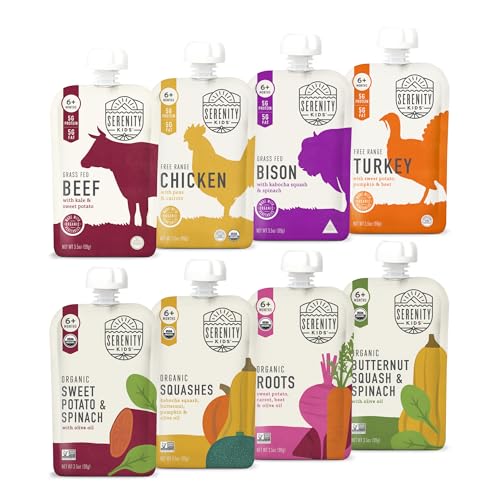
Reference features: 5g protein per pouch, veggie-first compositions, no added sugar. Designed for toddlers and Stage 2+ meals, perfect for busy families needing balanced macros.
- Best for: Veggie-forward flavors without added sugars.
- Why selected: Protein and nutrients support growing kids with clean ingredients.
- Caution: Real-food texture can be thicker; may require stirring or mixing with breastmilk/formula for younger babies.
Earth’s Best Organic Teething Snack — Strawberry Banana Crunchy Sticks

Reference features: Dissolvable teething sticks with organic banana and strawberry powder. Stage 2 offering suitable for babies 6 months and older during teething.
- Best for: Teething relief during early solids transition.
- Why selected: Simple organic ingredients with no artificial additives.
- Caution: Crunchiness is designed to dissolve; avoid oversized bites to prevent gagging.
Amara Organic Stage 2 Oats & Berries Pouches

Reference features: 100% organic, non-GMO ingredients with oats, mango, strawberry, banana, and amaranth. Designed to mix with breastmilk, formula, or water to achieve the texture that suits the baby.
- Best for: Customizable texture aligned with a baby’s development stage.
- Why selected: Simple ingredients and the option to adjust texture support non-toxic feeding goals.
- Caution: Some babies may be sensitive to oats; introduce gradually.
Happy Baby Nutty Blends Stage 2 — Fruit & Nut Butter

Reference features: Allergen introduction with nuts in baby-appropriate textures; pouches are designed for Stage 2.
- Best for: Early introduction of nut butters in a safe, controlled texture.
- Why selected: Pediatric allergist-informed approach to exposing allergens gradually.
- Caution: Nut ingredients may not be suitable for all families; consult pediatrician for allergies.
Buying Guide: Non-Toxic Baby Food Essentials
What to look for in non-toxic baby foods
Choose products with clear ingredient lists, organic certifications, and no artificial additives. Look for single-ingredient or simple blends to reduce potential allergens and exposure to synthetic preservatives. Stage labeling helps match texture and nutrition to developmental milestones.
Texture and stage considerations
Stage 2 foods are smoother and more complex in flavor than Stage 1, ideal for babies beginning to explore purees. As you move to Stage 3, expect thicker textures and more varied ingredients, including proteins. Consider your child’s chewing ability and gag reflex when selecting textures.
Allergen introduction and safety
Many parents aim to introduce common allergens early and gradually. If choosing nut-containing blends, consider physician guidance, especially for a family history of allergies. Allergen-aware products like Nutty Blends provide controlled textures to ease introduction.
Organic and transparent labeling
Non-toxic choices emphasize organic ingredients and transparent packaging. Look for clearly crafted or clean-label branding that discloses ingredients and processing methods. Packaging that allows you to see ingredients (as in Clearly Crafted lines) can help verify freshness and content at a glance.
On-the-go practicality
Selections with resealable pouches and kid-friendly flavors support busy family life, daycare, and travel. Ensure closures are reliable to prevent leaks. Consider the balance between convenience and nutrition when choosing snack options for outings.
All-around considerations
Safety: Prioritize products with minimal processing and additive-free claims. Nutrition: Favor blends offering a balanced macro profile: proteins, fats, and carbohydrates appropriate for developmental stages. Variety: Include a mix of fruit- and veggie-forward options to expose little ones to diverse flavors and textures.
FAQ
- What makes baby food non-toxic? Non-toxic baby foods avoid artificial additives, preservatives, and synthetic colors. They emphasize organic ingredients and simple, recognizable components.
- Are pouches safe for babies? Yes, when used as directed. Choose age-appropriate textures and supervise feeding to prevent choking. Check packaging integrity and expiry dates.
- Should I introduce nuts in baby food? Early allergen introduction can be beneficial for some babies. Consult a pediatrician for individual guidance, especially with family history of allergies.
- Is organic always better? Organic labeling reduces exposure to some pesticides and generally indicates fewer synthetic additives, though always read the ingredient list for specifics.
- How do I choose the right stage? Match texture and ingredient complexity to your child’s developmental milestones and chewing abilities. Start with Stage 1 if introducing solids, then progress to Stage 2 or 3 as advised by your pediatrician.
- Can I mix baby food with formula or breast milk? Some Stage 2 pouches are designed to be mixed with breast milk, formula, or water to adjust texture. Follow the product’s guidelines for preparation.