When choosing baby bottles, non-plastic options are preferred by many parents seeking chemical-free feeding. This guide highlights five top non-plastic bottles chosen for durability, ease of cleaning, and baby-friendly design. Each product is paired with who it’s best for and why it stands out, plus a practical caveat. The goal is to help you pick bottles that align with your family’s needs—whether you prioritize glass durability, stainless steel sustainability, or silicone comfort.
| Product | Material & Key Benefit | Best For |
|---|---|---|
| Nanobébé Flexy Silicone Bottle | Silicone, anti-colic nipple, stable base | Parents wanting a familiar-feel silicone bottle with anti-colic venting |
| Philips Avent Natural Glass (4 oz, 4-pack) | Borosilicate glass, natural response nipple | Breast-to-bottle transitions with glass durability |
| Dr. Brown’s Anti-Colic Options+ Glass (8 oz, 2-pack) | Glass, anti-colic internal vent | Parents seeking reduced gas and reflux potential |
| Pura Kiki Stainless Steel Bottle (9 oz) | Plastic-free, medical-grade silicone nipple | Eco-conscious families who want a modular, reusable system |
| Thyseed Anti-Colic Glass Bottle (5 oz) | Glass, anti-colic base vent | Calm feeds with minimized bubbles in a compact size |
Nanobébé Flexy Silicone Baby Bottle
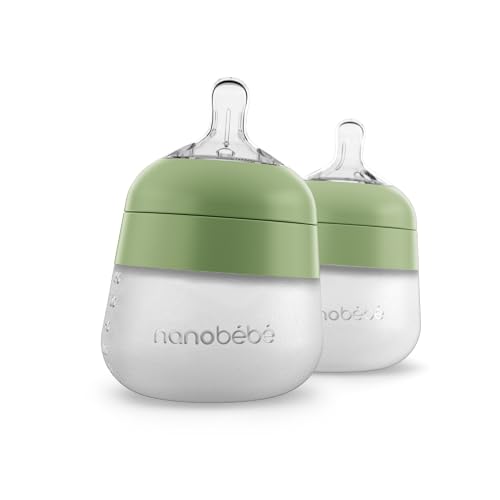
The Nanobébé Flexy is a silicone bottle designed for a soft, familiar feel during feeding. It uses a flexible, non-collapsible nipple and a stable base to reduce tipping. The bottle is dishwasher and microwave safe, and free from BPA, PVC, lead, and phthalates. This makes it a solid choice for parents who want a silicone option that mirrors the ease of use of traditional bottles while reducing nipple confusion during transitions from breast to bottle.
Best for: Parents who want a soft, breast-like feeding experience with reliable anti-colic features. This bottle is easier to clean and handle, especially for families who frequently heat or sanitize bottles.
Caution: The silicone material, while durable, can show wear over time with heavy use and aggressive cleaning cycles. Inspect seals and nipples regularly.
Philips Avent Natural Glass Baby Bottles (4 oz, 4-Pack)

These bottles use borosilicate glass for heat resistance and easy cleaning, paired with a Natural Response nipple that lets baby pace feeding. The glass construction stands up to temperature changes, and the nipple design closely mimics the breast’s feel, helping with latch and transition. The packaging includes multiple bottles for busy daily routines and sterilization-friendly care.
Best for: Parents seeking glass durability and a breast-like feeding rhythm. Ideal for households that frequently refrigerate or sterilize bottles.
Caution: Glass bottles can be heavier and shatter if dropped. Handle with care when washing and during travel.
Dr. Brown’s Anti-Colic Glass Options+ Bottle

Dr. Brown’s Glass bottles feature an internal vent system designed to reduce gas and spit-up. The glass body is heat- and thermal-shock resistant, making it suitable for gradual temperature changes. A vacuum-free feeding approach supports a feeding pace closer to breastfeeding, with a silicone nipple that helps maintain a steady flow. This setup aims to minimize colic symptoms and promote calmer feeds.
Best for: Families dealing with gas or fussiness who want a reliable glass bottle with a controlled flow. The vent system helps separate air from milk during feeds.
Caution: The complexity of the vent system may require careful cleaning to maintain performance. Ensure all parts are fully dry before reassembly to avoid leaks.
Pura Kiki Stainless Steel Bottle

The Pura Kiki bottle eliminates plastic components with a stainless steel body and a plastic-free design. It uses a medical-grade silicone nipple and is part of a modular system that can evolve into various cup configurations as the child grows. The MADESAFE-certified design emphasizes safety and sustainability, appealing to eco-conscious families focused on reducing plastic waste.
Best for: Parents seeking a plastic-free, long-lasting bottle that adapts to multiple feeding stages. Great for families prioritizing sustainability and kid-safe materials.
Caution: The all-plastic-free approach means some parts may be less forgiving if dropped or mishandled—check for dents and leaks after use.
Thyseed Anti-Colic Glass Bottle (5 oz)

Thyseed’s glass bottle features an anti-colic base vent to minimize air bubbles and reduce tummy discomfort. The bottle is designed with ultra-soft silicone for a natural-feeling latch, aiding babies transitioning from breastfeeding. A compact 5-ounce size makes it a practical option for newborns or early feeding stages.
Best for: Parents seeking an anti-colic solution with a compact 5 oz capacity and a natural-feel nipple. Useful for calmer feeds and easier cleaning in smaller bottles.
Caution: As a glass bottle with a vent system, it requires careful handling to avoid breakage during transport or cleaning.
Buying Guide: Key Considerations For Non-Plastic Baby Bottles
- Material type: Glass, silicone, and stainless steel each have pros and cons. Glass offers chemical resistance and heat stability; silicone provides a soft feeding experience; stainless steel is durable and plastic-free.
- Anti-colic features: Look for internal vents or slow-flow nipples to minimize gulping and gas. Consider the mounting and cleaning requirements of vents.
- Durability and handling: Glass bottles are sturdy but heavier and breakable; silicone and stainless steel are more impact-resistant but may require more frequent nipple replacements.
- Cleaning and sterilization: Dishwasher-safe items save time; ensure all parts are easy to disassemble and reassemble for thorough cleaning.
- Growth and versatility: Some bottles are designed to evolve with a child (e.g., convert from bottle to sippy or straw cup), which can reduce future purchases.
- Safety standards: Choose bottles that are BPA-free and free from phthalates and lead. Verify certifications when possible.
Frequently Asked Questions
- Are glass bottles safer than plastic?
– Glass bottles expose milk to fewer chemical concerns and resist staining, but they are heavier and can break. Choose based on lifestyle and handling comfort. - Do silicone nipples differ in flow?
– Yes. Nipples vary by flow rate; select a slow-flow option for newborns and transition to medium or faster as feeding progresses. - What is anti-colic venting and why does it matter?
– Anti-colic vents separate air from milk, reducing bubbles and gas, which helps minimize fussiness and spit-up. - Is plastic-free always better?
– Plastic-free designs reduce potential chemical exposure but may come with trade-offs in weight, cost, and maintenance. - Which bottle is best for travel?
– Durable materials (stainless steel or robust silicone) with fewer parts and leak-proof designs are ideal for travel. - How do I clean bottles with built-in vents?
– Disassemble all parts, rinse, soak if needed, then wash thoroughly in warm, soapy water or a dishwasher if permitted by the manufacturer.