Answering parents seeking lactose-free or low-lactose options: these formulas are designed to ease fussiness and gas from lactose sensitivity, while supporting growth and development. The top five products below are chosen for their dairy-lactose handling, prebiotic or probiotic blends, and holistic nutrient profiles. They’re suited for babies with lactose sensitivity, cow’s milk allergy considerations, or general tummy trouble. See the summary table for quick comparisons and use the Buying Guide to pick the best match for your baby’s needs.
| Product | Brand | Best For | Key Benefit |
|---|---|---|---|
| Similac Sensitive Infant Formula (29.8 oz) | Similac | Fussiness & Gas from Lactose Sensitivity | DHA and lutein; rewards program |
| Similac 360 Total Care Sensitive (20.1 oz) | Similac | Sensitive Tummies; 5 HMO Prebiotics | Closest prebiotic blend to breast milk |
| Enfamil Nutramigen Hypoallergenic with Iron (19.8 oz) | Enfamil | Cow’s milk protein allergy relief | LGG probiotic; rapid support for colic |
| Pepticate Hypoallergenic Infant Formula (13.2 oz) | NUTRICIA PEPTICATE | CMA relief; for 0-12 months | Extensively hydrolyzed protein; well-tolerated |
| Earth’s Best Organic Sensitivity (32 oz) | Earth’s Best | Organic, reduced lactose; fussiness relief | Omega-3 DHA and ARA; lutein |
Similac Sensitive Infant Formula for Fussiness & Gas

Product overview: Similac Sensitive is tailored for babies experiencing fussiness and gas associated with lactose sensitivity. It features DHA and lutein to support brain and eye development and includes a reward program via MySimilac QR codes. Best for parents seeking a ready-to-use option that emphasizes gentle digestion while maintaining essential nutrients. Choose this if you want a familiar brand with targeted comfort for lactose-sensitive infants. A potential limitation is that it remains a cow-milk-based formula; it is not hypoallergenic.
Similac 360 Total Care Sensitive (20.1 oz)

Product overview: This formula uses an exclusive blend of 5 HMOs to resemble breast milk’s prebiotic profile, supporting digestion and immunity. It is designed for fussiness and gas related to lactose sensitivity and is a strong option for families prioritizing prebiotic nutrition. Best for parents wanting a comprehensive prebiotic blend that aligns closely with breast milk. A limitation to note: prebiotic blends may vary in tolerance from baby to baby.
Enfamil Nutramigen Hypoallergenic with Iron

Product overview: Nutramigen is an amino-acid-based formula designed to ease colic and digestive disruption for babies with cow’s milk protein allergy. It includes LGG probiotic support and is suitable for babies who need rapid relief from colic symptoms. Best for infants with CMA or severe intolerance who require hypoallergenic nutrition. A potential limitation: amino-acid-based formulas can have different feeding tolerances; gradual introduction is advised per caregiver guidance.
Pepticate Hypoallergenic Infant Formula

Product overview: Pepticate is an extensively hydrolyzed formula designed to relieve cow milk allergy symptoms. It is clinically shown to reduce fussiness and supports infants up to 12 months with DHA, ARA, and prebiotics. Best for CMA relief when hypoallergenic nutrition is required and parents want a formula with strong pediatric recommendations. Limitation: taste and texture can be a factor for some babies when switching formulas, and ongoing pediatric guidance is advised.
Earth’s Best Organic Sensitivity Infant Formula
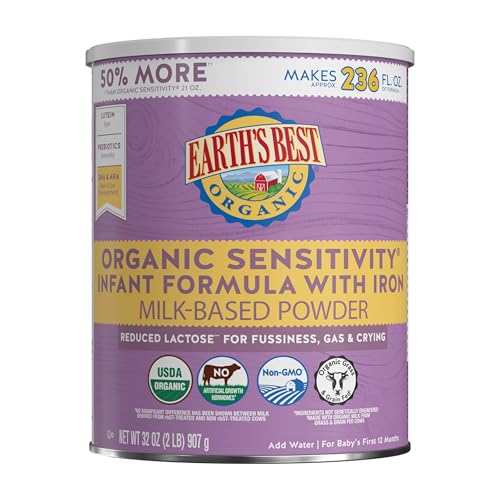
Product overview: Earth’s Best Organic Sensitivity uses reduced lactose to ease uncomfortable tummy symptoms while supplying iron, DHA, and ARA, with organic certification. Best for parents seeking an organic option with reduced lactose and added brain and eye nutrients. A possible limitation is the reduced lactose formulation may still differ in tolerance for some babies compared to fully lactose-free formulas.
Buying Guide: Key Considerations for Choosing a Non-Lactose Baby Formula
- What type of lactose issue does your baby have? Non-lactose, reduced lactose, or hydrolyzed protein options address different needs.
- Is there a cow milk protein allergy or intolerance? Consider hypoallergenic or amino-acid-based formulas (like Nutramigen or Pepticate) for CMA concerns.
- Are prebiotics or probiotics important for your baby? Some formulas include HMOs or LGG to support digestion and immune health.
- Do you prefer organic or conventional ingredients? Earth’s Best Organic options offer organic certification and specific nutrition profiles.
- Feeding format preferences: powder vs. ready-to-feed. Ready-to-feed options are convenient but may cost more per serving.
- Developmental nutrients: Look for DHA and lutein, which support brain and eye development, regardless of lactose status.
FAQ
- What is the main difference between reduced-lactose and hypoallergenic formulas?
Reduced-lactose formulas limit lactose content, while hypoallergenic formulas use extensively hydrolyzed or amino-acid proteins to minimize allergen exposure. - Which formula is best for suspected cow milk protein allergy?
Hypoallergenic options like Nutramigen or Pepticate are typically recommended after professional guidance. - Are prebiotics important in non-lactose formulas?
Prebiotics such as HMOs can support digestion and immune health, depending on the blend. - Can I switch formulas if my baby has tummy trouble?
Consult a pediatrician before changing formulas; some babies tolerate slow transitions better. - Is organic certification essential?
It depends on parental preference; organic formulas emphasize organic sourcing and certain additives. - Do these formulas require a prescription?
Most infant formulas do not require a prescription, but CMA-dedicated formulas may be recommended by a clinician.