Looking for natural, organic baby formula that fits your family’s values and your baby’s needs? This guide highlights five American-friendly options designed for infants from birth to 12 months. Each choice is suited for different digestive needs, breast-mreconciliation goals, and ingredient preferences. A quick summary table follows to help you compare at a glance.
| Product | Brand | Size | Main Benefit | Best For |
|---|---|---|---|---|
| Earth’s Best Organic Baby Formula (0–12 months) | Earth’s Best | 32 oz | Organic milk, DHA/ARA, lutein, prebiotics | Families seeking closest-to-breast-maste nutrition |
| Happy Baby Organics Stage 1 | Happy Baby | 22.9 oz | Probiotics & prebiotics, DHA | Gut health and immune support for new infants |
| Earth’s Best Organic Gentle (0–12 months) | Earth’s Best | 21 oz | Easy-to-digest proteins, DHA/ARA | Babies with sensitive tummies |
| Bubs 365 Day Grass Fed Infant Formula | Bubs | 20 oz | Grass-fed milk, prebiotics & probiotics, omega-3/6 | Parents seeking grass-fed dairy and clean-label ingredients |
| Pure Bliss Irish Farms (Similac) | Similac | 24.7 oz | Made in Europe, easy-to-digest nutrition, probiotic-friendly | Preference for European farming standards and added probiotics |
Earth’s Best Organic Baby Formula (32 oz)
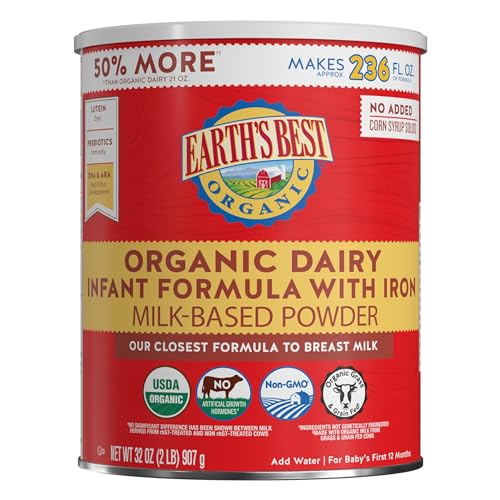
Earth’s Best Organic Baby Formula for Babies 0–12 Months combines organic milk from grass- and grain-fed cows with lutein, prebiotics, and DHA/ARA to support immune defenses, brain, and eye development. It is designed to be closest to breast milk among its category and contains no added corn syrup. This option is best for families seeking a straightforward, organic dairy-based formula to supplement breastfeeding or as a first-year substitute.
Best for: Parents wanting a complete organic dairy formula with immune- and brain-supporting nutrients. Limitations: Not ideal for babies with specific dairy sensitivities; consult pediatrician if there are concerns about tolerance.
Happy Baby Organics Stage 1 (0–12M)

Happy Baby Organics Stage 1 is USDA Organic and features probiotics and prebiotics along with DHA. It’s positioned as closer to breast milk in terms of gut health support among organic brands. The probiotic blend is clinically noted to support softer, more regular poops, which can be helpful for new eaters.
Best for: Families prioritizing probiotics and prebiotics for gut health. Caution: Some infants may require gradual introduction to organic formulas to minimize digestive upset.
Earth’s Best Organic Gentle (21 oz)

Earth’s Best Organic Gentle Infant Formula with Iron emphasizes easy digestion with proteins designed to be gentle on tiny tummies, plus lutein, prebiotics, and DHA/ARA. It’s a solid choice for babies who experience fussiness or gas after feeding. It remains an organic option suitable for supplementing breastfeeding or as a first-year alternative.
Best for: Parents seeking a gentle, easy-to-digest organic formula. Limitation: Gentle formulas may have different tolerance levels; monitor your baby’s reaction after switching.
Bubs 365 Day Grass Fed Infant Formula

Bubs 365 Day Grass Fed Infant Formula is built on milk from grass-fed cows and enriched with omega-3 DHA and omega-6 ARA, plus prebiotics and probiotics. It emphasizes clean labeling with no GMOs, corn syrup, artificial colors, flavors, or preservatives. It earns recognition for purity and source-quality standards, appealing to families who value pasture-raised dairy.
Best for: Those who want grass-fed dairy and a clean-label product. Caution: Availability may vary by region; check local stock if you’re shopping in certain areas.
Pure Bliss Irish Farms (Similac)

Pure Bliss Irish Farms by Similac is manufactured with milk sourced in Ireland and marketed as an easy-to-digest option modeled after breast milk. It highlights a European approach to formula nutrition and includes probiotic-friendly ingredients. This option is suitable for families who prefer European-sourced ingredients and a formula designed for gentle digestion.
Best for: Families seeking European-sourced ingredients and a balance of gut-friendly nutrition. Limitation: Some regions may offer different variant availability; verify product type before purchase.
Buying Guide: Natural Organic Baby Formula — What to Consider
- Organic certification and dairy sourcing: Look for brands that specify USDA Organic or equivalent standards and confirm whether milk comes from grass-fed or grain-fed cows, as this can influence taste and fatty acid profiles.
- DHA/ARA and prebiotics: These nutrients support brain development and gut health. Consider whether the formula provides a balanced level similar to breast milk and includes prebiotics or probiotics for gut flora.
- Digestive tolerance: If your baby experiences fussiness, gas, or reflux, you may prefer formulas marketed as easy-to-digest or gentle. Monitor tolerance after switching formulas.
- Allergen considerations: Check for hypoallergenic variants only if there is a medically diagnosed need. Most standard organic formulas are dairy-based and suitable for healthy, non-allergic babies.
- Flavor and palatability: While clarity on taste is limited, some caregivers report differences in mixing, texture, and aftertaste. If possible, consult your pediatrician about which type aligns with your baby’s needs.
- Availability and packaging size: Consider how often you need to buy, storage space, and whether a larger container (like 32 oz) versus smaller canisters fits your routine.
- Pediatric guidance: Always confirm with a pediatrician before switching formulas, especially if your baby has health concerns, allergies, or special feeding needs.
Frequently Asked Questions
- What is organic baby formula?
Organic baby formula uses dairy or plant-based ingredients produced without synthetic pesticides or GMOs and adheres to stricter farming standards. It is designed to support infant nutrition with essential fatty acids, iron, and vitamins.
- Which formula is best for sensitive tummies?
Formulas marketed as easy-to-digest or gentle may help with fussiness or gas. However, tolerance varies by infant, so monitor your baby after trying a new formula and consult a pediatrician if concerns persist.
- Do these formulas contain probiotics or prebiotics?
Several options include prebiotics and/or probiotics to support gut health. Check the product features for exact blends and levels to find a fit for your baby.
- Is grass-fed dairy better for infants?
Grass-fed dairy can offer different fatty acid profiles and may be preferred by families seeking pasture-raised sources. Availability and labeling vary by region and brand.
- When should I switch from formula to cow’s milk or other alternatives?
Most babies transition to whole cow’s milk or alternatives around 12 months, but follow your pediatrician’s guidance based on your child’s development and nutrition needs.
- What should I do if my baby rejects a new formula?
Introduce the new formula gradually, mixing with the current formula to ease transition, and observe for signs of intolerance. Seek pediatric advice if issues persist.