When you need a breathable, easy-to-wear carry solution, a lightweight baby carrier is essential. This guide highlights five compact picks ideal for urban errands, travel, and quick outings. Each option suits different caregivers and baby stages, from newborns to toddlers. Use the table below to compare core details at a glance.
| Product | Best For | Key Benefit | Weight Class |
|---|---|---|---|
| Infantino Flip 4-in-1 Convertible Baby Carrier | Families needing versatile positions | 4-in-1 carrying positions for newborn to toddler | 8–32 lbs |
| Momcozy Newborn Carrier WeeSnug | Newborns to small infants | Ergonomic cross-back support with lumbar aid | 7–25 lbs |
| Momcozy Baby Carrier (Khaki) | Growing babies, travel-friendly | Three adjustable sizes with enhanced lumbar support | 7–45 lbs |
| KeaBabies Original Baby Wrap Carrier | New to babywearing, quick bonding | IHDI-certified hip-friendly wrap design | All sizes |
| GROWNSY Baby Carrier | Long-wearing comfort | Three-point support with EVA back and head protection | 7–44 lbs |
Infantino Flip 4-in-1 Convertible Baby Carrier
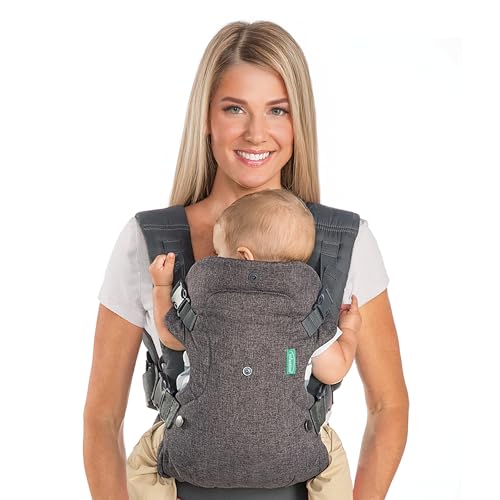
The Infantino Flip 4-in-1 Adjustable Carrier offers four carrying options—facing-in (narrow or wide), facing-out, and back carry—suitable from 8 to 32 pounds. It emphasizes ergonomic support with padded shoulder straps and a wide waist belt to distribute weight and reduce strain. This is best for caregivers who value versatility in one compact unit and may rotate wearing among mom, dad, or grandparents. A potential limitation is that the seat may feel bulky for very small newborns in certain positions.
Shiaon Baby Carrier Newborn to Toddler

The Shiaon carrier covers a wide range (8–30 lbs) with breathable mesh and premium cotton for all-season use. It emphasizes quick in-and-out wearing, making it suitable for quick trips and busy parents who need to position a sleeping infant rapidly. Best for caregivers who want a lightweight feel with simplified usability; it may lack some premium adjustability found in higher-end wraps.
Momcozy Ergonomic Carrier (Black)

Momcozy’s lightweight ergonomic carrier features three sizing positions to grow with your child (7–45 lbs). It includes an EVA waist support for lower-back comfort and thickly padded shoulder straps for extended wear. This option is well suited to travelers and daily commuters who want a breathable, comfortable carrier that can handle longer wear sessions. A potential caveat is that some users prefer wraps or soft carriers for newborns who need more snug, womb-like support.
Momcozy Khaki Ergonomic Carrier

This variant mirrors Momcozy’s three-position growth model with an ergonomic natural “M” position, ensuring hip and spine alignment as babies grow. The carrier emphasizes an adjustable, breathable build with padded legs and comfort-focused design. Choose this if you want a lighter, adaptable carrier that remains comfortable on longer outings; avoid if you require extremely compact storage for ultralight packs only.
KeaBabies Original Baby Wrap Carrier

The KeaBabies wrap carrier distributes weight evenly and is IHDI-certified for hip health. The self-tie wrap uses soft, breathable fabric for all-day comfort and fits many body types. It’s ideal for parents new to babywearing and those who want a snug, customizable fit without buckles. The wrap requires some practice to perfect the tie, which could be a hurdle for absolute beginners.
GROWNSY Baby Carrier Newborn to Toddler

The GROWNSY carrier emphasizes ergonomic support with a three-point system, AI back distribution, and a foldable head/neck support. Its design aims to minimize shoulder and back fatigue across extended wear, making it suitable for long park walks or shopping trips. Practical for parents who want sturdy support, but may feel bulkier than ultra-lightweight wraps in some situations.
Buying Guide
- Weight range: Confirm the carrier supports your child’s current weight and anticipated growth to avoid frequent replacements.
- Ergonomics: Look for hip-friendly M-position seating and back support to protect development and reduce strain.
- Adjustability: Three or more sizing positions help multiple caregivers achieve a secure, comfortable fit.
- Seasonality: Breathable fabrics and mesh panels improve comfort in warm weather; consider warmth for colder climates.
- Ease of use: Wraps require tying technique; buckle-style carriers offer quick on/off but may be less adjustable for very small newborns.
- Portability: Lightweight designs and compact folds are better for travel and quick errands.
- Longevity: Some carriers convert through several stages; others are best for brief periods. Match your lifestyle to the product’s life span.
FAQ
- What is the best carrier for newborns? The WeeSnug and similar lightweight designs are commonly favored for newborns due to snug fit and adjustable support. Look for 7–25 lbs capacity and ergonomic seating.
- Are wrap carriers harder to use than buckle carriers? Wraps require tying and practice, while buckle carriers offer quick access and simple adjustments. Beginners may prefer buckles and then explore wraps later.
- Is hip-healthy seating important? Yes. Look for designs that support the infant’s hips in an M-position to promote healthy hip development.
- Can a lightweight carrier replace a stroller? For short trips and busy days, a lightweight carrier can substitute for a stroller, but for long outings, a stroller or carrier with higher weight support may be preferable.
- How do I know which carrier fits my body type? Choose carriers with adjustable shoulder straps and belts. Try to ensure even weight distribution without pinching or slipping in the straps.
- Do these carriers support toddlers? Many listed carriers extend into toddler ranges (up to 32–45 lbs). Check the specific weight range to match your child’s current size and future growth.