Answering the top question for guardians: these infant feeder options help reduce choking risk while letting babies explore solid foods. Ideal for parents introducing textures, purees, and frozen treats, these feeders come in mesh and silicone styles. The best picks below are suited for babies from around 6 months and up, with some options growing with your child’s weaning journey. The table summarizes the five best fits for common feeding goals.
| Product | Best For | Key Benefit |
|---|---|---|
| Munchkin Baby Feeder for Fresh Food and Fruit (Blue/Mint) – 2 Pack | First tastes and purees | Choking-reduction design |
| PandaEar 3 Pack Baby Fruit Feeder Pacifier | Weaning progression | Three sizes for growing infants |
| Munchkin Baby Feeder for Fresh Food and Fruit (Coral/Purple) – 2 Pack | Soft solids introduction | Same choking-minimizing design, two color options |
| PandaEar 3 Pack Silicone Baby Fruit Feeder Pacifier | Teething and solids safety | 100% food-grade silicone with protective cap |
| Dr. Brown’s Fresh First Silicone Feeder (Mint) | Teething and self-feeding | Silicone bulb, durable and bite-resistant |
Munchkin Baby Feeder for Fresh Food and Fruit (Blue/Mint) – 2 Pack
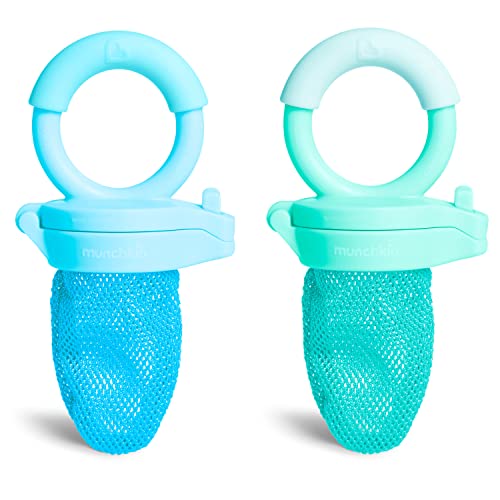
The Munchkin feeder is designed to reduce choking risk by letting only small, digestible pieces pass through. It’s suitable for frozen breast milk, purees, bananas, and ice chips, making it a practical choice for babies 6 months and older who are safely transitioning to solid foods.
Best for: Parents seeking a straightforward, dual-pack option for early solids and safe snacks. Better for: households wanting a familiar, widely available option. Choose this if: you want a simple two-pack with consistent performance across colors.
Caution: As with all feeders, supervise feeding and discard any damaged parts promptly to maintain hygiene.
PandaEar 3 Pack Baby Fruit Food Feeder Pacifier with 3 Sizes

These feeders use 100% food-grade silicone, with 2mm holes to reduce choking while enabling babies to explore soft solids. The three pouches cover a wide weaning window from early finger foods to larger fruit chunks, and the textured bow-handle doubles as a teether.
Best for: Parents who want a growing-with-baby solution across feeding stages. Better for: teething relief combined with safe feeding. Choose this if: you prefer silicone over mesh and want multiple pouch sizes in one kit.
Caution: The design relies on POsitions for filling; ensure the cap is securely closed to prevent spills during transport.
Munchkin Baby Feeder for Fresh Food and Fruit (Coral/Purple) – 2 Pack
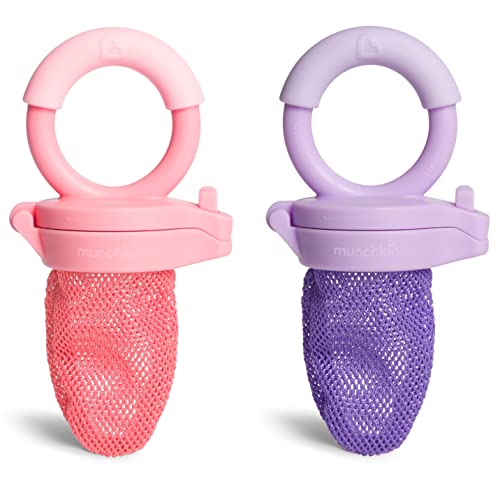
This second Munchkin option mirrors the blue/green set with the same choking-minimizing design. It’s best for households wanting color variety or a duplication set for babysitters or daycare use.
Best for: Families who want color variety or multiple feeders for shared feeding duties. Better for: quick swaps during busy days. Choose this if: you prefer a second set with proven design from a trusted brand.
Caution: Not all babies may adapt to every texture; introduce gradually and monitor reactions to new foods.
PandaEar 3 Pack Silicone Baby Fruit Feeder Pacifier (Bow Series)

Made entirely from premium silicone, these feeders avoid plastic exposure issues and include a protective cap to keep the tip clean. The 3-size set supports babies from the earliest tastes to more substantial fruit bites as they grow.
Best for: Parents prioritizing silicone and long-term use. Better for: teething comfort paired with safe feeding. Choose this if: you want a hygienic cap and silicone construction. Caution: Regular cleaning is essential to maintain hygiene for multiple pouches.
Dr. Brown’s Designed to Nourish, Fresh Firsts Silicone Feeder (Mint)

This silicone feeder emphasizes safe self-feeding with tiny holes and a familiar, breast-like shape to aid baby-led weaning. It’s built to withstand biting and chewing, offering a durable option for teething and feeding.
Best for: Parents pursuing a tear-free transition to self-feeding with a teether-friendly design. Better for: babies who respond well to simple, breast-like shapes. Choose this if: you want a feeder that doubles as a teether while enabling solids.
Caution: Monitor for wear over time; replace if the silicone shows signs of damage or tearing.
NatureBond Baby Food Feeder/Fruit Feeder Pacifier (2 Pack)
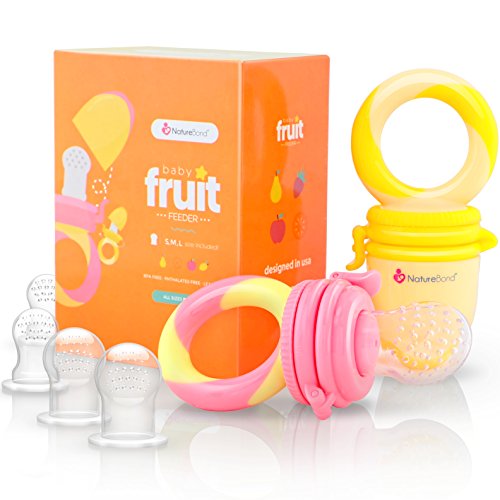
NatureBond feeders include four silicone teats and emphasize safety with BPA-free, latex-free, lead-free, and phthalate-free materials. They’re designed for easy disassembly for thorough cleaning and are marketed as a two-pack value for reliable everyday use.
Best for: Budget-conscious families needing high-value silicone feeders. Better for: easy cleaning and extended use across stages. Choose this if: you want a fully dismantlable design for hygiene. Caution: Ensure proper assembly to prevent leaks during feeding.
Dr. Brown’s Fresh First Silicone Feeder (Mint & Grey) – 2 Count

Another Dr. Brown’s option focuses on a bite-resistant silicone feeder that can hold a range of foods—from fresh fare to frozen treats. It also doubles as a teether, making it a compact choice for versatile needs during early feeding.
Best for: Parents who want a durable silicone option that also functions as a teether. Better for: fostering a smooth shift to self-feeding with familiar mouthfeel. Choose this if: you value a two-count package for multiple meals without changing brands. Caution: Handle with care to prevent drooping or tearing with extended chewing.
Buying Guide
What to consider when choosing an infant feeder
- Material safety: silicone feeders reduce plastic exposure and are generally easy to clean. Look for BPA-free and phthalate-free assurances.
- Choking risk reduction: choose feeders that limit piece size and have secure caps or covers to prevent spills during storage.
- Size and growth: consider a 3-pack with varying pouch sizes to accommodate a baby’s changing appetite and chewing ability.
- Teething compatibility: many models double as teethers or have textured handles to soothe gums during feeding transitions.
- Ease of cleaning: detachable parts and dishwasher-safe designs simplify sanitation, which is crucial for baby gear.
- Use case variety: some feeders are better for purees and breast milk popsicles; others support solid fruits and soft veggies as teeth come in.
- Durability and leakage risk: silicone variants tend to be sturdy and less prone to cracking compared to mesh nets; ensure seals are intact.
FAQ
- What age is appropriate for using an infant feeder? Most feeders are suitable for babies around 6 months and older who are learning to self-feed.
- Are silicone feeders safer than mesh feeders? Silicone feeders generally avoid mesh fibers and choking concerns, and they’re easy to wash, but both types require close supervision.
- How do I clean feeders properly? Dismantle all removable parts, rinse, and wash with mild soap or place in the dishwasher if labeled safe. Allow parts to fully dry before reassembly.
- Can feeders be used with breast milk? Yes, many feeders are designed to hold breast milk for frozen pops or purees, depending on the pouch size.
- What is a good choice for teething relief? Models with textured handles or built-in teether features offer additional gum relief during feeding.
- Should I choose one feeder or multiple? A multi-pack approach provides convenience for different meals, daycare, and backups while ensuring you always have a clean option.