The best first steps baby walkers help toddlers practice standing and walking while staying safe. This guide highlights five top options that suit different needs—from all-in-one activity centers to lightweight sit-to-stand walkers. Pick the right model for your baby’s age, development pace, and the type of play you want to encourage. The buyers below are grouped by features like height adjustability, learning activities, and portability.
| Product | ||
|---|---|---|
| Smart Steps Trend Activity Walker | Active toddlers needing diverse play | Removeable toy bar and multi-directional wheels |
| VTech Sit-to-Stand Learning Walker (Blue) | Early walkers who benefit from music and learning | Detachable activity panel and 5 piano keys |
| Safety 1st Ready, Set, Walk! DX | Walkers needing stability and built-in songs | 3-position height and 12 songs |
| Fisher-Price Laugh & Learn Smart Stages Sis Walker | Growing toddlers needing evolving play | 75+ songs and 3 Smart Stages levels |
| QDRAGON 3 in 1 Baby Walker | Multi-mode versatility for growing infants | Three modes with detachable entertainment table |
Note: Each product is best for different nursery setups and developmental stages. The table above helps you compare major strengths at a glance.
Smart Steps Trend Activity Walker

Best For: Toddlers who benefit from a built-in toy bar and a surrounding tray for easy access to toys and snacks. This model includes a removable toy bar and a large tray, along with multi-directional front wheels for easy maneuverability. Height is adjustable to three positions, and the seat provides a high back for comfort during longer practice sessions.
Why selected: The combination of a removable toy bar and an adjustable, comfortable seating position supports early play and walking milestones. This walker is better for homes that prioritize toy-driven activities alongside mobility practice.
Caution: The three-position height adjustment should be set to the lowest appropriate level for your child to ensure stability when seated.
VTech Sit-to-Stand Learning Walker Blue
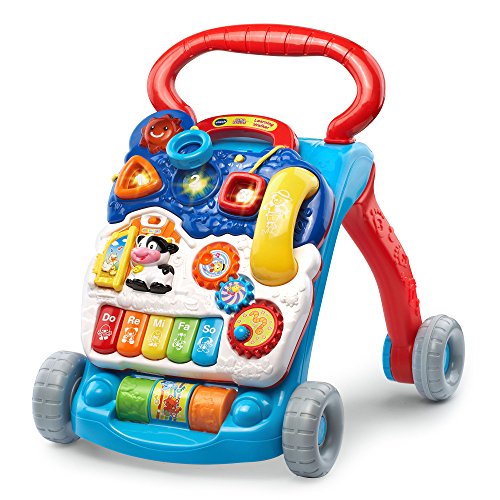
Best For: Babies who benefit from musical and cognitive stimulation alongside walking practice. This walker features a removable tray and a detachable panel that works on both carpet and bare floors, plus five piano keys and a pretend phone to encourage imaginative play.
Why selected: The integration of auditory training and motor development activities makes this ideal for early walkers who respond to music and role-play. The detachable tray supports on-the-go play as the child grows.
Caution: Detachable components should be reattached securely to ensure safe use during movement.
Safety 1st Ready, Set, Walk! DX

Best For: Parents seeking a stable walker with built-in entertainment and early learning cues. It offers a wide base for stability, three height positions, and 12 songs to engage sensory skills during walking practice.
Why selected: The extra-wide base and multi-sensory play help with balance, coordination, and problem-solving as babies take first steps. It emphasizes steady progression rather than speed.
Caution: The included toys and flashing light may require supervision to ensure small parts stay within reach of young children.
Fisher-Price Laugh & Learn Smart Stages Sis Walker
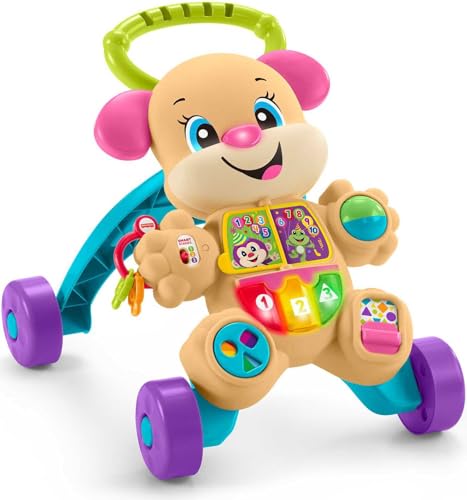
Best For: Growing toddlers who benefit from evolving play experiences. The walker transitions from sit-and-play to stand-and-walk and offers 75+ songs, sounds, and phrases across three Smart Stages to teach letters, shapes, colors, numbers, and basic Spanish words.
Why selected: This option provides a broad educational range as your child develops walking skills, making it a long-lasting choice. The activity set includes a light-up piano and multiple hands-on activities for cognitive growth.
Caution: The abundance of features may be overwhelming for very young or quickly distracted babies; gradual introduction is advised.
QDRAGON 3 in 1 Baby Walker

Best For: Parents seeking a versatile, multi-mode walker that supports sit-to-stand, push-along, and a detachable activity table. It’s designed with a stable triangle structure and a bottom design to reduce tipping risk.
Why selected: The 3-in-1 design offers extended usability as a child grows, combining a learning center with a traditional walker. The detachable activity panel adds enrichment without sacrificing mobility.
Caution: Weight and stability can vary with added water or sand in the lower structure; ensure proper use per age and supervision guidelines.
Buying Guide
What to look for in a first steps baby walker
Choose height-adjustable models to match your child as they grow. A stable base minimizes tipping risk, while a comfortable seat supports longer practice sessions. Look for age-appropriate activities that encourage both gross motor skills and early cognitive development.
Walkers with built-in activities vs. plain push toys
All-in-one activity walkers can entertain longer, helping babies stay motivated to practice walking. Simpler push toys may be lighter and easier to maneuver for new walkers. Consider your space and your child’s attention span when choosing.
Safety considerations
Ensure there are no sharp edges and that toy parts are securely attached. Prefer models with a wide base and stable frame. Always supervise babies during use and follow manufacturer weight and age recommendations.
Materials and maintenance
Wooden walkers offer durability and traditional play values, while plastic and metal frames are typically lighter and easier to clean. Regularly inspect wheels and joints for wear and clean surfaces to prevent dirt buildup.
Portability and storage
Flat-fold or compact designs help when you need to store the walker in small spaces. Consider foldability if you plan to travel or move the walker between rooms often.
Decision checklist
- Is adjustable height necessary for your child’s height progression?
- Do you prefer music and language development features?
- How important is a wide base for stability?
- Will you use it primarily at home or on the go?
FAQ
- What age should my baby start using a walker?
Most walkers are recommended for babies who can sit up steadily and hold their head up, typically around 6 months or older, depending on the product’s guidelines. - Are sit-to-stand walkers better than traditional walkers?
Sit-to-stand models support infants who are just learning to sit and stand, encouraging a gradual transition to walking while offering interactive play options. - Can walkers help with balance training?
Yes, many walkers provide stability features and motor play that support balance development during early steps. - Do walkers need to be used on carpet or hard floors?
Most walkers are designed for use on both surfaces, but wheels and tracking can perform differently on carpet versus hard floors. Check product specifics. - What safety features should I prioritize?
Look for a broad base, sturdy construction, rounded edges, and secure toy attachments. Supervise use at all times. - How long can my child use a walker before moving to a bigger toy?
Many children transition to a more advanced activity center once they begin walking confidently and show interest in more complex play.