The easiest baby carrier to put on by yourself focuses on simple design, intuitive adjustment, and secure support for both parent and baby. For busy parents, a carrier that’s lightweight, quick-dressing, and adaptable as your child grows is ideal. This guide highlights five carriers that balance simplicity with ergonomic safety, helping caregivers pick a model that fits their lifestyle. The selections favor easy one-person wear, breathable fabrics, and reliable hip-safe positioning for infants and toddlers.
| Product | Best For | Why It Stands Out |
|---|---|---|
| Momcozy Ergonomic Baby Carrier (Khaki) | Active parents, daily outings | Three adjustable sizes; built-in lumbar support; lightweight and easy to wear |
| Infantino Flip Luxe 4-in-1 (Onyx) | Growing babies, multi-position users | 4-in-1 design; updated lumbar support; ergonomic seat |
| Momcozy Newborn Carrier WeeSnug (Khaki) | Newborns to 25 lbs | Structured, womb-like fit; simple adjustments; breathable cotton |
| Infantino Flip 4-in-1 Convertible (Gray) | Versatile caregivers, newborn to toddler | Facing-in/out and back carry; adjustable for different bodies |
| Momcozy Air Mesh Carrier (Almond) | Hot climates and travel | Air mesh panel for airflow; hands-free comfort; grows with baby |
Momcozy Ergonomic Baby Carrier — Khaki

Best for: Busy parents who want hands-free comfort during daily tasks. This carrier emphasizes a lightweight, ergonomic design with a three-position size range to grow with your baby from newborn to toddler. The built-in EVA waist support adds lumbar relief for extended wear, and the padded straps help distribute weight evenly.
Why selected: Its combination of lightweight feel, adjustable fit, and lumbar support makes one-person dressing easier. The ergonomic M-position supports healthy hip development, and the wide adjustment range reduces the need for re-tying when sizes change.
Limitations: As with most soft-structured carriers, taller wearers may need a longer torso or additional adjustments to achieve the perfect fit.
Infantino Flip Luxe 4-in-1 — Onyx
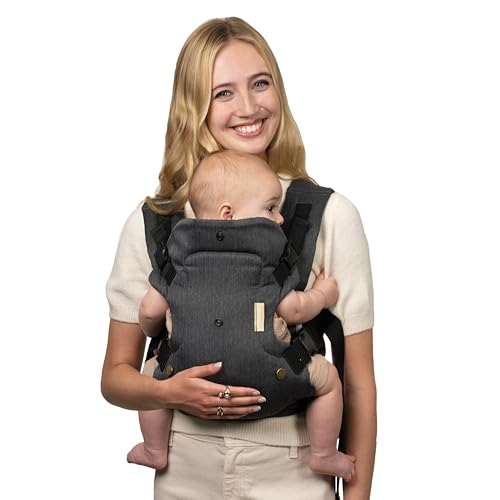
Best for: Parents seeking a long-term carrier that transitions from newborn to toddler with multiple carrying positions. This model features an updated lumbar belt and wider weight distribution for comfort during longer wear, plus ergonomic seating that adapts as your child grows.
Why selected: The four carrying configurations reduce the need to purchase separate carriers, and improved lumbar support helps minimize back strain during extended use. It’s a strong pick for households that value versatility and adjustability in one product.
Caution: Some users may find the initial setup a bit more complex due to multiple positions; take time to adjust before wearing for the first time.
Momcozy Newborn Carrier WeeSnug — Khaki

Best for: Newborns who need a snug, womb-like fit and parents who prioritize a soft, breathable fabric. WeeSnug emphasizes comfort with a cross-back support design and easy adjustments that accommodate early growth spurts.
Why selected: The carrier is designed to cradle a newborn with proper ergonomic positioning and a visual adjustment scale inside the waistband to help achieve the correct width for your baby’s height, supporting hip and spine development.
Limitation: The range tops out around 25 lbs, so transitioning to a larger carrier will be needed as the child grows.
Momcozy Air Mesh Carrier — Almond
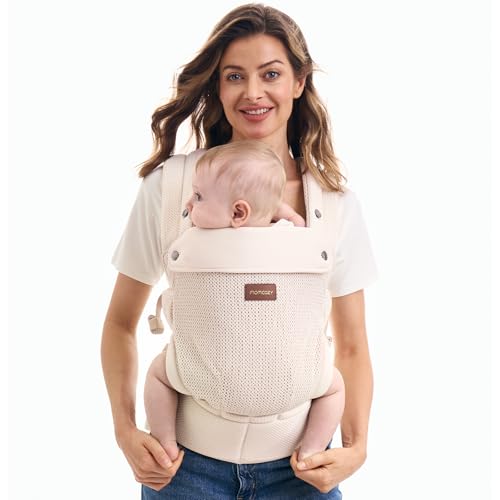
Best for: Parents in warmer climates or during travel where airflow matters. The air mesh panel enhances ventilation while maintaining a secure fit and good support for both baby and caregiver.
Why selected: This model combines hands-free functionality with breathable materials, helping both parties stay cool on outings. It is a practical choice for hot days or crowded venues where moisture control matters.
Caution: Mesh fabrics can show wear in high-friction areas; inspect the structure and seams regularly for signs of stretching or wear.
Buying Guide: Key Purchase Considerations
- Fit and adjustability: Look for carriers with well-padded shoulder straps, a supportive waist belt, and simple, intuitive adjustments to snugly fit diverse body shapes and sizes.
- Growth range: Choose models that transition from newborns to toddlers without needing a second carrier. 4-in-1 or 3-in-1 designs offer longer usability.
- Ergonomic design: Ensure the carrier supports the hips in an M-position, with a broad seating area and proper leg opening to promote healthy hip development.
- Fabric and breathability: For warm climates, prioritize breathable fabrics like cotton blends or mesh panels to keep both parent and baby comfortable.
- Ease of use: Favor designs that are quick to put on and take off by one person, with straightforward height and width adjustments.
- Weight distribution: Look for carriers with a sturdy waist belt and even weight distribution to minimize back strain during extended wear.
Frequently Asked Questions
- Q: Which baby carrier is easiest to put on by yourself? A: Carriers with simple wrap-free designs, few adjustment points, and intuitive waist-belt systems tend to be easiest for one-person use.
- Q: Do these carriers support newborns safely? A: Yes, many models include ergonomic seats and adjustable widths to provide proper hip and spine support for newborns.
- Q: Can I use the same carrier from birth to toddlerhood? A: Some carriers offer 3-in-1 or 4-in-1 configurations that accommodate growth, reducing the need to buy multiple carriers.
- Q: Are there carriers better for hot weather? A: Yes, models with air mesh panels or lightweight fabrics are designed to improve airflow and cooling.
- Q: What should I avoid when choosing a carrier? A: Avoid carriers with narrow seats or poorly distributed weight, which can stress the back or impede baby’s leg development.
- Q: How do I ensure a safe fit for hip development? A: Ensure the baby sits in an ergonomic M-position with knees higher than hips and all straps snug but comfortable.