Finding the right chupones for recien nacidos helps soothe a fussy newborn while supporting healthy oral development. This guide highlights five top pacifiers designed for 0–6 month babies, focusing on safety, comfort, and ease of use. Ideal buyers include new parents seeking medically approved, one-piece designs, and caregivers who want orthodontic-friendly options. The following table compares key choices to help quick decisions.
| Product | ||
|---|---|---|
| Philips Avent Soothie Lilac (4 Pack) | Newborns 0–3 months; breastfed or bottle-fed | One-piece medical-grade silicone; BPA-free; durable |
| Philips Avent Soothie Green (4 Pack) | Newborns 0–3 months; preference for green | Same One-piece design; flexible silicone; AAP-aligned |
| NUK Timeless Comfy Pacifier (5-Pack) | Newborns to 0–6 months; for natural sucking | Breast-like shape; orthodontic nipple helps oral development |
| MAM Original Start Pacifiers (2–4 Pack) | Smaller newborn mouths; skin-soft silicone | Orthodontic-friendly, glow-in-the-dark, dermatologically tested |
| Dr. Brown’s HappyPaci (3-Pack) | 0–6 months; easy transition from bottle | Contoured shield; 100% silicone; familiar bottle nipple shape |
Philips Avent Soothie Lilac Pacifier 4 Pack

The Soothie Lilac pacifier is a 100% silicone, one-piece design created for newborns 0–3 months. Its medical-grade silicone provides gentle, consistent support for natural suckling while aiming to aid early oral development. The design is BPA-free and aligns with pediatric guidelines, making it a straightforward choice for caregivers prioritizing safety and ease of cleaning. Best for parents who want a simple, durable option that can be sterilized easily.
Who it’s best for: new parents seeking a straightforward, hospital-grade pacifier that supports early feeding routines without extraneous parts. Limitation: only available in certain colors in some bundles; check color options before purchase.
Philips Avent Soothie Green Pacifier 4 Pack

Similar to the lilac variant, the Soothie Green pacifier is a 100% silicone, one-piece design for newborns. It supports self-soothing while helping with natural oral muscle development. Its durable silicone construction is BPA-free and easy to clean, suitable for frequent use. Best for households that prefer a green color or want an additional color option without compromising safety.
Who it’s best for: families seeking color variety within a trusted, single-piece pacifier. Limitation: color availability may vary by retailer or bundle.
NUK Timeless Comfy Pacifier (5-Pack)

The NUK Timeless Comfy Pacifier features a 100% silicone, one-piece design with a breast-like nipple shape to fit a newborn’s palate. The orthodontic nipple supports healthy oral development, and the 5-pack provides a value option for growing families. Best for parents who want a breast-like shape that may ease transitions between feeding and pacifying. Caution: ensure correct size for your baby’s mouth to avoid gagging or discomfort.
Who it’s best for: caregivers prioritizing a natural-feel nipple and a larger pack for ongoing use. Limitation: may take slightly longer to find the most comfortable fit for individual babies compared to narrower designs.
MAM Original Start Pacifiers (2 Pack)
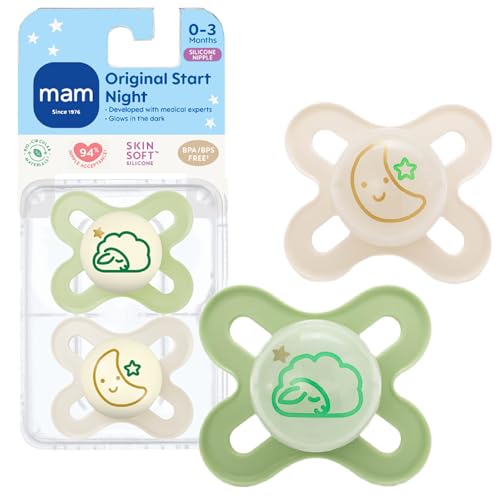
The MAM Original Start Pacifier is designed for smaller newborn mouths. Its SkinSoft silicone nipple offers a familiar latch, and the orthodontic shape supports healthy oral development. Glow-in-the-dark feature helps nighttime locating, and the 2-pack is ideal for families with multiple babies or backup options. Best for early-starting babies who benefit from a gentle, skin-friendly nipple.
Who it’s best for: parents wanting a smaller nipple and easy nighttime visibility. Limitation: fewer units per package than larger packs, so inventory planning is needed for frequent use.
Dr. Brown’s HappyPaci 100% Silicone Pacifier (3-Pack)

Dr. Brown’s HappyPaci offers a contoured one-piece silicone design appropriate for newborns 0–6 months. The shape mirrors familiar bottle nipples, potentially easing transitions between feeding and pacifying. The shield is butterfly-shaped to keep space for the nose and cheeks, which can improve comfort for some babies. Best for families who want a familiar-feel nipple and a gentle contour. Limitation: not all babies may prefer the butterfly shield layout, so initial experimentation may be needed.
Buying Guide
- Material and Safety: Look for 100% medical-grade silicone or BPA-free materials. One-piece designs reduce choking risk from detachable parts and are easier to clean and sanitize.
- Age Range and Size: Most newborn-focused pacifiers cover 0–3 or 0–6 months. Ensure the size matches your baby’s current mouth development.
- Oral Development: Orthodontic or breast-like nipple shapes can support natural tongue and palate growth. Choose a design that aligns with a pediatrician’s guidance if you have concerns about development.
- Ease of Cleaning: Single-material pacifiers are typically dishwasher-safe or easy to sterilize. Consider whether you want a warmer color or glow-in-the-dark features for nighttime visibility.
- Durability and Value: Multi-pack options are cost-effective for ongoing use and replacements, but ensure the design’s durability meets your family’s daily routine.
- Breastfeeding Considerations: For breastfeeding families, choose pacifiers labeled as compatible with breastfeeding and designed to support latching and milk intake without interference.
- Color and Aesthetic: Some parents prefer certain colors or brands due to availability in bundles. Color does not affect safety, but it may affect preference and routine satisfaction.
Frequently Asked Questions
- Are pacifiers safe for newborns? Yes, when used as directed, pacifiers can help soothe newborns and support feeding routines. Choose BPA-free, one-piece designs and consult a pediatrician if you have concerns about oral development.
- When should I start using a pacifier? You can introduce a pacifier after the initial breastfeeding establishment or once your baby seems to seek oral soothing, typically within the first few weeks.
- How do I clean pacifiers? Most are dishwasher-safe or can be sterilized by boiling. Always dry thoroughly before giving back to the baby.
- Can pacifiers affect teeth development? Prolonged and unsupervised use can influence dental alignment. Use age-appropriate shapes and discontinue pacifier use as advised by your pediatrician or dentist.
- What is the best pacifier for breastfeeding? Look for pacifiers designed to minimize nipple confusion and support natural latch. Many pediatric guidelines recommend starting with nipple-shaped or orthodontic designs and monitoring the baby’s response.
- How many pacifiers should I have? A few on hand is usually enough for typical daily use, with extra sets for travel or laundering cycles.