Answering the demand for affordable, reliable electric breast pumps, this guide highlights five cost-effective options well-suited for home, work, and travel. Each pick targets different needs—from wearable hands-free designs for busy moms to traditional hospital-grade models for steady pumping at home. The buyers here typically seek value without sacrificing essential features like adjustable suction, multiple modes, and portability. Below is a quick comparison table of the five top products to help you decide at a glance.
| Product | Best For | Key Advantage |
|---|---|---|
| NCVI Electric Breast Pump 8782 | Home and travel use; budget-conscious | Rechargeable with 4 modes and 9 levels |
| Smart Double Sides Wearable Breast Pump (KISSBOBO MOM) | Hands-free pumping on the go | Wireless, lightweight, LCD display |
| Lulia Double Electric Breast Pump | New moms needing portability | 4 modes, 9 levels with LED display |
| Paruu P16 Wearable | Maximum mobility with strong suction | 4 modes, 12 levels, LED display |
| Wearable Double Electric in-Bra Pump (PEEH) | Hands-free, discreet pumping | 3 modes, 9 levels, anti-backflow |
NCVI Electric Breast Pump 8782

Best for: Mothers who want a hospital-grade feel in a portable, rechargeable unit. This model suits those who prefer a traditional double-pump design with reliable suction across modes.
Why selected: It offers four modes and nine levels to customize stimulation and expression. The 2200mAh battery supports multiple sessions without frequent recharging, and components are dishwasher-safe apart from electrical parts. The anti-backflow design reduces milk backup and keeps tubing cleaner.
Limitations: The product data does not specify isolation ratings for all components, so care should be taken to keep electrical parts dry during cleaning.
Smart Double Sides Wearable Breast Pump (KISSBOBO MOM)

Best for: On-the-go moms who want a compact, wireless pumping option without sacrificing capacity.
Why selected: This wearable pump emphasizes portability with a lightweight design and a new LCD touchscreen for easy monitoring. It provides 2 modes and 9 levels to tailor suction and comfort, ideal for discreet sessions away from home.
Limitations: Battery life details are not provided beyond general claims; heavy use may require frequent charging. Ensure a secure fit for longer sessions to maximize comfort.
Lulia Double Electric Breast Pump

Best for: Mothers seeking a balance of power and portability with clear user interfaces.
Why selected: It matches a standard 4-mode, 9-level configuration with an LED display and a BPA-free, food-grade build. The kit includes multiple flanges and accessories, supporting various breast sizes and milk storage needs.
Limitations: As a portable device, it may not replace a hospital-grade unit for all-day pumping; check your typical pumping regimen to ensure it meets your volume needs.
Paruu P16 Wearable Breast Pump
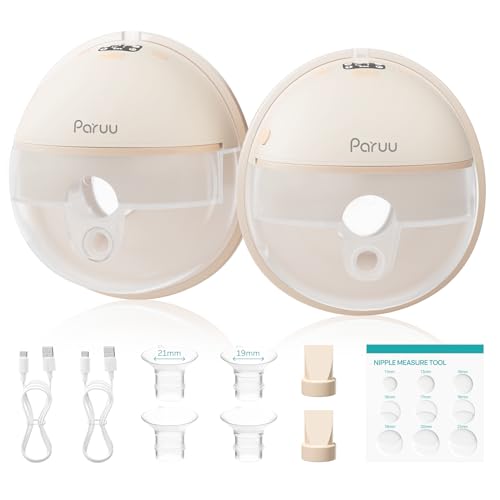
Best for: Moms who want maximum mobility with customizable pumping rhythm and a compact wearable design.
Why selected: The P16 offers 4 modes and 12 levels, with a strong suction range and a slim, light frame. An LED display makes operation intuitive, and the model provides a 30-minute automatic shut-off for convenient routine use.
Limitations: Suction strength can vary with flange fit; ensure proper seal and check valves if performance drops.
Wearable Double Electric in-Bra Pump (PEEH)

Best for: Women who prioritize hands-free operation and quiet performance in a discreet package.
Why selected: The PEEH model uses a compact, wearable in-bra design with 3 modes and 9 levels. It emphasizes a low-noise experience and anti-backflow protection, suitable for pumping during meetings, commutes, or travel.
Limitations: As with other wearable pumps, milk output may be more modest per session compared with traditional double-pump setups; plan for multiple sessions if total daily output is high.
Buying Guide
What to consider when choosing a cheap electric breast pump
- Pumping style: Do you prefer a traditional double-pump or a wearable, hands-free design? Wearables offer mobility but may have lower per-session output.
- Mode and suction range: Look for models with multiple modes and adjustable suction, such as massage, stimulation, and expression, plus levels to match comfort and milk flow.
- Portability and power: Decide between USB-rechargeable, battery-powered, or mains-powered options. Battery life matters for travel and daily commutes.
- Cleaning and materials: Choose BPA-free, food-grade materials. Check if most components are dishwasher-safe for easy cleaning.
- Fit and compatibility: Flange sizes (e.g., 17–24 mm) influence comfort and milk expression. Ensure the kit includes a range of sizes or is compatible with your preferred size.
- Noise level: For late-night pumping or office use, consider pumps advertised as low-noise or quiet operation.
- Maintenance and durability: Look for sealed backflow protection and reliable seals to minimize milk backup and cleaning complexity.
FAQ
- What type of pump is best for travel? Wearable, hands-free pumps are typically best for travel due to portability and discretion.
- Are cheap electric pumps reliable for daily use? They can be suitable for occasional or light daily pumping, but traditional hospital-grade pumps may be preferred for higher daily output.
- Do these pumps require a lot of maintenance? Most models use dishwasher-safe parts, but you should regularly inspect valves and diaphragms for wear.
- Is backflow protection important? Yes—the backflow protector reduces the risk of milk entering tubes and ensures better hygiene.
- Can I use these pumps with different flange sizes? Some kits include multiple flange sizes; if not, consider purchasing compatible sizes separately.
- How do I choose the right suction level? Start on a lower setting and gradually increase until you reach a comfortable, effective level without pain.