Choosing a car seat for a child around 60 pounds means prioritizing safety, long-term usability, and easy adjustability. This guide highlights five top booster seats that are well-suited for kids near 60 pounds, addressing families who want durable, versatile options. The selections cover highback and backless boosters, 3-in-1 harness boosters, and seats designed for three-across seating. Each option is explained with who it’s best for, why it was chosen, and practical cautions to consider when shopping.
Summary Table of Selected Products
| Product | Best For | Why It Stands Out | Limitation |
|---|---|---|---|
| Graco TurboBooster 2.0 Highback Declan | Families needing a 2-in-1 seat with growing-child support | Converts from highback to backless; strong safety features | Higher price for 2-in-1 flexibility |
| Graco TurboBooster 2.0 Backless Denton | Big kids who require a lightweight, simple booster | Good weight range to 100 lb; trusted Graco ProtectPlus | Backless only; not suitable for younger children |
| Graco Tranzitions 3-in-1 Harness Booster | Families seeking one seat across stages | 3-in-1 design with simple harness adjustments | Higher weight range starts at 40 lb for booster mode |
| Safety 1st Grand 2-in-1 Booster | Carpooling families needing compact, versatile seating | 2-in-1 with slim profile, three-across friendly | May feel bulkier in some smaller cars |
| Evenflo GoTime LX Booster (Astro Blue) | Parents wanting easy height adjustments | 7-position height settings; quick transition modes | Backless mode only after age threshold |
Graco TurboBooster 2.0 Highback Declan

The Graco TurboBooster 2.0 Highback Declan is a 2-in-1 booster that grows with your child from highback to backless. It’s best for families seeking extended use as a child approaches 60 pounds and wants additional neck and head support during longer rides. The seat features height-adjustable armrests and head support for enhanced comfort, alongside Graco ProtectPlus engineered safety testing for comprehensive protection across common crash scenarios.
Who it’s for: A family prioritizing a single seat that covers both highback and backless phases, and a child who benefits from extra head support in the vehicle. Why selected: The 2-in-1 design reduces the need for a separate seat and aligns with children approaching the upper end of typical booster weight ranges. Caution: The higher price point reflects the dual functionality, so budget-conscious buyers should weigh long-term use against upfront cost.
Graco TurboBooster 2.0 Backless Denton

The Graco TurboBooster 2.0 Backless Denton is a lightweight, backless booster designed for kids who are ready to ride without a highback. It supports children from about 40 to 100 pounds and up to 57 inches tall, making it well-suited for heavy kids who still need a booster seat. The ProtectPlus engineering provides rigorous crash testing for frontal, rear, and rollover crashes, plus additional testing under extreme conditions.
Who it’s for: Families with a larger child who can sit properly without a highback and wants a portable booster. Why selected: It’s a straightforward, well-tested option that emphasizes weight range and portability. Caution: Not ideal for younger children who still need head and neck support in a crash or in cars with lower seat belt routing height.
Graco Tranzitions 3-in-1 Harness Booster

The Graco Tranzitions 3-in-1 Harness Booster offers a harness booster, a highback booster, and a backless booster in one seat. It supports forward-facing use from 26.5 to 65 pounds, then converts to a highback booster up to 100 pounds, and finally to backless booster up to 100 pounds. The harness and headrest adjust together with the No-Rethread Simply Safe Adjust system for easy, quick fitting.
Who it’s for: Families wanting a long-lasting seat that can transition through multiple stages without needing a new seat. Why selected: It provides a smooth progression for a growing child while maintaining consistent safety features. Caution: Booster minimum weight for the top mode begins at 40 lb, so earlier transitioning may require a separate seat for lighter children.
Safety 1st Grand 2-in-1 Booster
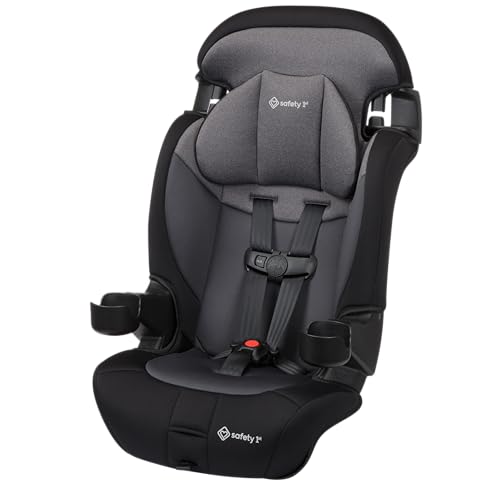
The Safety 1st Grand 2-in-1 Booster is designed to grow with a child from 40 to 100 pounds, evolving from a highback harness booster to a belt-positioning booster. Its slim design helps it fit more easily in vehicles with three-across seating, making it a practical choice for larger families or carpools. The lightweight frame ensures easier transfer between vehicles.
Who it’s for: Families needing a compact, versatile seat that fits in tighter back seats. Why selected: It balances a slim profile with broad weight-range coverage, enabling widespread use. Caution: Some users may find the seat less cushioned in longer trips, depending on vehicle upholstery and seat padding.
Evenflo GoTime LX Booster (Astro Blue)
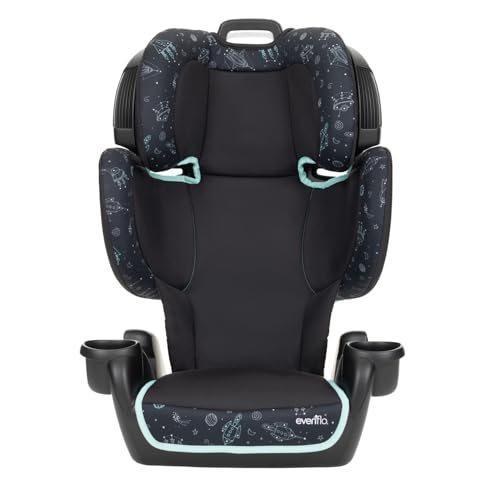
The Evenflo GoTime LX Booster offers 7-position height adjustment and two transition modes, enabling a highback or backless configuration as needed. It is positioned as a practical option for growing children within the 40 to 120-pound range. The design emphasizes easy height adaptation for a better fit over time.
Who it’s for: Parents seeking straightforward height control and simple mode transitions. Why selected: The adjustable height combined with a flexible transition makes it a dependable choice for households withvarying seating needs. Caution: Backless mode should be used only when the child meets appropriate height and behavior criteria, as per safety guidelines.
Buying Guide: Key Purchase Considerations
- Weight and Height Ranges: Ensure the seat supports your child’s current weight and height and offers room to grow toward the 60-pound mark and beyond.
- Booster Type and Longevity: Decide between highback, backless, or 3-in-1 designs based on vehicle compatibility, travel needs, and how long you want to use the seat.
- Harness vs. Belt-Positioning: Some seats stay in harness mode longer; others convert to boosters with minimal adjustments. Consider your child’s maturity and ability to sit properly in a booster.
- Ease of Use: Look for quick-adjust harness systems, simple headrest height changes, and easy cleaning features for busy families.
- Vehicle Fit: Slim profiles help with three-across seating. If you carpool or shuttle vehicles, prioritize seats with a lighter weight and easy transfer.
- Safety Features: Verify that the seat complies with current safety standards and includes crash-tested construction appropriate for front, side, and rollover scenarios.
- Installation Method: Check whether the seat uses LATCH or seat belt installation and whether it remains securely anchored across different cars.
Frequently Asked Questions
- What age or weight is best for transitioning from highback to backless boosters?
Answer: Many children transition when they consistently meet the seat belt fit guidelines in booster mode, typically around 40-60 pounds, but always follow the seat’s weight chart and the child’s height and seating position. - Is a 3-in-1 booster worth the extra cost?
Answer: If you prefer fewer seats and want the seat to last through multiple growth stages, a 3-in-1 can be cost-effective and space-saving, though it may be bulkier. - Can I use a booster seat in three-across configurations?
Answer: Yes, some slim-profile boosters are designed to fit three across, but outcomes depend on vehicle seat dimensions and seat belt routing. - What is ProtectPlus or similar safety engineering?
Answer: It refers to a brand-specific combination of crash tests across various crash scenarios, designed to improve overall protection in real-world use. - How important is ease of cleaning for a booster seat?
Answer: Very important for busy families; removable, machine-washable covers and dishwasher-safe cupholders simplify maintenance. - Are backless boosters safer than highbacks?
Answer: Backless boosters require proper belt placement and older children who meet the height and weight requirements; highbacks provide head and neck support in a crash when a vehicle lacks headrests.