Answer: For an 8-year-old, a high-back or backless booster that suits their height, weight, and vehicle seat belt fit is ideal. The top picks below are designed for kids roughly 40–110 pounds and up to about 57 inches tall, offering strong belt guides, age-appropriate comfort, and easy installation. These options are best suited for families seeking durable, travel-friendly boosters that support proper seat belt positioning as children grow. The summary table highlights key details to compare at a glance.
| Product | Type | Weight Range | Best For |
|---|---|---|---|
| Graco TurboBooster 2.0 Backless Denton | Backless | 40–100 lb | Big-kid travelers seeking a compact, lightweight option |
| Graco TurboBooster 2.0 Highback Declan | Highback (convertible to backless) | 40–100 lb | Growing child needing extra head/neck support |
| Graco TurboBooster 2.0 Backless Barbie | Backless | 40–100 lb | Kids who prefer minimal footprint |
| Chicco GoFit ClearTex Plus | Backless with LATCH | 40–110 lb | Travel-friendly with quick-release and carry features |
| Cosco Topside Backless Booster Leo | Backless | 40–100 lb | Lightweight, portable booster for multiple vehicles |
Graco TurboBooster 2.0 Backless Denton

This backless booster is designed for big kids from ages 4–10, weighing 40–100 pounds and up to 57 inches tall. It leverages Graco ProtectPlus Engineered for enhanced safety across frontal, rear, and rollover crashes. Best for families needing a lightweight, compact booster that transfers easily between vehicles. Limitations include no back support, which may reduce neck protection for taller kids when used on vehicles with offset belts.
Graco TurboBooster 2.0 Highback Declan

This 2-in-1 booster converts from a highback to a backless booster, accommodating a growing child. It includes Graco ProtectPlus Engineered safety testing and comfortable features like height-adjustable armrests and head support. Best for children who may need extra neck support or who frequently switch between vehicles. Choose this if you want a single seat that adapts as your child grows. A potential limitation is the taller profile when used as a backless in tight rear seating area.
Graco TurboBooster 2.0 Backless Barbie

Barbie-themed backless booster designed for kids aged 4–10, 40–100 pounds, up to 57 inches tall. It carries Graco ProtectPlus Engineered for comprehensive crash testing. Best for kids who are motivated by a familiar character and need a lightweight booster for travel. Limitation: backless design means less side protection and head support compared to highback models.
Graco® TurboBooster® LX Backless with Affix Latch

Backless booster with a Front-adjust LATCH system for quick securing, suitable for big kids 40–100 pounds and 43–57 inches tall. Best for families who want a straightforward, stable installation with LATCH plus belt positioning. Consider that as a backless seat, it offers less upper-body support in certain seating configurations.
Cosco Topside Backless Booster Leo

Cosco Topside is a lightweight, compact backless booster designed for children 40–100 pounds and 43.4″–57″ tall. Best for families needing a portable booster that can be easily moved between vehicles and used for travel. A limitation to note is the lack of back support, which may be a consideration for longer rides or taller kids needing extra neck support.
Chicco GoFit ClearTex Plus
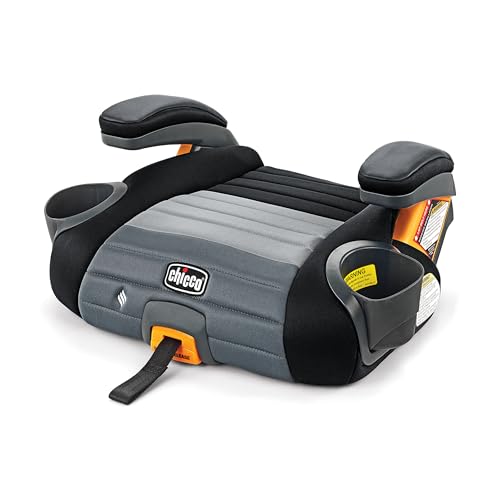
GoFit ClearTex Plus is designed for children 4 years and older, weighing 40–110 pounds, and 44–57 inches tall. It includes LATCH for stability, a quick-release latch for easy removal, and an ErgoBoost contoured seat for comfort. Best for families seeking a quick-attach booster with convenient one-hand removal. Limitation: backless design may offer less side impact protection compared with highback models.
Buying Guide
What type should I choose?
- Backless boosters are light, compact, and easy to move but provide less upper-body support. They’re best for smaller vehicles or when seat belt fit is easy to align with the lap and shoulder belts.
- Highback boosters offer head and neck support and are preferable if your child needs extra protection or if head restraints in your vehicle are low.
How do I ensure proper belt fit?
- Always check that the lap belt lies flat across the upper thighs and the shoulder belt sits across the chest and shoulder, not the neck or face.
- Use a booster with belt guides or a built-in clip to help position belts correctly for your child’s size.
What about installation and ease of use?
- Models with LATCH or Affix systems can simplify secure mounting in compatible vehicles.
- Consider a booster with quick-release features if you frequently transfer the seat between cars or need easy in-and-out access for the child.
How do I choose for travel or multi-vehicle households?
- Look for lightweight boosters, compact designs, and durable fabrics that are easy to clean. Backless options are typically more portable, while highbacks offer more protection in some seating arrangements.
FAQ
- What is the recommended age range for booster seats? – Booster seats are typically used for children who have outgrown car seat harnesses and are about 4 years old or older, depending on size and local regulations.
- What height or weight should I consider for a booster? – Most boosters target children in the 40–110+ pound range and up to about 57 inches tall.
- Is a backless booster safer than a highback booster? – Highback boosters provide head and neck support and may offer better protection in some crashes, especially if vehicle head restraints are low.
- Can boosters be used in any vehicle? – Boosters work in most vehicles, but you should verify belt routing and headrest availability for optimal fit.
- Do boosters require installation with LATCH? – Some boosters offer LATCH or Affix systems for easier installation, but many rely on the vehicle seat belt for secure fit.
- How should I clean booster seats? – Use manufacturer-approved methods; most fabric covers are machine-washable or spot-cleanable, but always follow care labels.