Finding the right standing play table helps babies move from floor play to upright exploration while supporting developmental milestones. This guide highlights five standout options that transition from floor to standing activity, explaining who each is best for and why. Ideal buyers include parents seeking multi-stage toys, caregivers prioritizing interactive learning, and gift-givers looking for long-lasting versatility. Below is a quick comparison to help you decide which table matches your child’s age and interests.
| Product | Best For | Why It Stands Out |
|---|---|---|
| VTech Sit-to-Stand Learn and Discover Table, Pink | Infants starting to stand (6+ months) | Transforms from floor toy to two-way learning table with six stations |
| VTech Buzz and Learn Activity Table with Seven Interactive Play Zones, Pink | Growing toddlers | Seven zones with light-up buttons and music for cause-and-effect play |
| Skip Hop Baby Activity Center: 3-Stage Grow-with-Me | From baby to toddler (4 months+) | Three stages, 360° seat, and a flat surface for crafts when standing |
| Little Acorn 4-in-1 Baby Activity Center | Toddlers and pre-walkers | Four play modes including tummy time and toddler table with Montessori toys |
| Baby Einstein Curiosity Table Activity Play Station | Early explorers (12 months+) | Multi-STEAM activities with removable legs for varied play modes |
The following sections break down each option, including what makes it a fit for different families and any practical caveats to consider before buying.
VTech Sit-to-Stand Learn and Discover Table, Pink
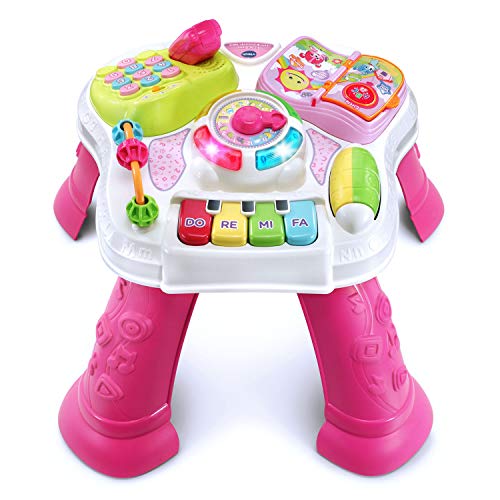
This table supports growth from a floor toy to a two-way learning station. It features a six-learning-station electric panel designed for infants 6+ months. The setup encourages imaginative play with a pretend phone, light-up piano keys, and an interactive book. Best for: babies beginning to stand who enjoy musical and cause-and-effect activities. Caution: smaller parts near the edge may pose a choking risk for very young infants; monitor during play.
VTech Buzz and Learn Activity Table with Seven Interactive Play Zones, Blue
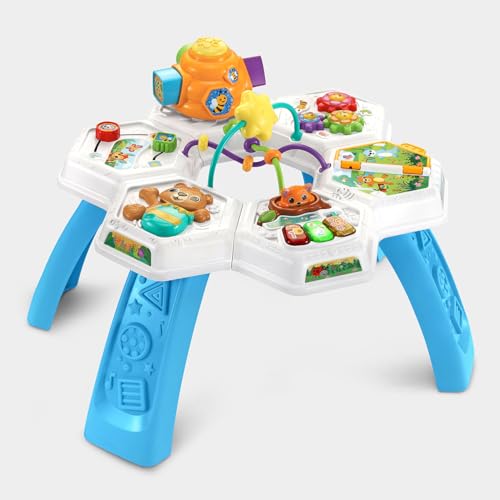
Designed to grow with a child, this table features seven play zones and light-up elements that produce music notes and color cues. It promotes laterally reaching, color recognition, and number basics. Best for: toddlers who enjoy music, animals, and interactive screens. Caution: ensure batteries are properly installed and not accessible to young children.
LeapFrog Little Office Learning Center, Green
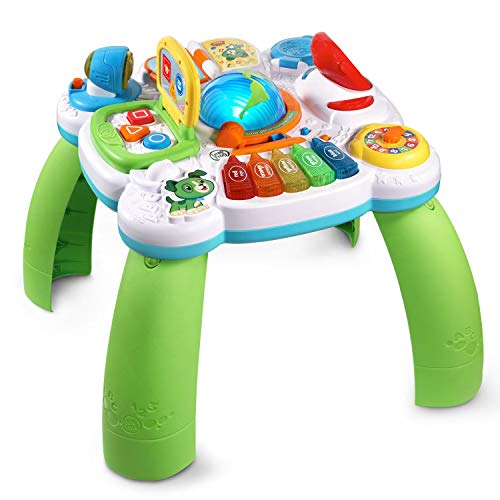
This desk-style activity center includes a laptop, phone, globe, and 27 electronic touch points for imitative play. It supports Explore, Learn, and Music modes to expose early words and international greetings. Best for: kids who love pretend work and role-play. Caution: not all activities are suitable for very small hands; supervision helps maintain safe interaction as skills develop.
Skip Hop Baby Activity Center: Interactive Play Center
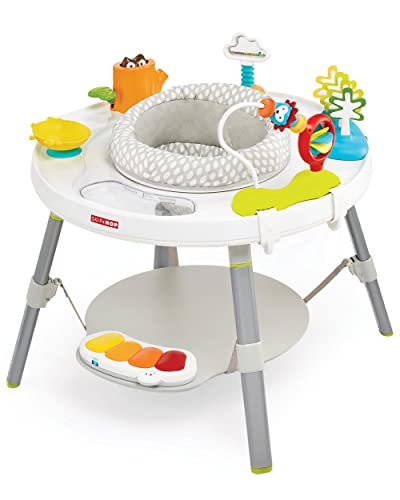
This center grows with your child across three stages, from sitting to standing, and finally to a toddler table. It includes a 360° rotating seat and over 25 activities. Best for: families seeking a single, long-lasting play solution with customizable toy placement. Caution: requires 3 AAA batteries (not included) for the musical features.
Little Acorn 4-in-1 Baby Activity Center
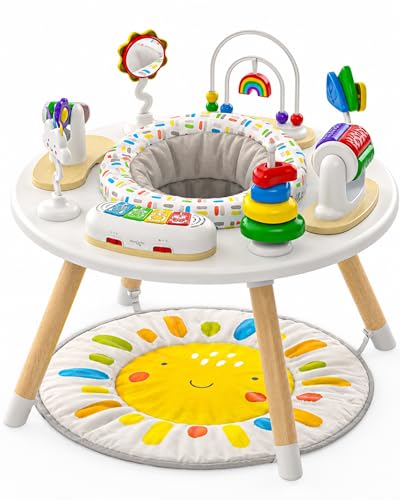
Designed to grow with a baby, this multi-stage activity center offers four play modes from tummy time to a toddler table. It includes Montessori-inspired toys and an interactive piano with more than 30 phrases, sounds, and songs. Best for: families seeking a Montessori-style, long-term development toy. Caution: batteries are required for the piano; include replacements on gift lists if needed.
Buying Guide: Key Considerations for a Standing Play Table
Purpose and age range: Look for options that transition from floor to standing play and accommodate your child’s current and near-future age. Multi-stage designs are ideal for longer use.
Learning features and play variety
Prioritize tables with a mix of sensory, auditory, and fine motor activities. Buttons, pops, lights, and music can enhance engagement and cause-and-effect understanding.
Durability and safety
Choose sturdy stands, rounded edges, and materials that wipe clean. Check for small parts but also ensure the design allows safe play during early walking attempts.
Setup, storage, and space
Consider the room size and whether the table folds or disassembles for storage. A larger, multi-zone table may require more space but reduces clutter by consolidating activities.
Maintenance and accessibility
Look for easy-to-clean surfaces and toys that are removable for cleaning or replacement. Some models come with reusable or washable toy components that simplify maintenance.
Warranty and support
Verify if there is a manufacturer warranty or replacement parts, especially for components that plug in or have moving parts.
FAQ: Standing Play Tables for Babies and Toddlers
- What age should my child start using a standing play table? Most tables are suitable from around 6 months to 12 months as the child gains sitting and standing balance, and many continue to be engaging through toddler years.
- Are standing tables safe for toddlers? Yes, when used with supervision and placed on level, stable flooring. Ensure the area is free of hazards and edges are rounded.
- How many activities should a table have? More than three engaging zones typically provides varied stimulation; however, the key is age-appropriate activities that promote motor skills and cognitive development.
- Can these tables be used on carpet? They can, but a smooth, flat surface improves stability. If on carpet, consider a floor mat to prevent tipping or wobbling.
- Do these toys require batteries? Several models include electronic sounds and lights that run on batteries. Check the product details to ensure you have the right replacements on hand.
- Is it better to buy multiple small toys or one multi-function table? A multi-function table reduces clutter and supports coordinated play across stages, while individual toys can target specific skills. Your choice depends on space, budget, and your child’s interests.