Answer: The best baby sippy cups for 6 months and older are those designed to ease the bottle-to-cup transition, with soft spouts or weighted straws, easy-grip handles, and spill-proof valves. This guide highlights five top options that support growing oral skills, catch spills, and adapt as your baby learns. The right cup depends on your child’s grip, chewing stage, and whether you prefer straw or spout designs. The table below compares key details for quick reference.
| Product | Best For | Spout/Straw Type | Notes |
|---|---|---|---|
| Dr. Brown’s Milestones Straw Cup | Babies learning straw drinking | Weighted straw | Removable handles; grows with baby |
| NUK Learner Cup 5 oz (2-pack) | Toddlers transitioning from bottle | Soft spout | Removable anti-slip handles |
| NUK Small Learner Tritan Cup | Young sip beginners | Soft spout | Lightweight; BPA-free |
| Nuby Clik-It Grip N’ Sip Cup (3-pack) | Spill-prone infants | Soft spout with NO-SPILL valve | Clik-It lid; easy grip handles |
| Moonkie 3-Stage Cup (4 oz) | Growing infants to toddlers | Three-in-one: straw, spout, open cup | Soft silicone; versatile design |
Dr. Brown’s Milestones Straw Cup

Best For: Babies who are starting to drink from a straw. This cup offers a weighted silicone straw that moves with the liquid, helping baby sip from any angle. The contoured cup and side-grip handles support a secure hold for small hands. Choosing this cup is ideal when you want a smooth transition from bottle to straw drinking, with the added benefit of a durable, BPA-free design.
Why selected: The weighted straw design accommodates variable liquid flow and encourages independent sipping. Removable handles let you adapt as motor skills improve. A potential limitation is that some babies may need time to adapt to straw drinking if they’re new to straws.
NUK Learner Cup 5 Oz (2-Pack)
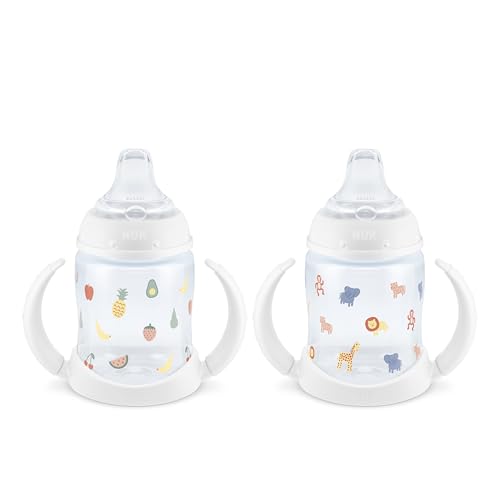
Best For: Quick bottle-to-cup transition with a soft spout. This two-pack is practical for families needing backups or rotating cups. Anti-slip handles are easy for little hands and removable as baby grows. The spill-proof design reduces mess during on-the-go feeding.
Why selected: Simple, compact, and BPA-free. The soft spout is gentle on gums while teaching cup drinking. A caution: smaller 5 oz capacity may require more frequent refills for very thirsty toddlers.
NUK Learner Cup 5 Oz (Single)

Best For: Parents seeking a single-cup option with easy grip and spill protection. The anti-slip handles stay put as weights and mobility increase. It helps babies advance from bottle to cup without leaks.
Why selected: It supports a straightforward transition with a reliable spill-proof spout. A limitation: not ideal for very aggressive chewers; spills may occur if the valve wears out over time.
NUK Small Learner Tritan Cup

Best For: Lightweight, easy-to-hold cup for new drinkers. This BPA-free cup emphasizes a soft spout and spill-proof performance, with removable handles for growing grip strength.
Why selected: The Tritan construction keeps weight down and resists cracks. Useful for early learners. Caution: smaller volume means more frequent refills during hunts for the last few sips.
Nuby Clik-It Grip N’ Sip Cup (3-pack)

Best For: Spill-prone babies who need a reliable no-spill mechanism. The built-in Clik-It valve opens only when sipping, helping minimize mess. Three-pack offers variety for at-home use and travel.
Why selected: The design emphasizes grip and control for little hands. Limitation: larger 10-ounce capacity may be too much for very early sippers; monitor how easily a child handles the larger cup.
Moonkie Silicone Baby Sippy Cups (4 oz)
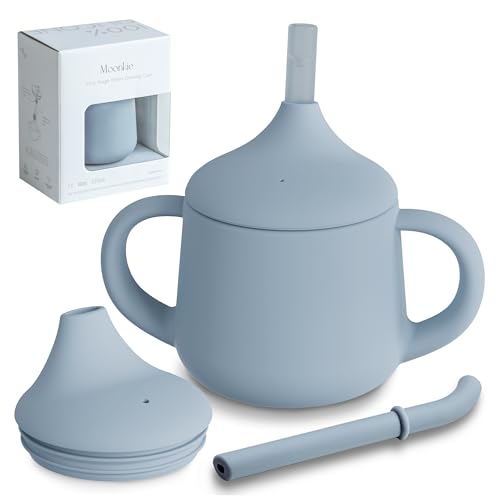
Best For: Early-stage sipters and teething infants. Three-in-one design lets you switch between straw, spout, and open cup as skills develop. The silicone is BPA-free and gentle on gums.
Why selected: Versatile progression in one cup reduces the need for multiple products. Caution: open cup mode is less spill-resistant and requires supervision during use.
Moonkie Baby Training Cup Set (Mint 2 Pack)
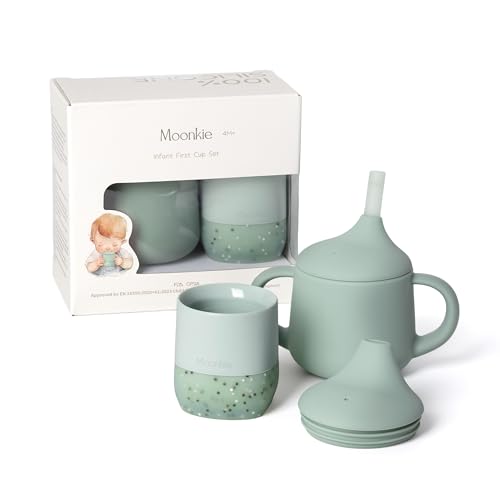
Best For: Two-cup set for growing toddlers making the transition from bottle to independent drinking. The 2-in-1 design supports later open-cup practice and oral development.
Why selected: Offers a staged approach to self-feeding with safe, silicone materials. Limitation: two-pack may be more cup than some families need at the start of the transition.
Buying Guide
What should you consider when selecting a 6-month+ sippy cup?
- Transition type: Straw vs. spout vs. three-in-one designs; choose based on your child’s current skill and comfort with straw drinking.
- Grip and size: Look for easy-grip handles or contoured shapes that suit small hands and growing grip strength.
- Spill protection: Spill-proof valves help minimize mess but can affect liquid flow; test for smooth sipping without leaks.
- Materials and safety: BPA-free silicone or BPA-free plastics are common; verify certifications if concerned about chemicals.
- Durability and cleaning: Consider dishwasher-safe parts and dishwasher compatibility for ease of maintenance.
- Volume: Start with smaller capacity (4–5 oz) for early sipters; switch to larger cups as your child drinks more independently.
FAQ
- Q: At what age should I start a sippy cup with a straw?
- A: Many babies begin straw practice around 6–9 months, once they have some head and neck control.
- Q: Are spill-proof cups really spill-proof?
- A: No cup is entirely spill-proof; look for valves designed to minimize leaks and practice with supervised use.
- Q: How do I clean straw cups effectively?
- A: Disassemble valves and straws and wash with warm soapy water; use an appropriate brush to reach hard-to-clean areas.
- Q: Which cup is best for dental health?
- A: Cups with softer spouts and open-cup options can promote proper lip closure and reduce prolonged bottle use, which supports dental health.
- Q: Should I buy in a set or individual cups?
- A: Sets are convenient for backups and travel; individual cups work well if you want to try different styles without commitment.