Answering the common question, these silicone cups with straws are designed for babies and toddlers who are transitioning from bottles to independent drinking. They emphasize safety, grip, and easy cleaning, making them suitable for both at-home use and travel. The best choice depends on your child’s age, dexterity, and how much supervision you prefer. Below, five top options are analyzed for parents seeking durable, baby-friendly cups that encourage a smooth transition to bigger kid drinkware.
Summary table of selected products:
- PandaEar 2 Pack 100% Tiny Silicone Drinking Training Cup with Handles & Straw for Baby and Toddler (White Blue)
- Moonkie Silicone Baby Sippy Cups | 3 Stages Training Cup Straw Cup for Infants Toddlers and Kid
- Seposeve 2 Pack Silicone Sippy Cups, Leak-Proof Baby Straw Cup
- Infantino My 1st Tumbler, 9 Oz. Silicone Sippy Cup with Straw & Handle
- WeeSprout Silicone Baby Cups With Straws and Lids, 4 & 8 oz Options
PandaEar 2 Pack Tiny Silicone Cup With Handles

Best for: Parents seeking a compact, non-slip cup with built-in handles for very young testers. PandaEar’s 100% silicone construction aims to protect developing teeth and gums while providing a stable hold. The cup includes a soft straw and removable lid, making it adaptable as a trainer cup for little hands learning to drink like a big kid. It’s designed for easy cleanup and everyday use, both indoors and outdoors.
Why chosen: The combination of non-slip handles, age-appropriate size, and a dishwasher-safe profile makes it a practical starter cup for toddlers who need a controlled flow and a familiar grip. It also doubles as a durable option for travel due to its sturdy silicone build and stain resistance.
Caution: While durable, the silicone components can be harder to dry completely; ensure thorough drying to prevent residual moisture between uses.
Moonkie 3 Stages Silicone Baby Sippy Cup
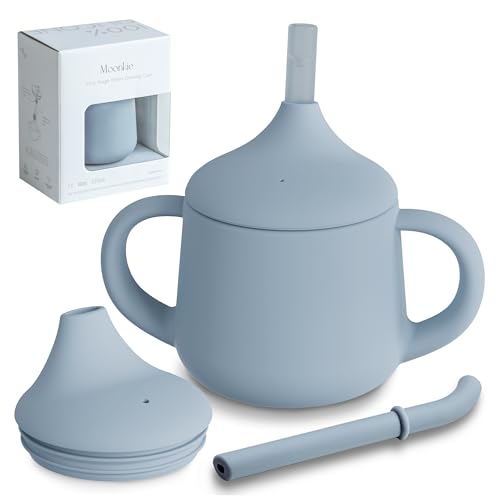
Best for: Parents who want a versatile cup that grows with their child. Moonkie’s three-in-one design supports stages from bottle to straw to open cup, promoting gradual independence. The cup uses 100% food-grade silicone and is BPA-free, with a soft spout and straw gentle on emerging teeth.
Why chosen: The three-in-one setup reduces the need for multiple cups as a child develops. It also emphasizes dental health by transitioning to an open cup, which can help with lip closure and speech development.
Caution: Some users may prefer dedicated open cups eventually; the three-in-one form factor can mean slightly larger cleaning space.
Seposeve 2 Pack Silicone Sippy Cups Purple Pink
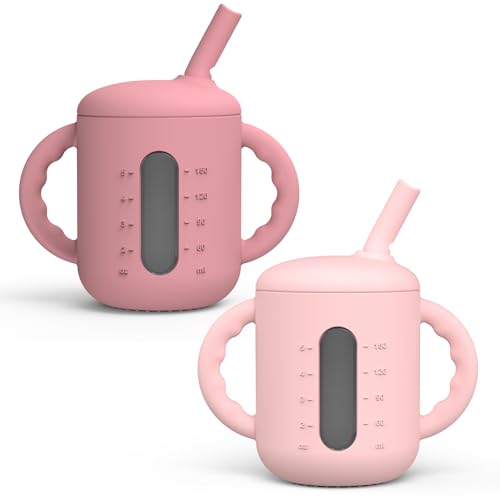
Best for: Caregivers who want leak-proof performance and visible intake tracking. Seposeve cups feature a three-level sealing structure to prevent leakage when inverted and a high-definition window with capacity markings to monitor daily intake. The upgraded spill-proof straw design helps control flow and reduce choking risks.
Why chosen: The combination of leak protection, capacity markings, and a non-slip handle makes this a reliable choice for both home and on-the-go transitions. It’s especially suitable for first-year drinkers who need oversight for how much liquid they’re consuming.
Caution: The internal straw design may require extra cleaning to maintain optimal flow, especially with formula or thicker beverages.
Infantino My 1st Tumbler, 9 Oz

Best for: Families seeking a stylish, age-appropriate design with a built-in straw and a spill-resistant system. The 9-ounce capacity is well-suited for toddlers practicing self-feeding and on-the-go hydration. The handle supports independent drinking and easy transport.
Why chosen: Infantino emphasizes leak resistance with a straw-based design and a removable straw for easy cleaning. The modern look and ergonomic handle are practical for daily routines, school drop-offs, and stroller outings.
Caution: Some children may outgrow the 9 oz size quickly; consider if you anticipate long-term use or need a larger capacity later.
WeeSprout Silicone Cups With Straws and Lids

Best for: Parents who want extra spill protection and built-in straw stoppers. WeeSprout cups come with lids and measurement markings, plus straw stoppers to prevent accidental removal of the straw. They suit busy households with little ones who thrive on clear spill containment.
Why chosen: The lid-straw combination reduces mess during travel or mealtime chaos. The included measurement markings help caregivers monitor intake and portion sizes, aiding routine hydration practices.
Caution: Lids can add cleaning steps; ensure all gaps are dried and cleaned to prevent mold buildup in seams.
Buying Guide: Choosing The Right Baby Silicone Cup With Straw
- Age and dexterity: For very young starters, cups with stable handles and soft straws help build confidence. As children grow, consider three-in-one designs that transition to open cups.
- Leak protection: Look for three-level sealing or known leak-proof mechanisms if spills are a concern at home or in a car seat.
- Cleaning practicality: Silicone is dishwasher-safe, but cups with lids and removable straws may require extra care to prevent mold in crevices.
- Flow control: Straws with smooth flow and gentle tips protect developing teeth and gums. A removable straw can simplify cleaning and replacement.
- Portability: Consider cups with sturdy bases, non-slip grips, and compact sizes for travel or daycare use.
- Durability and safety: Ensure 100% food-grade silicone without BPA, phthalates, PVC, lead, or other harmful additives. Wide bases reduce tipping risk.
- Development goals: Three-stage cups support transitions from bottle to straw to open cup, promoting speech development and lip closure.
Frequently Asked Questions
- What age should my child start using a silicone cup with a straw?
– Start when your child shows interest in self-feeding and can sit upright with minimal supervision, typically around 6-12 months for transitional stages, progressing as coordination improves. - Are silicone cups safer than plastic for babies?
– Silicone is non-toxic and BPA-free; it can be gentler on teeth and gums and is more durable for teething infants compared with some rigid plastics. - How do I clean silicone cups to prevent mold?
– Use warm, soapy water for handwashing or run through the dishwasher if labeled as dishwasher-safe. Take apart lids and straws for thorough drying. - Should I prefer a three-in-one cup or a dedicated sippy cup?
– A three-in-one cup grows with your child, reducing the need for multiple cups. A dedicated sippy cup may be simpler if your child only uses one cup type. - What features help reduce spills the most?
– Leak-proof seals, a secure lid, a soft-flow straw, and non-slip handles all contribute to minimizing spills during learning and travel. - Can these cups be used for open-cup drinking?
– Some cups offer open-cup transition modes; ensure you remove the lid or straw when the child moves to open-cup drinking to encourage lip closure and oral development.