Answering the common question “which push walker is best for my toddler?”, this guide highlights five top options that support early walking, motor skills, and imaginative play. Each product is suited for different needs: from simple push walkers for new walkers to feature-rich, multi-stage walkers designed for older toddlers. Use the quick table below to compare core details at a glance.
| Product | Best For | Why It Stands Out | Key Limitation |
|---|---|---|---|
| PULA Baby Push Walker with Wheels | First-time walkers | 2-in-1 walker and play wagon; enclosed wheels; low-gravity design | Wheels may be less suitable on very rough ground |
| Fisher-Price 4-in-1 Snack Cart Walker | Growing toddlers | Four ways to play; multilingual, engaging lights and sounds | More complex setup required for youngest babies |
| VTech Sit-to-Stand Learning Walker | Sit-to-stand beginners | Removable tray and multiple interactive features for motor skills | Less emphasis on cart-like storage |
| Pithfor Wooden Shopping Cart | Classic wooden play | 3-in-1 wooden design; durable, doll stroller, shopping cart, and walker | Wooden construction may be heavier to move for some kids |
| Melissa & Doug Deluxe Chomp and Clack | Engaging toy walkers | Three chomping alligators and other moving parts | Limited storage/cart features |
Note: The selections prioritize safety, developmental value, and age-appropriate features. Each product section below provides a concise, objective overview to aid quick decision-making.
PULA Baby Push Walker With Wheels

Best for first learners who need a simple, stable push walker. This 2-in-1 design serves as both a walker and a pull-toy wagon, encouraging toddlers to push or pull as they explore. The safe design features fully enclosed wheels, a low-gravity handle, and a non-slip grip, reducing the risk of tipping. EVA wheels provide smooth movement, while a food-grade PP hopper adds practical play value. Choose this if you want a straightforward, durable option for indoor or outdoor use. Caution: best used on even surfaces to maximize stability.
Fisher-Price 4-in-1 Snack Cart Walker
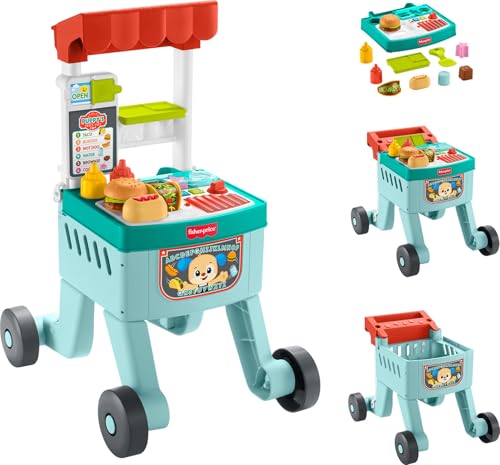
Best for toddlers growing into walking and pretend play. The toy cart offers four play modes, helping babies transition from sitting to walking to role-play. It includes 3 Smart Stages learning levels with language options (English, Spanish, French, Brazilian Portuguese), plus 135+ songs and sounds, lights, and interactive features. Choose this if you want rich, multi-sensory engagement that evolves as your child develops. Limitation: the features may be overwhelming for the youngest infants.
VTech Sit-to-Stand Learning Walker
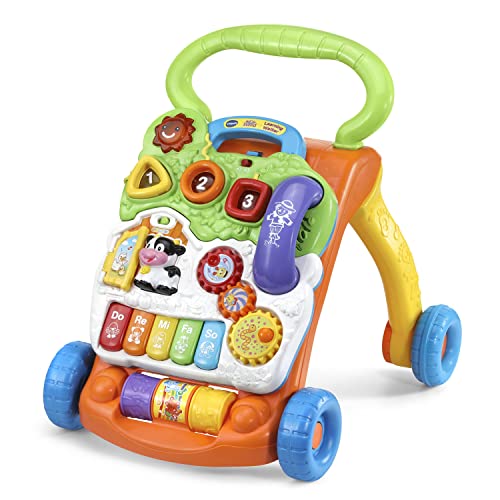
Best for early sit-to-stand development. The removable tray adds versatility for on-the-go play, and the five piano keys plus a pretend telephone encourage exploration. The activity center features shape sorters, light-up buttons, and colorful rollers to support motor skill development. Choose this if you want a compact, educational walker that supports sit-to-stand transitions. Caution: tray removal may reduce access to certain play elements when attached to the walker.
Pithfor Wooden Shopping Cart

Best for classic wooden play that encourages nurturing and imaginative play. This 3-in-1 wooden walker transforms into a shopping cart and a doll stroller, supporting role-play along with walking. It includes sensory gears and a front basket plus bottom deck for toys and groceries. Choose this if you prefer durable wood and traditional, open-ended play. Limitation: heavier construct may be harder for very young toddlers to maneuver alone.
Melissa & Doug Deluxe Chomp and Clack Walker

Best for engaging, imaginative play that keeps a child moving. The wooden walker features three chomping alligators, fish on wheels, and spinning butterfly and ladybug beads. As the baby pushes, the alligators open and close their mouths and make sounds. Choose this for a visually stimulating, motor-skill focused walker with strong tactile elements. Limitation: fewer built-in storage or cart features compared to multi-purpose walkers.
Buying Guide
What to consider when selecting a baby push cart walker:
- Age and developmental stage: For new walkers, prioritize stability, wide bases, and low handles. For older toddlers, look for multi-sensory activities and pretend-play elements.
- Surface use: Indoor use often requires smoother wheels and lighter weight. Outdoor use benefits from sturdy wheels and durable materials.
- Safety features: Enclosed wheels, non-slip handles, low center of gravity, and non-toxic materials are essential. Check for ASTM or other safety standards where applicable.
- Storage and play value: Some walkers double as toy carts or doll strollers. Consider whether you need extra storage, music, lights, or language options.
- Durability and materials: Wood walkers offer durability and timeless design; plastic or metal frames can be lighter and simpler to clean.
- Maintenance: Look for easy assembly and any moving parts that may require occasional tightening or cleaning.
Frequently Asked Questions
- What age should a child start using a push walker? An infant or toddler typically begins around 6-12 months, when they’re ready to stand and take supported steps.
- Should I choose a wooden or plastic walker? Wooden walkers are durable and offer classic play, while plastic walkers can include more interactive features and lighter weight.
- Can walkers help with balance? Yes, many walkers provide a stable framework that helps babies practice stepping and balance with support.
- Are walkers safe for all surfaces? Most are designed for indoor use on smooth floors; check the product specs for outdoor suitability and wheel type.
- Do walkers include learning activities? Some models incorporate songs, lights, and shape sorters to support early learning.
- What maintenance is required? Regular cleaning, checking wheel smoothness, and ensuring all movable parts are secure will help longevity.