Looking for durable, kid-friendly cookware sets that spark imaginative play without risk? This guide highlights five top baby pots and pans sets that are well-suited for preschoolers and toddlers. Each option is evaluated for best-for, what it helps develop, and practical limitations so caregivers can choose confidently for early kitchen adventures.
| Product | Best For | Why It Stands Out |
|---|---|---|
| Melissa & Doug Stainless Steel Pots & Pans | Young chefs who want a complete, premium-looking set | Premium stainless steel with riveted handles and a metal rack for organized storage |
| KEJIH Mini Play Pots And Pans | Tsters on a budget seeking a compact, realistic starter set | 12-piece toy cookware with multiple lids and accessories; small-size ideal for tiny hands |
| Fisher-Price Wood Kitchen Pretend Play | Wood-and-fabric lovers who want a larger pretend play collection | 19-piece set includes wood, metal, and fabric elements for varied textures |
| Rupnoflbui Kids Kitchen Set | Realistic, compact steel cookware for everyday pretend play | 11-piece set with small-diameter pots and concise accessories; durable materials |
| GILOBABY Kids Play Kitchen Accessories | Comprehensive starter kit including cutting and serving tools | 22-piece set with cutting board and sliceable pretend food to boost role-play skills |
Melissa & Doug Stainless Steel Pots & Pans Play Set

The Melissa & Doug set includes premium stainless steel cookware, a metal rack for organized storage, and wooden utensils. It’s designed to resemble real kitchen equipment, helping children practice fine motor skills and hand-eye coordination during pretend meals. Best for caregivers seeking a complete, durable, premium-looking kit that supports open-ended play. A potential limitation is that the set is larger and heavier than some mini packs, which may affect very young toddlers’ handling comfort.
Who it’s best for: Kids aged 3 and up who enjoy authentic kitchen aesthetics and structured pretend play. This set works well for role-play scenarios like a small family restaurant or a home kitchen pretend-store game.
KEJIH Mini Play Pots And Pans

This 12-piece set features tiny, realistic cookware with two lids, a colander, and an assortment of utensils. It’s best for budget-conscious buyers who want a compact starter set that still mimics real cookware. The small size makes it ideal for toddlers and preschoolers to grip and maneuver. A caution: some buyers note the items are very small and may be easier to lose or misplace during playtime.
Who it’s best for: Little cooks who prefer a minimal, low-cost collection and don’t require full-scale kitchen equipment for pretend play sessions.
Fisher-Price Wood Kitchen Pretend Play

The Fisher-Price set emphasizes a wooden and fabric mix with 19 pieces, including a pot, two pans, lids, utensils, a pretend oven mitt, and 11 food pieces. It’s best for children who enjoy storytelling and role-play that spans cooking and serving. The mostly wooden components offer a different tactile experience compared with all-metal sets. A limitation could be that it’s bulkier and may take up more shelf space than compact metal kits.
Who it’s best for: Preschoolers who like narrative play and want a more varied, textured pretend kitchen experience that includes food pieces for serving stories.
Rupnoflbui Kids Kitchen Set

The Rupnoflbui set highlights 11 pieces of stainless steel cookware with small-diameter pots and handles designed for little hands. It’s best for kids who want realistic scale and easy handling while developing fine motor skills. A potential limitation is that some items may appear smaller than expected in product images, so parents should confirm suitability for their child’s grip and play style.
Who it’s best for: Toddlers and early preschoolers who prefer compact, durable steel cookware for quick, repeat pretend cooking sessions.
GILOBABY Kids Play Kitchen Accessories
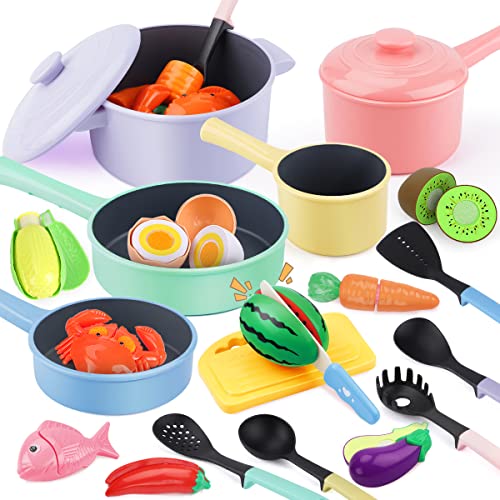
The GILOBABY set offers a complete 22-piece kitchen playset, including pots, pans, utensils, a knife, cutting board, and sliceable pretend foods. It’s best for multisensory pretend play that mimics real kitchen tasks—from chopping to plating. A note: some items are designed to resemble real foods, which can encourage detailed role-play but may require supervision to ensure safe, gentle use with children who are still learning to handle small parts.
Who it’s best for: Families seeking a robust, all-in-one pretend kitchen kit that encourages culinary storytelling, color recognition, and fine motor development.
Buying Guide: Key Considerations For Baby Pots And Pans
- Age and grip: Choose sizes and weights that match your child’s hand strength. Smaller, lighter pieces are easier for toddlers to manage.
- Material: Stainless steel offers durability and realism, while wood and fabric add tactile variety. Consider a mix for diverse pretend-play experiences.
- Safety features: Look for smooth edges, non-toxic finishes, and washable components. Check if parts are dishwasher-safe if you prefer easy cleanup.
- Storage and organization: Sets with racks or included storage help maintain a tidy play area and encourage cleanup as part of the play routine.
- Play value: Determine whether the set emphasizes realism, food items for serving, or cutting and prep activities to align with your child’s interests.
- Size and space: Size matters for room layouts. Compact sets fit small spaces, while larger, premium kits suit larger play zones.
- Maintenance: Some items require washing before first use or after play. Check cleaning guidelines to keep toys safe and durable.
FAQ
- What age are pretend pots and pans best for? Most sets target ages 3 and up, but some very small components may suit slightly younger children with close supervision.
- Are these sets safe for toddlers? Look for non-toxic materials, smooth edges, and BPA-free plastics. Supervision is recommended for younger children.
- Should I prefer all-metal or mixed materials? All-metal sets offer durability and realism; wood and fabric provide different textures and a softer feel. A mixed approach can balance durability and tactile variety.
- Do these sets teach cooking skills? They support role-play that builds fine motor skills, hand-eye coordination, and imaginative thinking, rather than real cooking technique.
- Is cleaning required before use? Some sets specify a rinse or wipe-down before first play. Always follow the manufacturer’s cleaning instructions.
- Can these be used with real food? Most pretend foods are designed for play; some metal sets may be compatible for simple pretend serving tasks, but never use real food with metal cookware intended for toy use.