Answering the search for a baby monitor that tracks breathing, this guide highlights five reliable options that emphasize breathing or movement monitoring alongside video, alerts, and sleep insights. These picks are best for parents who want early warnings, sleep coaching tips, or wearable-free options. The Nanit system suits busy households with a dedicated nursery; Sense-U and BEMPU appeal to on-the-go monitoring and simple setup; Moani provides high‑resolution video and AI features; and Philips Avent fits those who want a trusted brand with integrated breathing tracking. Use the quick comparison table below to start narrowing your choices.
| Product | Best For | Key Strength |
|---|---|---|
| Nanit Smart Baby Monitor System | New parents with a nursery setup | Integrated sleep insights and breathing tracking via camera and app |
| Sense-U Pro Baby Monitor | Travel and portable monitoring | Clip-on design with gentle vibration and alerts |
| Owlet Dream Sock | Parents needing real-time heart rate and oxygen alerts | Wearable sensor for continuous vital signs |
| Monai 4K Smart Baby Monitor | High-resolution video and AI alerts | 4K video with eye-safe night vision and AI features |
| Philips Avent Premium Connected Monitor | Brand reliability and SenseIQ breathing tracking | Breathing motion tracking with cry detection and translation |
Nanit Smart Baby Monitor System

Nanit combines video with sleep tracking and guidance. It automatically tracks sleep duration, efficiency, and baby positioning, and provides AI-powered sleep insights and nap predictions. It also monitors nursery conditions and cough/cry patterns. Best for parents seeking a comprehensive, research-backed approach to infant sleep and routine optimization. Limitations include reliance on WiFi for full feature access and the need to manage multiple viewing options (app, floor stand, or 8″ display).
Sense-U Pro Baby Breathing Monitor

Sense-U focuses on breathing movement, sleep position, and temperature trends with app alerts. It includes a gentle vibration feature to wake or nudge a sleeping baby and delivers audible alerts if movement pauses. The clip-on design makes it portable for travel. Best for parents who want immediate on-child vibration feedback and straightforward monitoring, but may be less comprehensive in room-wide video coverage compared with camera-based systems.
Owlet Dream Sock

Owlet Dream Sock tracks a baby’s heart rate and oxygen levels in real time and offers alerts via an app and base station. It is ideal for parents prioritizing vital-sign monitoring for healthy infants aged 1–18 months. A potential limitation is the need to wear the sock consistently, which may not suit every baby or family preference for non-wearable options.
Monai 4K Smart Baby Monitor
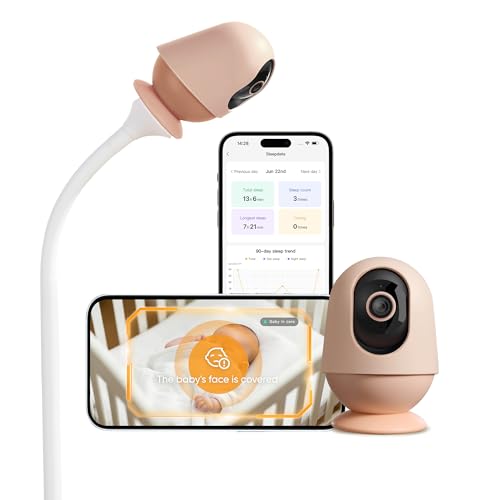
Monai delivers 4K video, eye-safe 950nm night vision, and AI-driven features like auto-capture and instant alerts for cries or covered faces. It’s best for parents who want high video fidelity and advanced AI-driven monitoring without a monthly fee. A notable caveat is potential data usage and setup complexity for those new to smart cameras.
Philips Avent Premium Connected Monitor

Philips Avent combines SenseIQ sleep and breathing motion tracking with cry detection and translation. This monitor is well-suited for parents who want a trusted brand and a broader understanding of baby’s cries alongside breathing patterns. A potential limitation for some households is the complexity of the cry translation feature, which relies on external services for best results.
Buying Guide
What should I consider when choosing a breathing-monitoring baby monitor?
Determine whether you prefer non-wearable camera-based monitoring or a wearable solution. Consider whether you want AI sleep insights, real-time alerts, and long-range viewing options. WiFi-dependent systems offer remote access, while local‑only devices minimize internet dependency.
How important is video quality and night vision?
Higher resolution video and infrared night vision improve your ability to spot cues during naps or night awakenings. 4K cameras deliver crisper details, but ensure your home network can handle the bandwidth. Eye-safe night vision reduces light exposure during sleep.
Which features justify a higher price?
AI-driven sleep insights, automatic tracking of sleep and positioning, and multi-point viewing (floor stand, wall mount, or integrated display) often justify higher costs. Wearable sensors add continuous vital-sign monitoring but may require more care in setup and maintenance.
What are practical trade-offs with wearables?
Wearables offer precise monitoring of heart rate and oxygen but may be less comfortable for some babies and require regular charging. Non-wearable cameras provide broader room monitoring with breathing insights via video analysis, often with fewer direct contact points.
Does the system support multiple caregivers?
Look for products that sync across devices (phone, tablet, display) and offer guest access. This is helpful for grandparents or babysitters who need to monitor the baby remotely or on-site.
Ease of setup and ongoing maintenance
Ask about installation requirements (wall mounts, floors stands), app reliability, and whether there are optional subscriptions for enhanced features. A simple, well-documented setup reduces frustration and improves day-to-day use.
Data privacy and security
Verify how video streams and health data are stored and transmitted. Favor devices with encryption, local storage options, and clear privacy policies. Avoid devices that rely exclusively on cloud access without strong protections.
Recommended quick-start choices
- Best all-in-one with sleep coaching: Nanit
- Best portable option: Sense-U Pro
- Best vital-sign monitoring wearable: Owlet Dream Sock
- Best high-resolution AI: Monai 4K
- Best trusted-brand option with breathing tracking: Philips Avent
FAQ
- Do these monitors truly track breathing, or just movement?
Breathing tracking varies by model. Some use camera-based recognition of chest motion, while others rely on wearable sensors to monitor breaths, heart rate, and oxygen.
- Are there health data privacy concerns with baby monitors?
Most modern monitors use encryption and offer local storage or secure cloud options. Review each device’s privacy policy and data handling practices before purchase.
- Can I view the monitor from multiple devices?
Many models support apps for phones and tablets, plus optional displays, enabling caregiver access from different devices.
- Are non-wearable monitors as reliable as wearable ones for vital signs?
Non-wearable monitors excel in room-wide surveillance and sleep insights, while wearables provide continuous, localized vital-sign data. Use based on your needs and baby comfort.
- Is there a need for ongoing subscriptions?
Some models offer free basic features with optional paid plans for advanced sleep analytics or extended video storage.