If you’re seeking baby formulas designed to minimize fussiness and gas caused by lactose sensitivity, these five options are commonly chosen for their lactose-reduced or lactose-free formulas. They’re suitable for parents who want alternatives to standard cow’s milk-based formulas, with emphasis on gentle digestion and digestible proteins. This guide highlights who each product is best for and why it’s a solid pick for lactose-sensitive babies.
| Product | Best For |
|---|---|
| Similac 360 Total Care Sensitive Infant Formula for Fussiness & Gas Due to Lactose Sensitivity | Infants with lactose sensitivity and fussiness; easy transition from breast milk |
| Enfamil Nutramigen Hypoallergenic Baby Formula with Iron, Lactose Free | Cow’s milk protein allergy; fast relief for colic symptoms |
| Earth’s Best Organic Sensitivity Infant Formula | Parents seeking organic, reduced-lactose option with DHA/ARA |
| Similac 360 Total Care Infant Formula with 5 HMOs | Babies needing a breast-mike prebiotic blend and gentle digestion |
| Mama Bear Sensitivity Premium Infant Formula with Dual HMOs | Lactose-sensitive babies needing immune and digestive support |
Similac 360 Total Care Sensitive Infant Formula

Product highlights include an exclusive blend of 5 HMOs designed to mirror breast milk, plus a formulation aimed at easing fussiness and gas associated with lactose sensitivity. Best for parents who want a ready-to-digest option that supports gentle tummy comfort while maintaining complete nutrition. The product is ideal for infants showing signs of fussiness after feeding and those who may be lactose intolerant or lactose sensitive. A potential limitation is that some babies may require further dietary adjustments if symptoms persist beyond the initial use.
Enfamil Nutramigen Hypoallergenic Baby Formula with Iron, Lactose Free

Designed to ease colic from cow’s milk allergy, Nutramigen is amino acid-based and lactose free. It includes the LGG probiotic, which is widely studied for supporting digestive health. Best for babies with proven cow’s milk allergy or severe lactose intolerance seeking fast relief and reliable hypoallergenic nutrition. Choose this if your pediatrician recommends an extensively hydrolyzed or amino acid-based option; it may be more specialized and costly than standard formulas.
Earth’s Best Organic Sensitivity Infant Formula
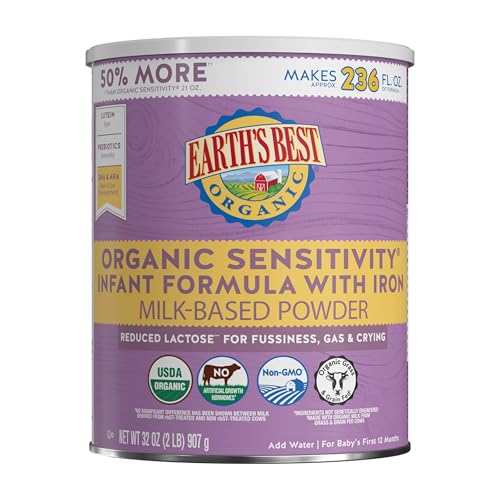
This formula emphasizes organic milk sources with reduced lactose to ease digestion. It’s enriched with DHA and ARA for brain and eye development and includes prebiotics to support digestive health. Best for parents seeking an organic option that remains suitable for supplementing breastfeeding or as a stand-alone feed. Limitations might include the need to monitor for any remaining sensitivity and whether organic sourcing meets your price or availability preferences.
Similac 360 Total Care Infant Formula with 5 HMOs

Featuring a 5-HMO prebiotic blend that is structurally identical to those in breast milk, this formula aims to support immune and digestive health. It is non-GMO and suitable for infants needing gentle digestion and a prebiotic approach. Best for parents who want a ready-to-feed option or a formula closely aligned with breast milk’s natural prebiotic profile. A potential note is that it includes standard lactose, so verify suitability for your infant’s sensitivity level.
Mama Bear Sensitivity Premium Infant Formula with Iron

Enhanced with dual HMOs (2′-FL and LNnT), this lactose-sensitive formula provides immune and digestive support while reducing lactose content. Best for babies who respond well to HMOs similar to those found in breast milk and for parents seeking a non-GMO option. A limitation to consider is the lack of long-term independent testing data for new formulations; monitor your infant’s response and consult a healthcare provider if symptoms persist.
Enfamil Nutramigen Hypoallergenic Baby Formula with Iron

Listed again here for emphasis on its hypoallergenic, lactose-free profile, with LGG probiotic and iron-fortified nutrition. Best for babies who require a highly specialized hypoallergenic option to manage cow’s milk protein allergy. Better for quick relief of colic symptoms associated with allergy; avoid this if your infant tolerates standard formulas without allergy concerns.
Bubs Goat Milk Formula (Note: not lactose-free)

Goat milk-based formula offers a different protein source and may be easier to digest for some babies; however, it is not lactose-free. Best for families interested in goat milk options with digestive-friendly ingredients. If lactose intolerance is a primary concern, this may not be the top choice.
Buying Guide: Key Considerations For Lactose-Reduced Formulas
- lactose status: Confirm if the product is lactose-free, reduced-lactose, or designed for lactose sensitivity, and align with your pediatrician’s guidance.
- Protein type: Some babies benefit from hydrolyzed or amino acid-based formulas when lactose sensitivity coincides with cow’s milk protein allergy.
- Probiotics and HMOs: Look for prebiotics like HMOs (2’-FL, LNnT) that support immune and digestive health, especially in early life.
- Feeding form: Ready-to-use liquids are convenient, while powder forms offer shelf stability and cost efficiency; choose based on feeding routine.
- Allergen considerations: Check for organic or non-GMO labels if important for your family, and review other ingredients like DHA/ARA for development support.
- Pediatric guidance: Lactose sensitivity and cow’s milk protein allergy require different approaches; when in doubt, consult a pediatrician or a registered dietitian for tailored recommendations.
Frequently Asked Questions
- What is lactose-free baby formula? Answer: Lactose-free formulas are designed with no lactose or very low levels to reduce digestive discomfort in lactose-intolerant infants.
- Who should use reduced-lactose formulas? Answer: Babies with fussiness, gas, or mild digestive discomfort linked to lactose sensitivity may benefit from reduced-lactose options.
- Are hypoallergenic formulas lactose-free? Answer: Many hypoallergenic formulas are formulated to be lactose-free or low lactose and are used for cows’ milk protein allergies.
- Can I switch between lactose-free and standard formulas? Answer: Switching is possible in consultation with a pediatrician to ensure steady growth and nutrition.
- Do these formulas contain prebiotics? Answer: Several options include HMOs or other prebiotics to support gut health, but ingredient lists vary by product.
- Is organic formula always better for lactose sensitivity? Answer: Organic status does not guarantee lactose sensitivity benefits; lactose content and protein type are the key factors.