If you’re shopping for a baby carrier suitable for a child 12 months and older, you want options that support growing weight, offer ergonomic seating, and minimize back strain for the wearer. This guide highlights five carriers well-suited for toddlers in the 12+ month range, focusing on comfort, adjustability, and practical features for daily use. Each option is described with who it’s best for, why it stands out, and a clear limitation to consider.
Summary of selected products
| Product | Best For | Key Benefit | Weight Range |
|---|---|---|---|
| Infantino Flip Luxe 4-in-1 | Caretakers needing lumbar support | Updated lumbar belt and 4 carrying positions | 7–35 lbs |
| Infantino Flip 4-in-1 (Gray) | Parents seeking versatile positions | Facing-in/out and back carry | 8–32 lbs |
| GROWNSY Newborn to Toddler | Parents wanting long-term growth | Ergonomic M-shape, wide straps | 7–44 lbs |
| MOMTORY 6-in-1 | Busy families needing versatility | Six carrying positions, hip seat option | 7–50 lbs |
| Momcozy Ergonomic Carrier | Travel-friendly, lightweight comfort | Enhanced lumbar support, easy wear | 7–45 lbs |
Infantino Flip Luxe 4-in-1 Convertible Carrier
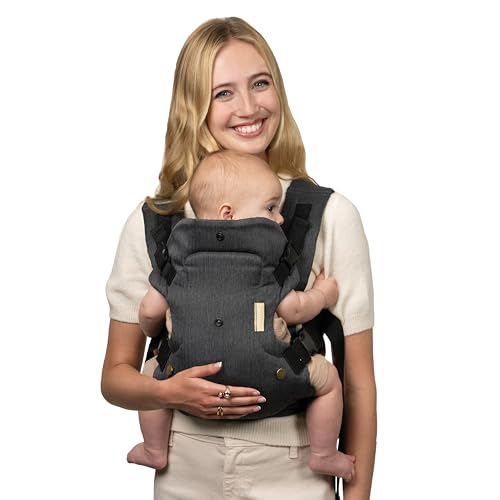
Best for caregivers who want major comfort as baby grows. The Flip Luxe offers four positions in one carrier, from newborn to toddler, with an updated lumbar support belt to help distribute weight more evenly. This model is ideal for parents who frequently switch from carrying in front to back carry and want a premium fabric feel with elevated accents.
Who it’s best for: caregivers prioritizing lumbar support and multiple carry options without changing carriers. Why selected: long-lasting design, wide weight distribution, and ergonomic seat help reduce back and shoulder strain during daily activities.
Caution: maximum weight is 35 lbs, so once your child passes the toddler stage, you’ll need a larger alternative.
Infantino Flip 4-in-1 Convertible Carrier (Gray)
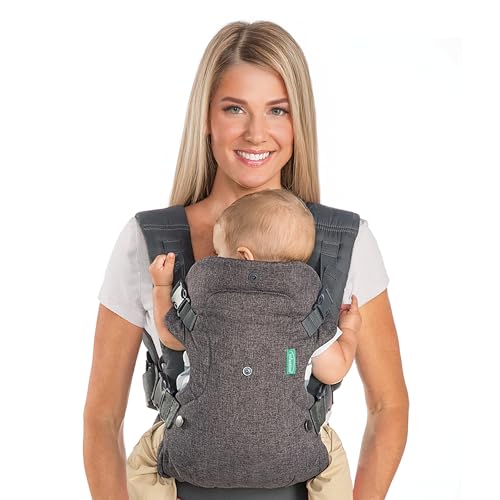
Best for families needing flexible positioning across stages. This carrier supports 8–32 lbs with facing-in, facing-out, and back carry options, ensuring ergonomic positioning at every stage. The padded straps and wide waist belt help distribute weight evenly, reducing pressure on shoulders and back.
Who it’s best for: caregivers who want a versatile carrier that remains comfortable through day-long outings. Why selected: consistent ergonomic design and caregiver-adjustable settings suit multiple wearers. Caution: weight range tops out around 32 lbs, which may limit extended toddler use.
GROWNSY Baby Carrier Newborn to Toddler

Best for parents seeking an ergonomic build with a longer growth lifespan. GROWNSY emphasizes an “M” shaped posture to protect hip joints and includes a foldable head/neck support for added stability. The three-point support system plus extended back support helps distribute weight across shoulders and the back.
Who it’s best for: those needing a carrier that grows with baby while keeping comfort high for extended wear. Why selected: solid ergonomic frame and skin-friendly fabric contribute to a secure feel during longer outings. Caution: some users may prefer higher-end materials for premium textiles.
MOMTORY 6-in-1 Baby Carrier

Best for versatile use across seasons and activities. MOMTORY offers six carrying positions with a baby hip seat option, facilitating easy transitions between front, hip, and back carries. It emphasizes user-friendly adjustments to accommodate different body types.
Who it’s best for: caregivers needing a broad carrying repertoire and quick changes on the go. Why selected: adaptable design and multiple carry modes help families tailor the fit. Caution: some users may experience a longer setup time given the number of adjustment points.
Momcozy Baby Carrier

Best for travelers and light packers who still want ergonomic support. The Momcozy carrier emphasizes hands-free comfort with a built-in lumbar support and a natural “M” position. It’s designed to grow from newborn to toddler with adjustable sizing and padded straps for long-wearing comfort.
Who it’s best for: families prioritizing lightweight wearability and lumbar protection during longer outings. Why selected: combines comfort with practical adjustability for various caregivers. Caution: fabric and padding may feel less premium than luxury models for some users.
Buying Guide
What should you consider before buying?
- Weight range: Choose a carrier that supports your child’s current and near-future weight, especially beyond 12 months.
- Ergonomics: Look for an “M” or frog-leg posture, supportive lumbar belt, and evenly distributed weight for comfort.
- Carrying positions: If you want versatility, select carriers offering multiple configurations (front, back, hip, facing-in/out).
- Adjustability: Ensure straps, buckles, and seats are adjustable to accommodate different caregivers and body types.
- Comfort features: Padded straps, wide waist belts, and breathable fabrics reduce fatigue during extended use.
- Durability and washability: Consider fabrics that withstand frequent washing and daily wear.
How to choose by use case
- Daily errands and travel: prioritize lightweight designs with lumbar support and quick adjustments.
- Active outings: seek sturdy back carries and strong weight distribution to support longer wear.
- Plus-size caregivers: look for extended waist belts and wider straps to ensure a secure fit.
Care and maintenance tips
- Follow manufacturer washing instructions to preserve fabric integrity.
- Regularly inspect buckles and seams for wear.
- Rotate between carriers to extend the lifespan of each option.
Frequently asked questions
- What is a good carrier weight range for a 12-month-old? Answer: Look for carriers that comfortably support at least 12–32 lbs, with some models extending to 44–50 lbs for longer use.
- Are back carries better for toddlers? Answer: Back carries can be more comfortable for larger toddlers and longer outings, but front carries are easier for quick, frequent lifts.
- Do carriers need to be adjusted for different caregivers? Answer: Yes. An adjustable fit helps ensure ergonomic alignment for each wearer and reduces strain.
- What materials are best for sensitive skin? Answer: Soft, breathable fabrics with gentle seams and a snug head/neck support are preferable for delicate skin.
- How do I know if a carrier supports hip development? Answer: Look for ergonomic seats that allow the infant’s hips to be in a wide, bent-knee position (M-shape) and a snug, supportive seat.
- How long can I safely wear a carrier? Answer: Follow the manufacturer’s weight and height guidelines and take breaks as needed to avoid fatigue.