Answer: For soothing gas and reflux, choose bottles with anti-colic vents, air-free or reduced-air designs, and nipples that mimic breastfeeding. The best options below suit different needs: Dr. Brown’s options are great for parents seeking proven anti-colic venting, Boon Nursh is ideal for silicone lovers who want vent-free gas reduction, MAM Easy Start suits preemies and newborns wanting a slow, breast-like flow, Philips Avent’s AirFree vent focuses on keeping the nipple full of milk, and Evenflo Balance Plus offers a budget-friendly venting system for gentler feeds. The buyer types most helped include new parents seeking reliable anti-colic features, parents preferring silicone materials, and families needing easy cleaning. A quick table compares key aspects of each top pick.
| Product | Best For | Vent Type | Nipple Type |
|---|---|---|---|
| Dr. Brown’s Natural Flow Options+ | Babies with frequent gas | Internal anti-colic vent | Slow flow |
| Boon Nursh Bottles | Silicone lovers | Air-free pouch design | Medium flow |
| MAM Easy Start Anti-Colic | Newborns and preemies | Vented base | Extra slow |
| Philips Avent Anti-Colic AirFree | Gas-prone babies | AirFree vent | Slow flow |
| Evenflo Premium Proflo | Budget-conscious families | Proflo venting | Slower flow |
Dr. Brown’s Natural Flow Options+ 8 oz Bottle — 4 Pack

Anti-colic design helps reduce gas, spit-up, and burping. Vacuum-free feeding with a consistent flow lets babies feed at their own pace. The vent system is designed to preserve nutrients and aid digestion for better sleep. Best for parents who want a proven anti-colic system and a bottle that closely resembles breastfeeding flow.
Best for: Parents seeking a well-established vented system that minimizes air ingestion and supports nutrient preservation. Caution: Some caregivers find the internal vent assembly a bit more complex to clean.
Boon Nursh Bottles — Silicone 8 Oz
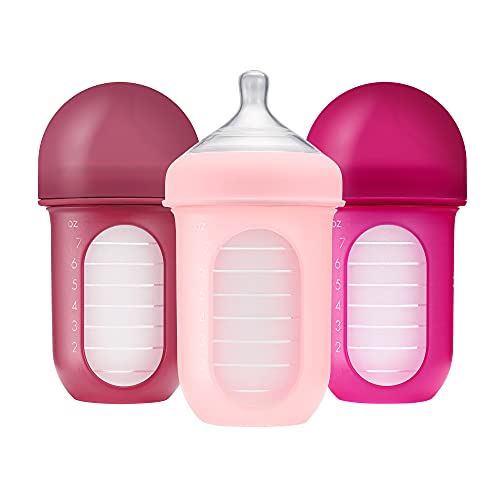
Air-free feeding with a collapsible silicone pouch design helps prevent gas and spit-up. The entire milk contact surface is silicone and BPA/PVC-free. Easy latch-on and a bottle that encourages proper tongue position during feed learning. Best for parents who want a vent-free, silicone-based solution with simple use.
Best for: Silicone enthusiasts who want a gas-reducing, vent-free design. Caution: Requires silicone pouch care and periodic replacement of the silicone parts.
MAM 4.5oz Easy Start Anti-Colic + Wide Neck Bottle

Engineered vented base reduces air intake, paired with a SkinSoft nipple to help babies feed at their own pace. Extra slow nipple mimics mom’s nipple feel for preemies and newborns. Best for: Newborns and preemies needing a gentle, breast-like flow with reduced gas. Caution: Some users may prefer a different nipple shape for older infants.
Philips Avent Anti-Colic Bottle with AirFree Vent — 4 oz

AirFree vent keeps the nipple full of milk, reducing air intake and easing gas. Designed to support upright feeding by maintaining a milk-filled nipple. Best for: Parents seeking a simple, vent-based approach to gas reduction with a compact bottle size. Caution: The AirFree option can be used with or without the vent depending on feeding style.
Evenflo Feeding Premium Proflo Venting Balance Plus 5 oz (Pack of 6)

Gulp-free flow with a wide latch-friendly base helps maintain a natural feeding rhythm. Proflo venting technology reduces air bubbles in the bottle, supporting calmer feeds and potentially less gas and reflux. Best for: Families on a budget who still want effective venting. Caution: Some users may prefer higher-end venting systems for more severe colic cases.
Buying Guide: How To Choose A Gas-Reducing Baby Bottle
What feature most reduces gas? A venting system or an air-free design that limits air ingestion is key. Consider whether you want a traditional internal vent, a vented base, or a collapsible pouch system. Material preferences matter; silicone pouches are easy to inspect and clean, while BPA-free plastics offer durability. Flow rate matters for comfort; slower or extra-slow nipples help babies feed at a natural pace and swallow less air. For newborns and preemies, look for bottles designed to mimic breastfeeding and support latch comfort.
How important is ease of cleaning? Bottles with multiple parts require thorough cleaning. If you want simpler care, consider fewer parts or easy-clean designs. For silicone-pouch bottles, plan for regular replacement of the pouch and nipple to maintain performance. If space is limited, compact bottles with fewer components can be advantageous.
Which bottle is best for longer-term use? Anti-colic bottles with durable venting systems and reliable nipple materials tend to perform well across several months. Some parents switch between brands depending on the baby’s tolerance to gas and reflux, so consider a model that can adapt (for example, multiple nipple flow options).
FAQ
- Do anti-colic bottles really reduce gas? They are designed to minimize air intake and air bubbles, which can help reduce gas, burping, and spit-up in many babies.
- Is silicone better than plastic for gas reduction? Silicone is inert and easy to inspect; it is often preferred for clean handling and a durable, air-free feeling, but gas reduction depends on the vent design and flow rate, not just material.
- Can I use any bottle with any nipple for gas reduction? Some nipples are engineered for slower flow to limit gulping and air intake. Pairing a slow or extra-slow nipple with an appropriate vent can improve outcomes.
- How do I clean venting systems effectively? Disassemble as recommended by the manufacturer and wash all parts with warm, soapy water. Rinse thoroughly and air-dry. Regular deep cleaning reduces residue buildup that can affect performance.
- When should I switch bottle types? If gas persists or feeding becomes uncomfortable for the baby, consider trying a different venting approach or nipple flow to match their age and feeding style.
- Are these bottles BPA-free? Most listed options specify BPA-free construction, but always verify product details before purchasing.