Answer: For a 5-month-old, a grow-with-me activity center is ideal. The top choices below support early head control, exploration, and safe transitions as babies approach sitting and standing. Each option is best for different priorities—rotating seats for movement, ocean-themed multisensory play, Montessori-inspired toys, and easy conversion to a toddler-friendly surface. The table after the intro compares core details to help you decide quickly.
| Product | Stage(s) | Best For |
|---|---|---|
| Skip Hop Activity Center: Explore & More | 4mo+ to 25 lbs | Rotating seat and 25+ activities |
| Baby Einstein Neptune Ocean Discovery | 6 months+ | Ocean-theme exploration |
| Little Acorn 4-in-1 Rainbow | Tummy time to toddler table | Montessori-inspired 8 toys |
| Skip Hop Silver Lining Cloud | 4mo+ to toddler | Classic growth with piano and lights |
| Bright Starts 3-in-1 SuperSeat | 6 months+ (seat to table) | Flexible seating and mealtime |
Skip Hop Explore & More Activity Center
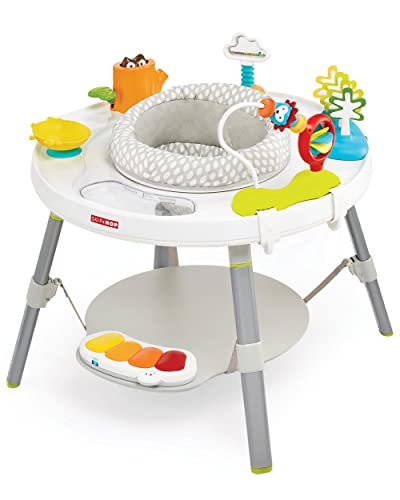
Best for parents seeking a robust, rotating play station with a long growth arc. Designed with a pediatrician, it supports babies from 4 months to 25 pounds. The 360° rotating seat grants easy access to 25+ activities, encouraging reach, grip, and core engagement. The three-stage setup—Sit, Swivel & Play; Cruise & Interact; and a toddler table—supports a natural progression from early play to independent, seated activities. The Discovery Window and light-up piano promote cause-and-effect learning through movement and sound.
Who it’s for: families wanting a single, long-lasting center that transitions from baby to toddler use without needing multiple purchases. Why selected: the three-stage design and high number of activities provide varied stimulation as motor skills advance. Limitation: requires three AAA batteries for the piano features, which are not included.
Key features in brief:
– 3-stage growth: Sit, Swivel & Play → Cruise & Interact → Toddler Table
– 360° rotating seat and 25+ activities
– Discovery Window with a multi-mode light-up piano
– Clip-on toy loops for easy customization
Baby Einstein Neptune Ocean Discovery Activity Center

Best for parents who want nautical-themed stimulation and simple, all-directions toy access. Suitable for babies around 6 months and up to 25 lbs. The 360° swivel bouncy seat lets the child reach multiple toys with minimal repositioning, supporting gross motor exploration around a central hub. Four height positions adapt as your baby grows and gains stability. This option emphasizes directional play through ocean-themed activities and accessible toy layouts.
Who it’s for: families prioritizing theme-based exploration and easy seat adjustment. Why selected: the ocean theme and 360° swivel design offer engaging, multi-directional play. Limitation: recommended for babies starting around 6 months, so it may be less suitable for younger infants who cannot sit upright yet.
Little Acorn 4-in-1 Rainbow Activity Center
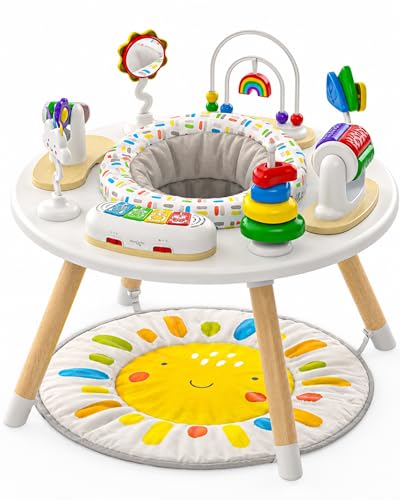
Best for Montessori-inspired play with a long-range use plan. The multi-stage center grows with your child, offering tummy time, exersaucer, and a toddler table. It includes 8 interactive toys designed to nurture motor control, tactile exploration, self-awareness, and problem-solving. The interactive piano with over 30 phrases and songs keeps engagement high. Batteries are included to start the play right away.
Who it’s for: parents seeking a versatile, durable center with easy-to-remove toys and a clear progression into toddler activities. Why selected: the Montessori approach and included batteries provide immediate, varied learning. Limitation: some parents may prefer more traditional toy designs rather than Montessori motifs.
Skip Hop Silver Lining Cloud Activity Center

Best for parents who value a classic design with a strong sensory profile and a multi-mode piano. The three-stage system mirrors the Explore & More center and includes a Discovery Window for visual tracking and cause-and-effect learning. The removable, light-up piano offers piano mode, song mode, and motion-sensor mode to encourage varied engagement. It supports babies from 4 months to 25 pounds and stores portable, removable toys for independent play.
Who it’s for: households wanting a weather-themed, dependable option with visually stimulating features. Why selected: the combination of a rotating seat, multiple activities, and a light-up piano adds rich sensory input. Limitation: similar to other multi-activity centers, battery replacement and ongoing toy management may be needed over time.
Bright Starts 3-in-1 SuperSeat

Best for flexible seating and mealtime transitions. The 3-in-1 design converts from an activity seat to a floor seat with a snacking tray and to a booster seat for use at mealtime. Its 360° rotating seat allows for baby motion and a broad field of view during play. BPA-free tray ensures safe snacking. This option is ideal for families seeking a compact, all-in-one seating solution that blends play and practical dining support.
Who it’s for: households needing a versatile seat that covers play and feeding stages. Why selected: the 360° seat rotation and tray add convenience for quick shifts between activities and meals. Limitation: some buyers may prefer a larger play surface when used as a full activity center rather than a seating solution.
Buying Guide: Key Purchase Considerations
What stage should you expect your baby to reach next? Consider whether you want a center that adapts across multiple growth phases or a more focused, shorter-term option. A 360° rotating seat generally offers easier access to toys and can promote movement, but ensure the weight limit aligns with your child’s growth trajectory.
How many and what types of activities matter? Look for a mix of tactile, auditory, and visual stimuli, plus toy rearrangement options to sustain interest as babies gain reach and fine motor control. Removable toys and easy cleaning are practical for busy households.
Power needs and portability matter. If a piano, lights, or motion sensors are included, confirm battery requirements and replacement costs. If the center will travel or be used in different rooms, check weight and foldability or disassembly options.
Safety and materials should be considered. Choose BPA-free trays and durable, easy-to-clean fabrics. Review weight limits and ensure the base provides stability during play to prevent tipping as your child leans or swivels.
FAQ
- Q: When can a baby start using an activity center? A: Many centers are recommended from around 4 months when babies can hold their heads up with supervision.
- Q: Do activity centers help with walking progress? A: They support gross motor exploration and leg movement, which may aid early cruising and balance as babies grow.
- Q: Are all centers suitable for toddlers? A: Most grow-with-me centers convert to toddler-friendly surfaces or tables, extending use beyond infancy.
- Q: How many toys should a center include? A: More than 10 well-chosen activities can provide varied stimulation without overwhelming the baby.
- Q: What should I watch for in terms of safety? A: Ensure sturdy construction, secure seat rotation, non-toxic materials, and appropriate weight limits for your child.
- Q: Is battery-powered equipment necessary? A: Some features like a light-up piano or motion-sensor play require batteries; check included items and replacements.