Answering the question “which carrier is best for a 2-year-old?” this guide highlights practical, adjustable options designed for toddlers from roughly 24 to 48 months. Each carrier below emphasizes comfort, hip-healthy design, and ease of use for caregivers. This selection targets parents seeking a mix of front-carry, back-carry, and hip-seat styles, with varying features like breathable mesh, wide seats, and detachable extras. The table below compares key points to help you decide quickly.
| Product | Best For | Key Benefit |
|---|---|---|
| Beco Toddler Carrier with Breathable 3D Mesh | Active families needing airflow | Breathable mesh panel for cooling |
| JJ Cole Sola Toddler Sling Carrier | Simple, adjustable wearers | Even weight distribution, shoulders support |
| Beco Toddler Carrier with Extra Wide Seat | Ergonomic long carries | 100% cotton, hip-healthy design |
| MOMTORY Safety-Certified 6-in-1 Carrier | Flexible positions for growing kids | Six carrying options with a hip seat |
| LILLEbaby CarryOn 3-in-1 | Travelers needing torso support | Wider torso, up to 60 lbs |
In the following sections, each product is evaluated on who it suits best, why it’s selected, and a practical limitation to consider. All descriptions reference the features provided by each listing and aim to present a clear, objective comparison for buying decisions.
Best For Breathable Comfort: Beco Toddler Carrier With Mesh

The Beco Toddler Carrier with Breathable 3D Mesh is designed for toddlers aged 24-48 months, focusing on airflow to keep both caregiver and child cool. It uses moisture-wicking microfiber with a breathable 3D mesh panel, which helps reduce heat buildup during longer carries. Best for families in warm climates or those who tend to carry during peak sun hours, this option supports both front-carry and back-carry positions, offering flexibility as your child grows. The stretcher-like seat promotes a snug fit, and adjustable straps accommodate varying torso lengths. A potential caveat is that airflow depends on the mesh panel’s placement against the back and may feel less cool in very humid environments.
Who it’s best for: Active caregivers who want cool airflow and versatile carry options for a growing toddler. Why selected: Combines two carry positions with a breathable design, supporting prolonged wear.
Best Adjustable Comfort: JJ Cole Sola Toddler Sling Carrier

The JJ Cole Sola Toddler Sling Carrier is an adjustable, single-shoulder sling designed to grow with a child up to about 45 pounds. It emphasizes a secure seat and back support, with a non-slip surface to help keep your child cushioned as you go about daily tasks. A split padded shoulder strap distributes weight across both sides of the neck and shoulder area, reducing strain on a single point. This makes it a practical option for parents who prefer a lighter, easy-to-dine setup. The main limitation is that a sling-style carrier can place more emphasis on shoulder wear and may require more frequent adjustments for long outings.
Who it’s best for: Parents who want a simple, adjustable sling that still supports a secure seating position. Why selected: Easy to wear and adapt as children grow, with weight distribution considerations.
Best All-Around Ergonomics: Beco Toddler Carrier With Extra Wide Seat

This Beco model uses a 100% cotton fabric and an extra-wide seat that supports toddlers from 24-48 months. The cotton construction is gentle on skin and designed to be hip-healthy with even load distribution, reducing back and shoulder strain for longer carries. Unique elements include a detachable hood for shade or nursing and a zippered storage pocket, making it a good pick for parents who value additional features in a compact carrier. A potential limitation is that pure cotton may be warmer in hot climates without the enhanced mesh of the other Beco model.
Who it’s best for: Caregivers seeking ergonomic support with added convenience features. Why selected: Combines hip-friendly design with thoughtful extras that aid daily use.
Best Flexible 6-in-1 Design: MOMTORY Baby Carrier

MOMTORY presents a 6-in-1 carrier that transitions from newborn to toddler and beyond, accommodating weights from 7 to 50 pounds. It offers six carrying positions, including hip seat configurations, which can be ideal for families who frequently switch between front, back, and hip carries. The carrier emphasizes safety and comfort with skin-friendly fabric and a simple wearing process. A potential caveat is that more configurations can require a brief adjustment period to master each position.
Who it’s best for: Parents who want a single carrier that covers multiple stages of early childhood. Why selected: Flexible options allow continued use without needing to switch devices as child grows.
Best For Travel: LILLEbaby CarryOn 3-in-1
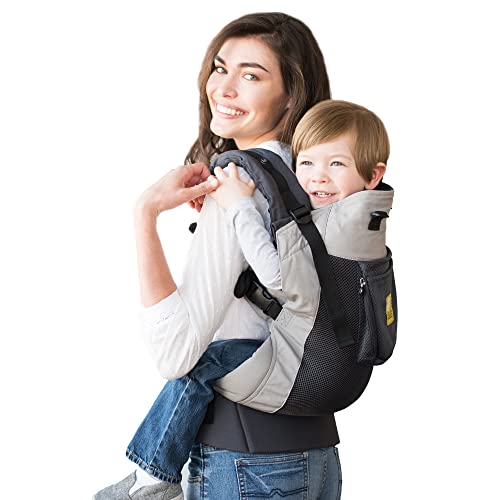
The LILLEbaby CarryOn 3-in-1 is designed with a roomy torso for growing toddlers and a higher back panel, supporting children up to 60 pounds. It is described as stroller-free in daily use, enabling hands-free access in places where a stroller might not be allowed. It emphasizes adjustable side panels to widen or narrow the seat for hip positioning, which is useful for ensuring comfort during longer periods of wear. A potential drawback is that its larger frame may be bulkier to carry or store when not in use.
Who it’s best for: Families who travel or navigate spaces with limited stroller access. Why selected: High weight tolerance and flexible seat adjustments support longer outings and various environments.
Buying Guide
What should you consider before buying a toddler carrier?
- Weight and age range: Ensure the carrier supports your child’s current weight and anticipated growth (for 2-year-olds, many models cover 24-48 months or up to about 45-60 pounds).
- Seat design: An extra-wide seat and ergonomic hip positioning reduce strain on your back and hips and support healthy hip development.
- Carrying positions: Front carry, back carry, and hip carry offer different ergonomics. Consider which positions you’ll use most and how easy it is to switch.
- Breathability and materials: Mesh panels, cotton fabrics, and moisture-wicking materials help with comfort in warmer climates.
- Storage and extras: Pockets, hood, shade, and foldable frames can add convenience for daily use or travel.
- Adjustability: Look for adjustable straps and torso length accommodations to fit different caregivers and body types.
How to compare these carriers quickly?
- Best for airflow: Choose models with breathable mesh panels against the back.
- Best for versatility: Look for multi-position or 6-in-1 carriers that grow with your child.
- Best for travel: Prioritize compact, storage-friendly designs with higher weight tolerance.
- Best for comfort-focused families: Favor 100% cotton fabrics and wider seats that distribute weight evenly.
Usage tips for safe and comfortable carrying
- Position the child’s hips in an M-shape with knees higher than the hips when possible.
- Distribute weight evenly across your shoulders and hips to minimize fatigue.
- Take breaks on long walks to reduce back strain and adjust the carrier as needed.
FAQ
- Q: At what age can a toddler start using a carrier comfortably? A: Most toddlers can start around 9-12 months for shorter periods, but 2-year-olds will usually require a carrier with an extra-wide seat and strong hip support.
- Q: How do I know if a carrier is hip-healthy? A: Look for ergonomic seating that supports an M-shaped leg position and even distribution of weight.
- Q: Are mesh carriers cooler for summer use? A: Yes, breathable mesh panels aid airflow and can reduce heat buildup during longer wears.
- Q: Can I use a carrier for back carries with a 2-year-old? A: Yes, many carriers support back carries once the child is secure and the caregiver is comfortable with the position.
- Q: Do these carriers require assembly or special washing instructions? A: Most carriers are designed to be user-friendly with simple adjustments; washing instructions vary by material, so follow the product’s care guide.