For caregivers and family members, keeping a dementia patient safe at home can require reliable monitoring with simple, accessible controls. The following hand-picked devices offer two-way communication, quick call buttons, medication reminders, and night vision, all without needing complex setups. These monitors are designed for dementia care, enabling caregivers to stay connected and respond quickly when help is needed, while giving seniors a sense of security and independence.
Summary of chosen products:
- CallToU Elderly Monitor with Camera and Audio – CallToU
- JEMXITG Elderly Monitor with Camera and Audio (No WiFi) – JEMXITG
- JEMXITG Elderly Monitor with Camera and Audio (No WiFi) – JEMXITG
- Zaguoroo Elderly Monitor with Camera and Audio – Zaguoroo
- Ellie Pro Baby Monitor with Camera and Audio – Ellie Baby Pro
CallToU Elderly Monitor With Camera And Audio
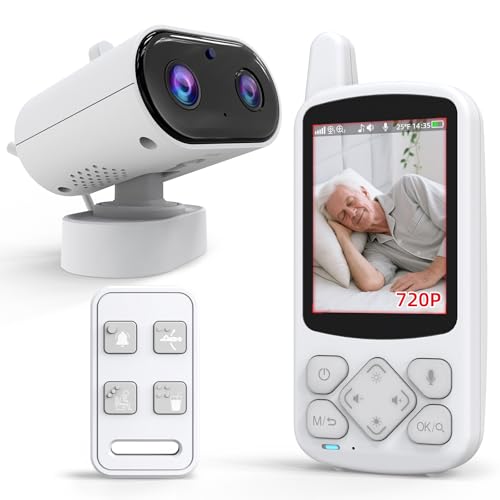
The CallToU system provides real-time two-way talk and clear infrared night monitoring, making it suitable for bedrooms, living rooms, or nurse-call settings. It supports an SOS button and daily alerts to prompt caregiver responses for essential routines like hydration or bathroom needs. The built-in dementia-friendly features include medication reminders and soothing sounds designed to support comfort and routine. The camera’s high sensitivity helps caregivers observe subtle cues, and the night vision remains effective in low light for around-the-clock monitoring.
JEMXITG Elderly Monitor With Camera And Audio (No WiFi)
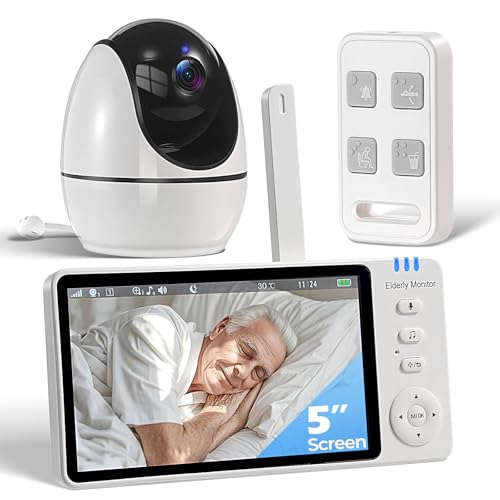
JEMXITG’s no-wifi monitor emphasizes privacy with a 2-way audio system, SOS call buttons, and medication reminders. It also includes temperature monitoring and infrared night vision, providing a comprehensive care tool without requiring an internet connection. A long-lasting battery and VOX (voice-activation) support ensure the caregiver can check in efficiently, while the tactile buttons help users who may have visual or dexterity challenges. This model is designed to be a practical, private option for dementia care settings.
JEMXITG Elderly Monitor With Camera And Audio (No WiFi) – Second Variant
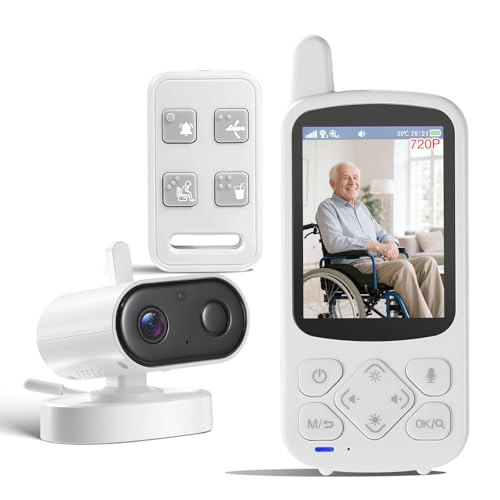
This second JEMXITG model adds a 2-way audio setup and a robust SOS system along with temperature monitoring and infrared night vision. It emphasizes privacy with no WiFi requirement and includes a battery designed to minimize daily recharging. The device is suitable for seniors who benefit from tactile call buttons and simple visual indicators to trigger caregiver alerts quickly during emergencies or routine checks.
Zaguoroo Elderly Monitor With Camera And Audio

The Zaguoroo monitor offers 24/7 capability with a one-touch call button and medication reminders, plus two-way talk and infrared night vision. It supports a no-WiFi design, enhancing privacy while enabling caregivers to monitor temperature and alert status remotely. The device is built for ease of use with an ergonomic remote featuring raised markers for visually impaired users, supporting dementia care routines and quick response in stressful moments.
Ellie Pro Baby Monitor With Camera And Audio

Ellie Pro offers 2K UHD clarity with remote pan-tilt-zoom and a long-lasting 6000mAh battery, designed for broader room coverage and extended use without frequent recharges. Voice activation and AI safety features monitor for infant or elderly cues, while a no-WiFi setup prioritizes privacy. The device supports 1000 ft range and night vision, making it adaptable for multi-room homes and dementia care environments that require dependable monitoring and quick caregiver access.
HelloBaby 6″ IPS No WiFi Monitor

HelloBaby expands viewing comfort with a 6-inch IPS screen and no-WiFi operation. It features 16–30 hours of battery life, infrared night vision, 355° pan and tilt, and a 2-way talk function. The large display aids caregivers and family members who need clear, continuous observation of a loved one’s condition, while VOX mode helps conserve power. The setup emphasizes ease of use for dementia care in busy family homes or homes with caregivers on the move.
Babysense 5.5” Split-Screen Monitor

Babysense combines a split-screen display with two cameras and a range of monitoring features. While primarily marketed for infant monitoring, the system provides two-way audio, a 1000 ft range, a 4x zoom, and a 5000mAh battery. The color RGB night light and lullaby options offer additional comfort features that can be useful for dementia care routines, especially in multi-room homes where caregivers must monitor multiple zones efficiently.
Baby Ganibs Monitor With Camera And Audio

Baby Ganibs emphasizes remote pan, zoom, and tilt with 320° rotation, 120° tilt, and up to 2x zoom. It supports up to four cameras and includes infrared night vision and ECO mode. The no-WiFi design aids privacy, while the 30-hour battery life supports all-night monitoring. Two-way talk lets caregivers communicate directly with a loved one, supporting dementia care strategies that rely on constant but unobtrusive contact.
Buying Guide: Key Purchase Considerations For Dementia Care Monitors
- Privacy and connectivity: No-WiFi models provide privacy but may limit remote access. Consider a mix of devices for in-room monitoring with optional local access for caregivers on the go.
- Ease of use: Look for large buttons, tactile controls, and clear indicators. Dementia care devices should be simple to operate under stress.
- Two-way communication: A reliable speaker and microphone enable real-time reassurance and quick intervention when signs of distress appear.
- Alerts and reminders: Built-in SOS buttons, medication reminders, and routine alerts support daily care tasks and help prevent missed steps in care plans.
- Night vision and display: Infrared night vision helps monitor during sleep, while a readable display is essential for caregivers who may be adjusting devices in low-light conditions.
- Power and battery life: A long-lasting battery reduces downtime between charges. ECO modes can extend standby time for screens in sleep modes.
- Expandability: Some models support multiple cameras. If monitoring several rooms is needed, choose a system with easy scalability.
- Durability and ergonomics: Look for rugged remotes and raised markers for visually impaired users. Durable builds reduce maintenance needs in busy homes.
When selecting a monitor for dementia care, balance privacy, ease of use, and real-time responsiveness. Systems without Wi-Fi minimize exposure to online threats, while devices with VOX or automatic wake features offer convenient hands-free operation. In multi-room homes, scalable options enable caregivers to expand coverage without swapping devices. Overall, prioritize clear audio, dependable alerts, and a straightforward interface to support consistent, safe daily care.