Finding a baby monitor that works well for deaf or hard-of-hearing parents can be challenging. The right device combines reliable audio or visual alerts, minimal lag, and easy-to-access notifications across the home. This guide highlights five Amazon options that emphasize clear signaling, long range, and hands-free communication so caregivers can respond quickly and stay connected with their baby from any room.
Quick reference: chosen products at a glance
| Product | |
|---|---|
| Bellman & Symfon Baby Cry Transmitter | Bellman & Symfon |
| Sonic Bomb Baby Cry Signaler | Sonic Bomb |
| VTech Communications DM221 Audio Baby Monitor | VTech |
| HelloBaby No WiFi Baby Monitor HB6550 | HelloBaby |
| CallToU Elderly Monitor with Camera | CallToU |
Bellman & Symfon Baby Cry Transmitter

The Bellman & Symfon system focuses on baby cry monitoring designed for deaf or hard-of-hearing families. It provides real-time alerts through a smart home ecosystem, ensuring caregivers are notified promptly even when not near the baby. A key advantage is its independence from WiFi, offering a reliable backup during power outages thanks to a long battery life and secure radio transmission. This setup supports continuous emergency communication across rooms, which is crucial for safe, responsive childcare.
Sonic Bomb Baby Cry Signaler

The Sonic Bomb Cry Signaler is a compact unit that responds to baby sounds with adjustable sensitivity. It offers a fast, noticeable alert when a baby cries, helping deaf or hard-of-hearing parents detect needs quickly. Its plug-in design keeps it stationary in a nursery, while the alert remains highly visible or audible depending on the setup. This device is well-suited for households that value immediate, user-friendly signaling without requiring complex networks or smartphones.
VTech DM221 Audio Baby Monitor

With DECT 6.0 technology, the VTech DM221 delivers clear audio with reduced interference and noise. Its long range reaches up to 1,000 feet, allowing caregivers to monitor from multiple rooms or even from outside. The 5-level sound indicator provides a visual cue of room activity, and the built-in two-way talk-back intercom lets parents soothe or communicate with baby without rushing back to the nursery. The night light on the baby unit adds a gentle, non-disruptive glow that can help comfort a parent during late-night checks.
HelloBaby No WiFi HB6550 Monitor

The HelloBaby HB6550 offers a 5″ color display, 355° pan and tilt, and 1,000 ft range. Its non-WiFi design reduces hacking risk and dependence on internet connectivity. Night vision and 2-way audio support ongoing visual and audio monitoring, while the pan-tilt function provides a broader field of view. This option suits families seeking a robust video monitor that remains effective even when online services are unreliable or unavailable.
CallToU Elderly Monitor with Camera
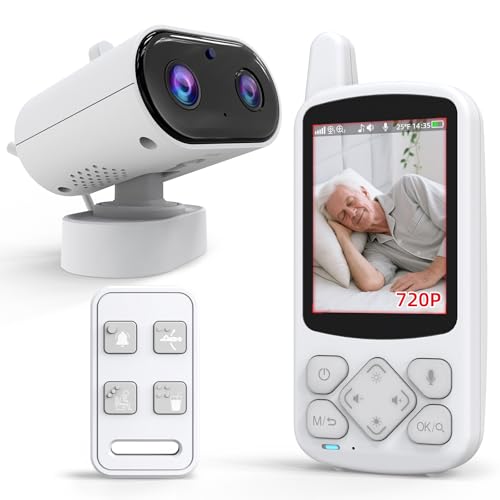
The CallToU elder care monitor pairs live video with 2-way audio, enabling caregivers to communicate quickly with a senior in another room. An on-device SOS button and routine alerts help manage daily care tasks, such as reminders to drink water or take medications. Although marketed for elderly care, its straightforward interface and reliable signaling also benefit deaf or hard-of-hearing parents who need immediate, clear notifications in a family environment.
Buying Guide: Key Considerations for Deaf-Parent-Friendly Monitors
- Alert modalities: Look for devices offering multiple alert types, including visual LEDs, audio chimes, and vibrating alerts. Redundancy helps ensure notifications are noticed in busy households or during background noise.
- Range and reliability: Prioritize models with strong, stable connections and a long operating range (1,000 feet or more is common). DECT or non-WiFi designs can reduce interference and improve reliability in crowded homes.
- Power and independence: WiFi-free options and long-lasting batteries minimize outages and uptime issues. Consider models with rechargeable batteries and back-up power options.
- Two-way communication: A built-in talk-back feature lets caregivers soothe or check on baby without rushing back to the nursery, which is especially helpful for deaf or hard-of-hearing parents managing multiple caregiving tasks.
- Security and privacy: Choose monitors with secure transmission channels (e.g., DECT 6.0). This reduces the risk of eavesdropping and ensures protection of personal data.
- Video versus audio emphasis: For deaf parents, video-enabled monitors with strong night vision and clear audio indicators can be more informative than audio-only options, though dual-mode devices offer flexibility.
- Power outages and offline performance: Systems that function without WiFi or via local radio transmission provide continued alerts during outages, an important safety consideration.
- Ease of setup and accessibility: Simple installation, intuitive interfaces, and visible indicators support quick adoption and daily use for caregivers balancing family duties.
When selecting a monitor, buyers should consider the home layout, the preferred alert style, and whether visual cues (lights, screens) or audio cues are more effective in their environment. Combining a video monitor with a dedicated signaling device can create a layered alert system that enhances safety for deaf or hard-of-hearing parents.