Choosing a baby carrier for a seven-month-old involves balancing comfort, ergonomic support, and adjustable fit as your child grows. The right carrier should support healthy hip and spine development, be easy to put on, and adapt to different caregivers. Below are five Amazon-listed carriers that rank well for stability, multi-position flexibility, and comfort for both baby and parent. Each section includes a direct product link, a quick visual, and key features to compare at a glance.
| Product | Brand | Key Features |
|---|---|---|
| MOMTORY 6-in-1 Baby Carrier | MOMTORY | From infant to toddler, 6 carrying positions, hip seat, all seasons, adjustable for various body types |
| Infantino Flip 4-in-1 | Infantino | 4 carrying positions, newborn to toddler, ergonomic design, adjustable for all caregivers |
| Momcozy Ergonomic Carrier (Khaki) | Momcozy | Three sizing positions, ergonomic M-position, built-in lumbar support, soft padding |
| Momcozy Ergonomic Carrier (Black) | Momcozy | Three sizing positions, ergonomic M-position, lumbar support, padded straps |
| Safotad With Hip Seat (Grey) | Safotad | Ergonomic M-shape, multiple carries, extended waistband, supportive hip seat |
MOMTORY 6-in-1 Baby Carrier

The MOMTORY 6-in-1 Baby Carrier supports children from infancy to toddlerhood, offering six carrying positions to match your growing child. It features adjustable shoulder straps and a waist stool to fit various body types. The carrier is advertised as skin-friendly with premium fabric for comfort during long outings, shopping, or travel. Its hip-seat option provides an alternative for infants who sit or lie in the seat. This versatility aims to keep both parent and child comfortable across activities and times of day.
Infantino Flip 4-in-1 Convertible Carrier
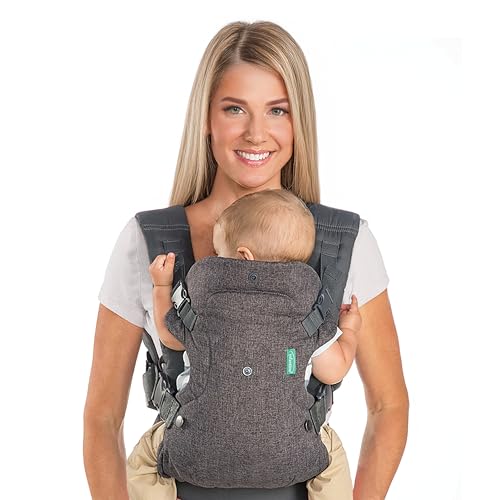
This Infantino model offers four carrying positions suitable for newborns up to toddlers (8–32 lbs). It emphasizes ergonomic wear with padded shoulder straps and a wide waist belt that distributes weight to reduce back and shoulder strain. Adjustable straps and seat settings make it suitable for different caregivers, ensuring a secure, personalized fit whether you’re running errands or enjoying a day out. Parents can choose facing-in, facing-out, or back carry as needed.
Momcozy Baby Carrier (Khaki)

Momcozy’s ergonomic carrier in khaki is designed for hands-free daily use, with three adjustable sizing positions to grow with your child. It supports a natural M-position to promote healthy hip and spine development. The design includes thickly padded shoulder and waist straps for a comfortable fit and built-in EVA lumbar support to reduce back strain. The carrier is touted as easy to wear, making it suitable for travel and busy schedules while maintaining comfort for both parent and baby.
Momcozy Baby Carrier (Black)

This second Momcozy option mirrors the khaki model’s features, offering three growth settings, ergonomic M-position, and lumbar support to ease carrying over longer periods. The carrier emphasizes lightweight usability and comfortable padding to accommodate everyday activities while ensuring a secure fit for both newborn to toddler stages. It is particularly marketed toward travelers and parents who value ease of use without sacrificing ergonomic safety.
Safotad Baby Carrier With Hip Seat (Grey)

Safotad’s hip-seat carrier emphasizes an ergonomic M-shape for healthy hip and spine development, with multiple carrying options including front-facing and back carries. The extended waistband accommodates a range of body types, and the hip seat provides additional support for longer wear sessions. The design reduces fatigue by distributing weight across a wider area and offers a durable build suitable for daily use and travel. The carrier is positioned as a versatile option for parents seeking flexibility in carry styles.
Buying Guide: Key Purchase Considerations
When selecting a carrier for a seven-month-old, consider these factors to ensure the right fit, safety, and long-term comfort.
- Ergonomic positioning: Look for carriers that support an M-shaped hip/leg position to promote healthy hip development and reduce pressure on the spine.
- Carry positions: A multi-position carrier (facing-in, facing-out, back carry) adapts to a growing baby and varying activities. For seven months, front-facing outward may not be ideal for extended periods; back or inward-facing carries are often preferred.
- Fit and adjustability: Wide, padded shoulder straps and an adjustable waistband help distribute weight, minimizing back strain for parents of different sizes.
- Weight range: Ensure the carrier supports at least 7–32 lbs (or higher) to cover the 7-month stage and beyond, along with a seat that accommodates growth.
- Materials and comfort: Skin-friendly fabrics and padded leg openings reduce irritation for baby. Breathable materials help with all-season use.
- Ease of use: Quick-don options and intuitive buckles/straps save time and reduce frustration, especially during outings with a wiggly infant.
- Maneuverability and cleaning: Removable parts or easy washing options are beneficial for busy parents dealing with spills or messes.
- Durability: A sturdy waistband, reinforced stitching, and quality zippers contribute to long-term reliability across multiple stages.
- Caregiver diversity: If multiple caregivers use the carrier, ensure the model offers consistent fit for different body types and adjustability to accommodate them easily.
Additional Comparisons: What To Prioritize
For seven-month-olds, priority often goes to ergonomic support and adjustability. Carriers with hip seats can provide extra support for shorter trips, while lightweight designs favor travel and daily errands. Checks for safety certifications, fabric certifications, and age/weight guidelines from the manufacturer can further guide a responsible choice. If you need to switch between front and back carries frequently, ensure buckles and straps are intuitive and secure. Consider testing fit in a store or reviewing detailed sizing guides if shopping online to prevent uncomfortable fits.